Sid Meier's Civilization series is loved for its turn-based 4X loop — explore the map, expand with new cities, exploit resources and tech trees, and exterminate (or diplomatically outlast) rival civilisations across thousands of years of history. The mix of long-term planning, asymmetric faction abilities, research decisions, and that legendary "just one more turn" momentum is what defines its DNA.
When players ask for games like Civ, they're really looking for that same satisfying arc of building something from scratch, watching it grow in complexity, and steering it to a meaningful victory — whether through science, culture, domination, or diplomacy. The best alternatives share at least one of: grand scope, meaningful tech progression, turn-based pacing, or civilisation-level decision-making.
Top pick:Sid Meier's Civilization V is the single closest pick — it shares literally every mechanic with the anchor, just with a refined hex grid and polished one-unit-per-tile combat, and its enormous mod library means you'll never run out of content.
Some store buttons are affiliate links — we may earn a commission at no extra cost to you.
24 games like CIV
97%
Sid Meier's Civilization V 2010
Civilization V refines the core Civ formula with a one-unit-per-tile combat system and hex grid, delivering the same cycle of city-building, tech research, diplomacy, and victory-condition racing. It remains many fans' favourite entry in the series.
Key difference: Hex grid and one-unit-per-tile replaces stacked armies.
Best for: Players wanting a polished, moddable Civ with great DLC.
Skip if: You hate micromanaging individual unit positioning.
Civilization VI splits city districts across the map and adds the Eureka/Inspiration system to accelerate research, keeping the same explore-expand-exploit-exterminate DNA. It's the most recent mainline entry and actively supported with expansions.
Key difference: City districts spread physically across tiles, changing layout strategy.
Best for: Players who want the freshest ruleset and ongoing content.
Skip if: You prefer Civ V's cleaner, less fiddly interface.
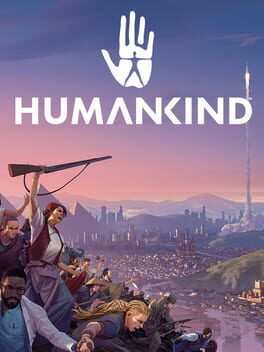
Humankind is the most direct Civ rival, letting you assemble a custom civilisation from dozens of historical cultures across six eras, with fame replacing a single victory condition for a fresh twist on the 4X formula.
Key difference: Culture-merging system replaces fixed civilisation identity.
Best for: Civ veterans wanting a modern 4X with fresh design ideas.
Skip if: You prefer Civ's familiar, tested structure.
Civilization IV introduced religion and great-person systems to the classic turn-based 4X formula and is still regarded as one of the deepest entries. The Beyond the Sword expansion alone has hundreds of hours of content.
Key difference: Religion and corporations add mid-game economic/cultural levers.
Best for: Fans who want maximum systemic depth and mod support.
Endless Legend is a fantasy 4X with deeply asymmetric factions, seasonal weather affecting strategy, and rich lore — it brings the tech-research and city-building loop of Civ into an original fantasy world with exceptional writing.
Key difference: Each faction plays by completely different mechanical rules.
Best for: Civ fans who want fantasy setting with mechanical variety.
Skip if: You want a historical real-world civilisation sandbox.
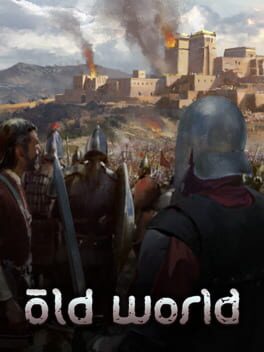
Old World fuses Civ's 4X structure with Crusader Kings-style dynasty simulation, adding orders-per-turn management and family intrigue to ancient Mediterranean empire-building — designed by a former Civ lead designer.
Key difference: Dynasty characters and limited action points reshape every turn.
Best for: Civ and CK2 fans wanting the best of both in one package.
Skip if: You dislike character-level management layered over 4X.
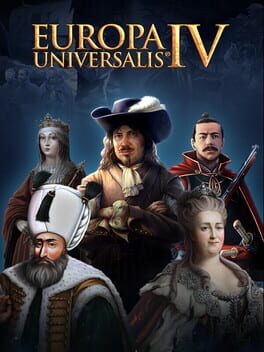
Europa Universalis IV is a grand-strategy game spanning 1444–1821 where you steer a real nation through diplomacy, colonisation, warfare, and trade — the deepest historical empire-building on PC. The research and expansion loops will feel familiar but the simulation is far denser.
Key difference: Real-time with pause; far more historical simulation granularity.
Best for: Civ fans who want more historical authenticity and complexity.
Skip if: You want clean turn-by-turn pacing or a shorter session.
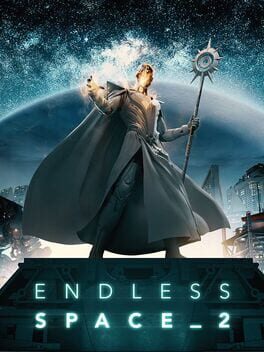
Endless Space 2 is a polished space 4X with gorgeous faction design, card-based space combat, and a deep tech tree — it hits the same civilisation-building rhythm as Civ but across a procedural galaxy.
Key difference: Card-based battle system replaces traditional tactical combat.
Best for: Civ fans ready to scale up to a full space-opera 4X.
Skip if: You dislike space settings or real-time-ish combat resolution.
Stellaris transplants the 4X empire-building formula into space, letting you design species, colonise planets, research technologies, and wage galactic wars. The mid-to-late game emergence of crises mirrors Civ's late-game escalation perfectly.
Key difference: Real-time with pause; procedural galaxy, not Earth's map.
Best for: Civ players ready to explore a science-fiction 4X sandbox.
Skip if: You dislike real-time grand strategy or sci-fi settings.
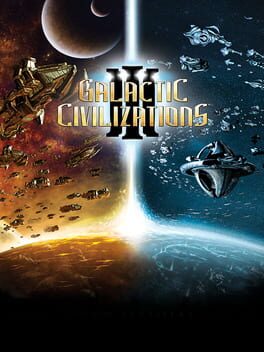
Galactic Civilizations III is a pure turn-based space 4X where you colonise star systems, research huge tech trees, and trade or war with alien races — the clearest Civ equivalent in a sci-fi setting.
Key difference: No tactical combat layer; battles resolved automatically.
Best for: Civ players who want a turn-based 4X set in space.
Skip if: You want hands-on battle control or a strong narrative.
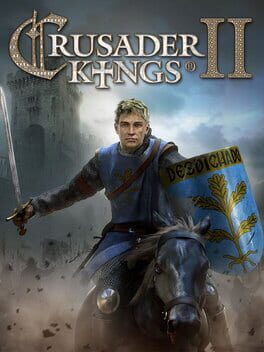
Crusader Kings II turns medieval dynasty management into a deeply systemic grand strategy where bloodlines, marriages, and plots replace standard tech trees. The emergent storytelling is unlike anything else but shares Civ's 'one more turn' pull.
Key difference: Dynasty and character simulation dominates over territory/economy.
Best for: Civ players who want politics and roleplay over war planning.
Skip if: You prefer clearly defined victory conditions.
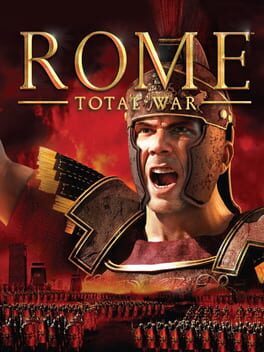
Rome: Total War pairs a turn-based campaign map — where you build cities, manage economy, and conduct diplomacy — with real-time tactical battles. The campaign layer scratches the same civilisation-building itch as Civ.
Key difference: Battles resolve in real-time 3D rather than abstract combat.
Best for: Civ fans who want hands-on battlefield command.
Skip if: You dislike switching between strategic and tactical modes.
Heroes of Might and Magic III: The Restoration of Erathia 1999
Heroes of Might and Magic III is a beloved turn-based strategy where you develop castle towns, recruit armies, research magic, and move heroes across a hex map to conquer rivals — a close cousin to Civ's pacing and decision density.
Key difference: Fantasy heroes lead discrete army stacks; no population-growth cities.
Best for: Civ players who want a fantasy turn-based strategy classic.
Skip if: You dislike hero-centric RPG elements in strategy.
PC
78%
Total War: Warhammer II 2017
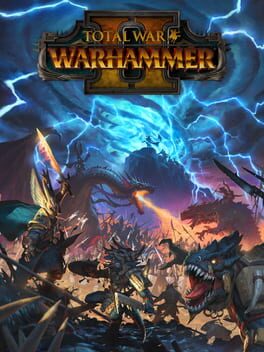
Total War: Warhammer II pairs a rich turn-based campaign map — factions, diplomacy, city building, and tech research — with real-time battles, wrapping it all in the Warhammer Fantasy universe.
Key difference: Real-time army battles replace abstract Civ combat.
Best for: Civ fans who want fantasy lore and hands-on battlefield moments.
Skip if: You strongly prefer purely turn-based, no real-time elements.
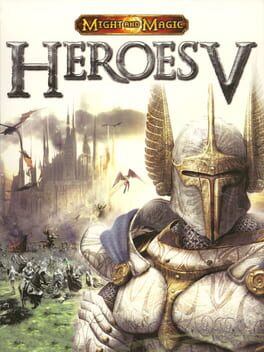
Heroes of Might and Magic V modernised the HoMM formula with 3D visuals while keeping the turn-by-turn town-building and map conquest loop intact. It sits comfortably between Civ and classic fantasy strategy.
Key difference: Modern presentation but more linear progression than Civ.
Best for: Players wanting HoMM III's ideas with a cleaner look.
Spore moves through evolutionary stages from microbe to spacefaring empire, with its Civilisation and Space stages directly echoing Civ's 4X gameplay — building cities, trading, and conquering planets.
Key difference: Five completely different game-mode stages disrupt strategic focus.
Best for: Casual players who want lite Civ ideas wrapped in creativity.
Skip if: You want serious strategic depth throughout.
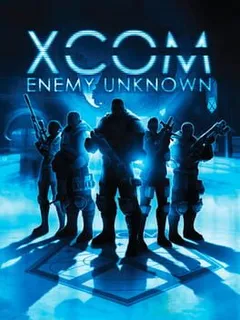
XCOM: Enemy Unknown shares Civ's turn-based tactical rhythm and tech-research tree, layering squad management and base-building onto a global strategic map where humanity's fate depends on your decisions.
Key difference: Micro-scale squad tactics, not macro civilisation management.
Best for: Civ fans craving tense turn-based decisions with high stakes.
Skip if: You want city-building and diplomacy over small-unit combat.
XCOM 2 tightens the base-building and research loops of Enemy Unknown and adds guerrilla resistance mechanics, making every strategic choice feel consequential across a global map — a turn-based strategy fan's dream.
Key difference: Resistance/timer pressure makes campaigns more frantic than Civ.
Best for: Players who want XCOM but with more strategic map depth.
Skip if: You dislike brutal permadeath difficulty curves.
Into the Breach distils turn-based grid strategy to its pure essentials: you see every enemy move in advance and must optimise around it, making each small puzzle deeply satisfying — a purer strategy hit than many bigger titles.
Key difference: Tiny 8×8 grids, no economy or diplomacy at all.
Best for: Civ fans who want pure tactical decision-making, no fluff.
Skip if: You need empire-scale scope and long campaigns.
Age of Empires II lets you guide a historical civilisation through ages of technological advancement, city building, resource gathering, and military conquest — conceptually identical to Civ but in real-time instead of turn-based.
Key difference: Real-time instead of turn-based; no diplomacy or victory conditions beyond conquest.
Best for: Civ players who want historical progression at faster pace.
Age of Mythology extends AoE II's formula with mythological civilisations, god powers, and unique myth units — still a real-time historical strategy but with the civ-identity flavour Civilization fans appreciate.
Key difference: God powers and myth units add asymmetric RTS combat flair.
Best for: Players who want historical flavour with fantasy twists.
Skip if: You dislike real-time resource micromanagement.
Frostpunk is a city-builder survival strategy where you manage a shrinking coal supply, pass laws, and make brutal societal choices to keep your population alive — a tight, high-pressure spin on Civ's city and people management.
Key difference: Single-city survival scenario; no expansion, warfare, or exploration.
Best for: Civ fans who enjoy the city management and moral dilemma aspects.
Skip if: You want multi-civilisation scope and open-ended sandbox.
RimWorld is a colony-management simulator driven by an AI storyteller, where you build settlements, research tech, manage colonist needs, and defend against raids — sharing Civ's 'build-up and hold on' rhythm.
Key difference: Narrative emergence and colonist psychology over geopolitical strategy.
Best for: Civ players who want deep colony simulation with emergent stories.
Skip if: You want clear victory conditions and competing civilisations.
The Banner Saga is a turn-based tactical strategy with resource-management decisions on the march, where your choices about supplies and morale ripple through a beautifully drawn Norse-inspired war. A hidden gem of the TBS genre.
Key difference: Linear narrative journey; no open-world civilisation building.
Best for: Civ fans who want atmospheric turn-based strategy with story weight.
Skip if: You dislike narrative-driven, non-sandbox strategy.
Hex grid and one-unit-per-tile replaces stacked armies.
PC
Sid Meier's Civilization VI
96%
Strategy
City districts spread physically across tiles, changing layout strategy.
PlayStation, PC, Mobile, Xbox, Nintendo
Humankind
96%
Strategy
Culture-merging system replaces fixed civilisation identity.
Xbox, PlayStation, PC
Sid Meier's Civilization IV
94%
Strategy
Religion and corporations add mid-game economic/cultural levers.
PC
Endless Legend
92%
Strategy
Each faction plays by completely different mechanical rules.
PC
Old World
91%
Strategy
Dynasty characters and limited action points reshape every turn.
PC
Europa Universalis IV
87%
Strategy
Real-time with pause; far more historical simulation granularity.
PC
Endless Space 2
86%
Strategy
Card-based battle system replaces traditional tactical combat.
PC
Stellaris
85%
Strategy
Real-time with pause; procedural galaxy, not Earth's map.
Xbox, PlayStation, PC
Galactic Civilizations III
83%
Strategy
No tactical combat layer; battles resolved automatically.
PC
Crusader Kings II
82%
Strategy
Dynasty and character simulation dominates over territory/economy.
PC
Rome: Total War
79%
Strategy
Battles resolve in real-time 3D rather than abstract combat.
Mobile, PC
Heroes of Might and Magic III: The Restoration of Erathia
78%
Strategy
Fantasy heroes lead discrete army stacks; no population-growth cities.
PC
Total War: Warhammer II
78%
Strategy
Real-time army battles replace abstract Civ combat.
PC
Heroes of Might and Magic V
74%
Strategy
Modern presentation but more linear progression than Civ.
PC
What makes a game truly feel like Civilization?
The Civ formula rests on four pillars: meaningful turn-by-turn decisions, a technology tree that unlocks new possibilities, city or territory growth that compounds over time, and rival powers that force you to adapt. Games like Europa Universalis IV and Crusader Kings II nail the grand-scope and historical depth, while Stellaris carries those pillars into space with a 4X backbone that Civ fans recognise immediately.
Importantly, it's not just about being a strategy game — real-time titles like StarCraft scratch a completely different itch. The true Civ feeling comes from sitting with a decision, weighing long-term consequences, and watching your empire grow across many game-hours rather than game-minutes.
Best picks if you love Civ's city-building and tech-tree sides
If the city growth and research-tree satisfaction is what keeps you hooked, Humankind (our top 'additional' pick) directly mirrors that loop with a novel culture-assembly system. For a tighter, more survival-focused take, Frostpunk distils city management into a brutal single-settlement crisis where every law and building decision carries real moral weight.
For a sci-fi colony angle, RimWorld delivers the same compounding-complexity feeling — your settlement starts fragile and grows into a self-sustaining fortress — just with a narrative storyteller instead of a diplomatic victory screen.
Hidden gems Civ fans shouldn't miss
Old World (in our 'additional' list) is the most underrated Civ alternative on the market, designed by a former Civilization lead and fusing the 4X map with Crusader Kings-style dynasty drama — it belongs on every Civ fan's radar. From the candidate pool, The Banner Saga is a frequently overlooked turn-based strategy gem that rewards the same deliberate decision-making as Civ, wrapped in a stunning hand-drawn Norse world.
Into the Breach is another hidden gem: a small-scale puzzle-strategy title that strips turn-based tactics to their mathematical essentials, offering a purity of strategic thought that fans of Civ's combat planning will deeply appreciate in short, punchy sessions.
What is the best game like Civilization for beginners?
Civilization VI is the best starting point for newcomers — it has built-in tutorials, clear visual feedback for districts and districts, and a wealth of difficulty settings. Civilization V is also excellent and slightly simpler in its systems, making it another strong choice for players new to 4X strategy.
Are there any free games similar to Civilization?
FreeCiv is an open-source Civ clone available for free on PC, closely mirroring Civilization II's ruleset. Unciv is a mobile-friendly open-source remake of Civilization V. Neither matches the polish of the mainline series but both are genuine 4X experiences at no cost.
What is the closest game to Civilization but set in space?
Stellaris is the most popular space equivalent — it's a grand-strategy 4X by Paradox where you build a galactic empire, research technology, and interact with alien civilisations. Endless Space 2 and Galactic Civilizations III are closer in mechanical structure to Civ itself, with cleaner turn-based pacing.
Is Europa Universalis IV similar to Civilization?
EU4 shares Civ's historical empire-building ambition but is considerably more complex and runs in real-time with pause rather than discrete turns. It's a natural next step for Civ players who want deeper historical simulation, trade networks, and diplomatic intricacy, but expect a steep learning curve.
What should I play after finishing every Civilization game?
Old World is the most recommended next step — it was designed by a Civ veteran and adds dynasty mechanics that feel like a genuine evolution of the formula. Humankind is the other major modern 4X that directly competes with Civ. For something different in flavour but similar in depth, Crusader Kings II or Endless Legend are excellent transitions.
 97%
97%