The Sims (2000) captured something no other game had: the pleasure of crafting individuals from scratch — their looks, personalities, ambitions, and relationships — and watching the messy, funny, sometimes tragic details of domestic life unfold. Its core appeal is intimate character stewardship: managing social needs, home design, career trajectories, and romantic entanglements at a human scale rather than a civilization scale.
When players ask for "games like The Sims," they're really asking for one or more of these pillars: sandbox character creation, social relationship management, home building and decoration, daily-life simulation, or the emergent comedy and drama that comes from all of the above colliding. The best matches deliver at least two of these in meaningful depth.
Top pick:The Sims 4 is the single closest pick — it is the living evolution of the anchor, sharing every core mechanic from character creation and needs management to career paths and house building, and it remains actively updated — making it the unambiguous starting point for anyone who has exhausted the original.
Some store buttons are affiliate links — we may earn a commission at no extra cost to you.
16 games like The Sims
98%
The Sims 4 2014
The Sims 4 is the direct modern successor, retaining the same core loop of character creation, need management, career advancement, and house building. It iterates on every system from the original while adding smoother UI and expanded social interactions.
Key difference: Free-to-play base game with heavy paid DLC model.
Best for: Anyone who wants the most polished, supported Sims experience today.
Skip if: You dislike DLC-gated content and microtransactions.
The Sims 2 deepens the original's formula with generational aging, wants and fears, and richer character storytelling driven by memories. It captures the intimate character drama of the original with more emotional depth.
Key difference: Aging and generational legacy mechanics add long-term stakes.
Best for: Fans who want richer storytelling and more character depth.
Skip if: You need modern graphics or quality-of-life UI features.
The Sims 3 opens up the neighborhood into a seamless open world, letting Sims walk, shop, and socialize across town in real time. It retains the same character-driven sandbox while adding open-world freedom.
Key difference: Fully seamless open neighborhood instead of discrete lots.
Best for: Players who want to see their Sims interact with the wider world.
Skip if: You prefer tightly curated lot-based gameplay over open exploration.
Animal Crossing: New Horizons shares The Sims' love of decorating personal spaces, building relationships with characters, and following a relaxed daily-life loop. The cozy, sandbox island life scratches the same comfort-play itch.
Key difference: No controllable human avatar — you play yourself on a cartoon island.
Best for: Players who want a gentler, lower-stakes life sim.
Skip if: You need direct control over character personality and needs.
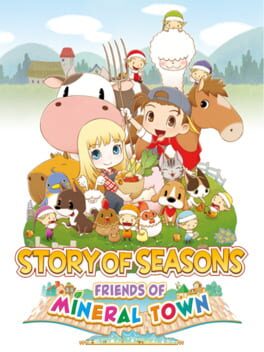
Friends of Mineral Town is a life-sim about building relationships with townsfolk, pursuing romance and marriage, customizing your home, and following seasonal daily routines — core Sims pleasures in a wholesome farming package.
Key difference: Farming is the economic backbone; no house-building design mode.
Best for: Sims fans who want cozy daily-routine life sim with romance goals.
Skip if: You dislike farming loops or want free-form sandbox play.
Stardew Valley blends farming simulation with deep social relationships, gift-giving, romance, and marriage — key pillars of The Sims experience wrapped in a charming pixel RPG. NPC schedules and friendship meters mirror Sims-style social management.
Key difference: Farming and dungeon-crawling are the primary activities, not house life.
Best for: Sims fans who also want resource gathering and light progression goals.
Skip if: You have no interest in farming or combat loops.
RimWorld simulates individual colonists with distinct personalities, social relationships, moods, needs, and life histories — arguably the deepest character simulation ever made, though viewed from a colony-management top-down perspective.
Key difference: Colony survival strategy with brutal emergent storytelling, not cozy.
Best for: Sims fans who want deep character simulation and emergent drama.
Skip if: You want a relaxed, first-person domestic experience.
Persona 5 structures daily life around a social calendar — managing friendships (Confidants), romance, school, and free time with the same juggling of competing priorities as The Sims. Relationships directly affect gameplay outcomes.
Key difference: JRPG dungeon combat is half the game alongside the social sim.
Best for: Sims fans who enjoy anime-style story and turn-based RPG combat.
Skip if: You want sandbox freedom rather than a scripted narrative.
Rune Factory 4 combines farming, home decoration, and deep relationship simulation — wooing, befriending, and eventually marrying characters with Sims-like social depth — alongside light action RPG dungeon content.
Key difference: Action RPG combat and dungeon crawling alongside the social sim.
Best for: Sims players who want romance and relationship depth with RPG flair.
Skip if: You have zero interest in combat or dungeon exploration.
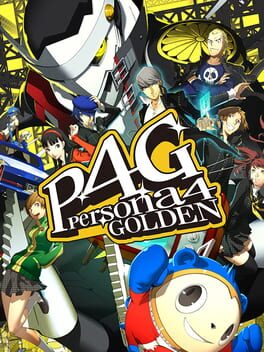
Persona 4 Golden's Social Link system revolves around building deep relationships, managing daily schedules, and navigating romance and friendship — all core Sims pleasures in a murder-mystery JRPG shell.
Key difference: Set in a small-town murder mystery with dungeon RPG combat.
Best for: Players who loved social/relationship gameplay but want a rich story.
Skip if: You dislike visual-novel dialogue segments and JRPG combat.
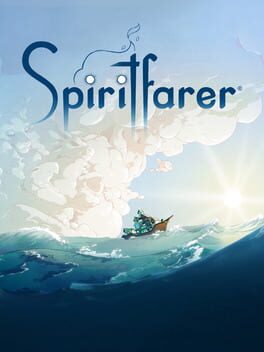
Spiritfarer tasks you with learning each spirit passenger's personality, likes, food preferences, and personal history, then fulfilling their needs — a deeply intimate character-care loop that echoes The Sims' warmth and emotional investment.
Key difference: A linear narrative about grief and letting go, not a sandbox.
Best for: Sims players who value emotional character connection above mechanics.
Skip if: You want open-ended play without a narrative endpoint.
Spore, also from Maxis, shares The Sims' DNA of nurturing and customizing a creature through multiple life stages — eating, socializing, mating, and building a civilization. It's a direct spiritual relative in terms of design philosophy.
Key difference: Spans five wildly different gameplay phases from cell to space.
Best for: Sims fans curious about Maxis's other big simulation experiment.
Skip if: You want a consistent life-sim loop rather than genre-shifting phases.
Catherine is built around the anxieties of adult relationships, romance, and social pressure — choosing between partners, managing social ties, and navigating emotional fallout, all core Sims preoccupations, wrapped in a puzzle game.
Key difference: Gameplay is a block-pushing puzzle platformer, not a life sim.
Best for: Sims players who love the romance and social drama above all else.
Skip if: You can't stomach challenging block-puzzle mechanics.
Bully puts you in charge of building social standing through making friends, managing relationships across cliques, and navigating the social hierarchy of a school — a compressed version of The Sims' social mechanics in an open-world setting.
Key difference: Third-person action brawler in a school open world.
Best for: Sims players who want social dynamics inside a structured narrative world.
Skip if: You dislike action combat or want pure sandbox house building.
Minecraft's sandbox building lets players construct detailed homes, furnish interiors, and create personal spaces with the same creative satisfaction as The Sims' build mode. The survival and crafting loop differs but the building freedom resonates.
Key difference: Survival crafting and exploration, not character/social simulation.
Best for: Sims players primarily motivated by building and interior design.
Skip if: Character personalities, needs, and social drama are your core interest.
Fable III lets you build relationships, marry characters, own and furnish houses, raise children, and manage reputation — a rough analogue to The Sims' social and domestic loop inside an action RPG fantasy world.
Key difference: Story-driven action RPG with combat as the primary gameplay loop.
Best for: Sims fans who want character relationships inside a fantasy narrative.
Skip if: You need deep social simulation rather than simplified relationship meters.
PCXbox
At a glance
Game
Match
Shared DNA
Biggest difference
Platforms
The Sims 4
98%
Simulator, Fantasy
Free-to-play base game with heavy paid DLC model.
PlayStation, PC, Xbox
The Sims 2
96%
Simulator, Fantasy
Aging and generational legacy mechanics add long-term stakes.
PC
The Sims 3
95%
Simulator, Fantasy
Fully seamless open neighborhood instead of discrete lots.
PC
Animal Crossing: New Horizons
83%
Simulator, Sandbox
No controllable human avatar — you play yourself on a cartoon island.
Nintendo
Story of Seasons: Friends of Mineral Town
82%
Simulator, Fantasy
Farming is the economic backbone; no house-building design mode.
Xbox, PlayStation, PC, Nintendo
Stardew Valley
79%
Simulator, Fantasy
Farming and dungeon-crawling are the primary activities, not house life.
PlayStation, PC, Nintendo, Mobile, Xbox
RimWorld
74%
Simulator
Colony survival strategy with brutal emergent storytelling, not cozy.
PC
Persona 5
72%
Fantasy, Comedy
JRPG dungeon combat is half the game alongside the social sim.
PlayStation
Rune Factory 4 Special
72%
Simulator, Fantasy
Action RPG combat and dungeon crawling alongside the social sim.
PlayStation, PC, Xbox, Nintendo
Persona 4 Golden
70%
Fantasy, Comedy
Set in a small-town murder mystery with dungeon RPG combat.
PlayStation
Spiritfarer
68%
Simulator, Fantasy
A linear narrative about grief and letting go, not a sandbox.
PlayStation, PC, Xbox, Nintendo
Spore
63%
Simulator, Comedy
Spans five wildly different gameplay phases from cell to space.
PC
Catherine
60%
Comedy, Romance
Gameplay is a block-pushing puzzle platformer, not a life sim.
PlayStation, Xbox
Bully
56%
Comedy, Sandbox
Third-person action brawler in a school open world.
PlayStation, PC
Minecraft: Java Edition
52%
Simulator, Fantasy
Survival crafting and exploration, not character/social simulation.
PC
What makes a game feel like The Sims?
The Sims' signature feel comes from three interlocking systems: granular character customization (personality, appearance, aspirations), a social needs engine that forces characters to interact and form or break relationships, and a creative building mode that lets players express identity through space. A true Sims alternative needs at least two of these. The Sims 2 and The Sims 3 nail all three, while Animal Crossing: New Horizons nails building and social warmth but simplifies the needs system, and Stardew Valley nails social relationships and home decoration but wraps them in a farming loop.
Persona 5 and Persona 4 Golden are surprising matches because their Social Link/Confidant systems replicate the most emotionally engaging part of The Sims — nurturing relationships through repeated interactions, gifts, and time investment — even if the surrounding game is a JRPG.
Best picks for the builder side of The Sims
If what you love most is furnishing rooms, laying down wallpaper, and arranging furniture to express your aesthetic, Animal Crossing: New Horizons is the closest console equivalent, offering a vast catalog of craftable furniture and full island terraforming. Minecraft: Java Edition is the ceiling of creative building freedom — no catalog limitations — though it trades character simulation entirely for survival crafting.
For players who want the design tools closest to The Sims' actual build mode, the best answer remains staying within the franchise: The Sims 3 introduced curved walls and an open neighborhood to build in, while The Sims 4 added the room-based build system and a massive community gallery for sharing designs.
If you want the social drama and romance without the house building
Stardew Valley is the cleanest path here — its friendship and romance systems are deep enough that many players spend more time at festivals and giving gifts than farming. Persona 5 goes even further, making relationship-building a mechanical necessity tied to combat power, ensuring you're always invested in your social calendar. Both games deliver the satisfying feeling of a character warming up to you over time.
For something more niche, RimWorld (not in the candidate pool but listed above) is the most sophisticated character drama simulator available — colonists form friendships, rivalries, and romances entirely without player direction, generating stories that rival anything scripted. It's darker and more complex than The Sims but deeply satisfying for fans of emergent social storytelling.
The Sims 4 is the closest — it's the direct sequel and runs the same core loop of character creation, needs management, career progression, and house building. If you want a life sim outside the franchise, Stardew Valley and Animal Crossing: New Horizons are the strongest alternatives.
Are there any games like The Sims with more realistic simulation?
RimWorld simulates individual characters with deep personality traits, social relationships, mental states, and life histories, arguably surpassing The Sims in simulation depth. It's a colony survival game viewed from above rather than a domestic life sim, but the character drama it generates is unmatched.
Is Animal Crossing basically The Sims?
They share a cozy daily-life loop and a love of home decoration, but Animal Crossing doesn't simulate individual human needs or let you direct character behavior — you play as yourself, not a created Sim. Think of it as The Sims' laid-back cousin: less control, more atmosphere.
What games like The Sims focus on relationships and romance?
Persona 5 and Persona 4 Golden have the deepest relationship systems outside the Sims franchise, with characters who have schedules, preferences, and multi-stage social arcs. Stardew Valley includes courtship and marriage. Rune Factory 4 combines Stardew-style romance with action RPG gameplay.
Were there any games like The Sims before it came out?
Little Computer People (1985) by Activision is often cited as a direct ancestor — a single character lived in a house you could interact with. Theme Hospital and other Bullfrog management sims influenced Maxis's thinking, and Will Wright's own SimCity provided the "god game" sandbox DNA that The Sims domesticated.
 98%
98%