Stellar Blade earns its dedicated fanbase through a specific combination: a timing-based parry and evasion combat system that rewards mastery over button-mashing, wrapped in a post-apocalyptic sci-fi aesthetic clearly inspired by NieR and Bayonetta, with a female protagonist whose journey is told through cinematic cutscenes, NPC side quests, and a hub city that grows as the story unfolds.
When players search for games like Stellar Blade, they're usually chasing one of three itches: the precise parry rhythm (think Sekiro's deflect loop), the stylish anime sci-fi action (think NieR: Automata's DNA), or the third-person action-adventure structure with skill unlocks and exploration. The best recommendations satisfy at least two of those at once.
Top pick:NieR: Automata is the single closest match to Stellar Blade — it shares the android female protagonist, the post-apocalyptic Earth-reclamation premise, the anime art direction, the hack-and-slash skill-gauge combat, and the multiple-ending narrative structure so completely that Stellar Blade is best understood as a spiritual successor built in its shadow.
Some store buttons are affiliate links — we may earn a commission at no extra cost to you.
22 games like Stellar Blade
97%
NieR: Automata 2017
NieR: Automata shares Stellar Blade's anime-aesthetic post-apocalyptic sci-fi setting, a stylish android female protagonist (2B), and a hack-and-slash combat loop built around evasion timing and special skill gauges. Both games feature branching multiple endings, a ruined Earth overrun by machine enemies, and a tone that mixes melancholy narrative with kinetic action.
Key difference: NieR shifts genre mid-game with bullet-hell sections and top-down segments.
Best for: Anyone who wants a near-identical vibe with a deeper philosophical story.
Skip if: You disliked replaying the game for alternate endings.
Sekiro: Shadows Die Twice makes parrying the entire heartbeat of its combat, demanding precise deflection timing against every enemy — the same skill Stellar Blade rewards most heavily. Both games punish passivity and build toward spectacular timed-counter boss showdowns.
Key difference: Feudal Japan fantasy setting replaces sci-fi post-apocalypse entirely.
Best for: Players who found Stellar Blade's parry system the most satisfying part.
Skip if: You want character customization or skill-tree variety.
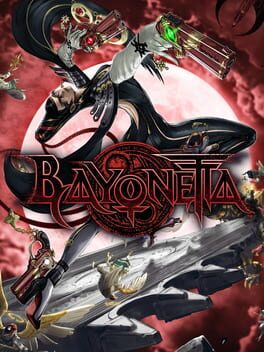
Bayonetta is the gold-standard stylish action game with a female protagonist, timing-based dodge mechanics (Witch Time), and elaborate special-gauge finishers — the genre template Stellar Blade is built on. Both share anime aesthetics, spectacle-focused boss fights, and a combo-mastery combat loop.
Metal Gear Rising: Revengeance is a fast, stylish hack-and-slash in a sci-fi near-future setting where parrying (Blade Mode) is central to combat mastery, directly paralleling Stellar Blade's timing-based system. Both games feature female-coded cyborg aesthetics, a propulsive metal soundtrack, and boss fights that are spectacles of skill.
Key difference: Much shorter with almost no exploration; pure combat focus.
Best for: Players who want the most stylish, over-the-top slash action.
Skip if: You enjoyed Stellar Blade's open world exploration and side quests.
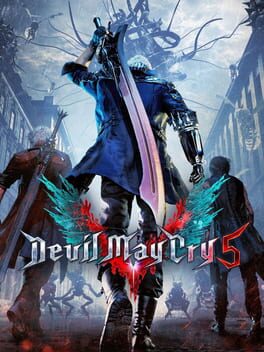
Devil May Cry 5 perfects the stylish hack-and-slash combat loop — skill-gauged specials, timed parries, and ranked combo performance — that Stellar Blade draws from directly. Three playable characters with distinct movesets and spectacular boss fights make it the genre benchmark.
Key difference: No open world or exploration; pure mission-based arena combat.
Best for: Players who want the deepest, most expressive melee skill ceiling.
Skip if: You want RPG exploration or a post-apocalyptic sci-fi narrative.
Lies of P centers its Souls-like combat on perfect-block parrying as its primary survival tool against doll-and-puppet enemies in a dark Belle Époque city — the closest Souls-adjacent parry rhythm to Stellar Blade's deflect system. The linear-with-hub structure and boss-focused progression mirror Stellar Blade's layout.
Key difference: Pinocchio fairy-tale framing in a Victorian horror setting.
Best for: Players who love Stellar Blade's parry precision and want peak Souls challenge.
Skip if: You want a sci-fi setting or stylish anime aesthetics.
God of War (2018) pairs a third-person melee combat system — built around well-timed parries, skill unlocks, and devastating special attacks — with a strong narrative and ruined-world exploration, mirroring Stellar Blade's structure closely. Both games have a satisfying skill progression loop and boss encounters that gate progress meaningfully.
Key difference: Norse fantasy mythology replaces sci-fi; second playable character shifts pacing.
Best for: Players who want bigger production values and richer world-building.
Skip if: You strongly prefer a solo female protagonist and sci-fi tone.
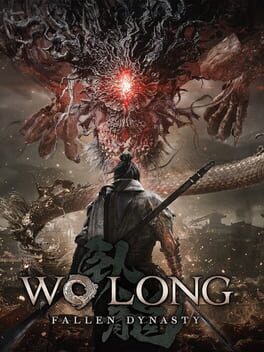
Wo Long: Fallen Dynasty rebuilds its entire combat system around a deflect-parry mechanic as the primary defense — nearly identical in philosophy to Stellar Blade's timing-based parry loop — set in a demonic Three Kingdoms China. Boss encounters demand perfect deflect reads in exactly the same way.
Key difference: Historical Chinese fantasy instead of sci-fi; deflect window is slightly more generous.
Best for: Players who want Stellar Blade's parry feel with a faster, flashier rhythm.
Skip if: You want an open world or a modern sci-fi setting.
Bloodborne demands aggressive dodge timing and well-read attack patterns against nightmarish creatures, rewarding the same instinct for timing that Stellar Blade cultivates. Both games feature a crumbling world with hidden lore, NPC survivors scattered across the environment, and punishing but fair combat.
Key difference: Gothic horror Lovecraftian setting; no parry, only rally and dodge.
Best for: Players ready for a harder, darker, more cryptic experience.
Skip if: You need clear quest markers and narrative direction.
PlayStation
83%💎 Gem
Code Vein 2019
Code Vein is a third-person action RPG in an anime-styled post-apocalyptic world overrun by monsters, with a hub city of NPC survivors, skill-gauge special attacks, and Souls-inspired timed dodges — virtually the same skeleton as Stellar Blade. The anime art direction and desperate sci-fi atmosphere make it the closest aesthetic twin to Eve's adventure.
Key difference: Co-op AI companion is permanent; combat is slower and more RPG-stat-driven.
Best for: Stellar Blade fans who want a deeper skill-tree and RPG customization.
Skip if: You dislike anime tropes pushed to a more extreme degree.
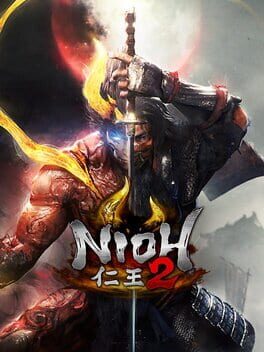
Nioh 2 layers a deep stance-based melee combat system with ki-pulse timing mechanics (functionally identical to Stellar Blade's parry gauges) atop a supernatural monster-filled Japan, with a skill tree of unlockable special attacks and a hub town of NPC questgivers.
Key difference: Far more complex RPG stat systems and loot grind than Stellar Blade.
Best for: Stellar Blade fans who want a longer, harder, more RPG-heavy endgame.
Skip if: You're intimidated by deep stat systems and gear optimization.
Dark Souls III shares the timed parry and dodge evasion mastery that defines Stellar Blade's combat, alongside exploration of crumbling environments with hidden shortcuts and NPC questlines. The stamina system and risk/reward aggression loop feel directly ancestral to Stellar Blade's design.
Key difference: Much slower, heavier combat; no narrative cinematics or voice acting story delivery.
Best for: Players wanting the deepest, most demanding version of timing-based melee.
Skip if: You want a clear main story told with cutscenes and character drama.
Demon's Souls established the timed parry, deliberate dodge, and enemy-pattern-reading that Stellar Blade inherits. The somber ruined-kingdom atmosphere and isolated NPC survivors in a safe hub echo Stellar Blade's Xion city structure almost exactly.
Key difference: Original Souls formula means very sparse narrative and dialogue.
Best for: Parry-mastery fans who want Souls at its most stripped-back and atmospheric.
Skip if: You rely on quest markers or enjoy character-driven cutscenes.
Horizon Zero Dawn puts a female protagonist in a post-apocalyptic sci-fi Earth reclaimed by mechanical creatures, navigating the mystery of a lost civilization — the setting DNA is nearly identical to Stellar Blade's premise. Combat rewards spatial awareness and tactical dodge-timing against machine enemies.
Batman: Arkham City built the modern third-person timing counter system — press the button at the right frame to parry enemy strikes and chain into combos — which directly influenced Stellar Blade's rhythm. Both games feature a narrative-heavy open hub, gadget-like special abilities, and skill unlocks.
Key difference: Superhero setting; counter timing is simpler and less punishing than Stellar Blade.
Best for: Players who want similar counter combat with lighter challenge and open-world exploration.
Skip if: You want challenging parry windows that demand precision.
Batman: Arkham Knight refines the series' timing-based counter combat with the widest array of gadget-special attacks and the most cinematic boss encounters in the Batman series, closely mirroring Stellar Blade's cinematic action set pieces. The large hub with side quests and NPC missions also echoes Stellar Blade's structure.
Key difference: Batmobile sequences break up combat pacing significantly.
Best for: Players who loved Stellar Blade's side quest density and cinematic flair.
Skip if: You dislike vehicular sections interrupting action gameplay.
Shadow of the Colossus distills action combat to reading boss patterns and striking at precise moments — the same patience and timing mastery that Stellar Blade demands. The lonely, post-collapse world and existential narrative mood match Stellar Blade's melancholy tone.
Key difference: No regular enemies, no leveling — purely 16 boss puzzles in an open world.
Best for: Players drawn to Stellar Blade's boss fights and atmospheric, sparse world.
Skip if: You want regular combat, side quests, or RPG progression.
PlayStation
67%
Middle-earth: Shadow of Mordor 2014
Middle-earth: Shadow of Mordor features fluid third-person hack-and-slash combat with counter timing, skills that unlock powerful finishing moves, and a structured open world with NPC-driven side missions — matching Stellar Blade's gameplay loop in a different fantasy dressing.
Key difference: Nemesis system creates emergent enemy stories; combat is less punishing.
Best for: Stellar Blade fans who want more open-world freedom and emergent systems.
Skip if: You're specifically after sci-fi settings and precision parry difficulty.
Marvel's Spider-Man uses a timing-dodge-and-counter system with skill-gauge special attacks and a traversal-focused open Manhattan that structurally mirrors Stellar Blade's ruined-city exploration. Side quests and NPC stories fill out the world similarly.
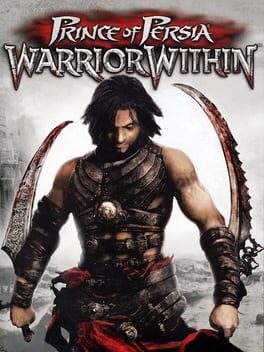
Prince of Persia: Warrior Within introduced a dark, aggressive hack-and-slash combat system with timing-based counters and dual-wielded combos that laid groundwork for Stellar Blade's style. The ruined environments and acrobatic evasion loop feel like a direct antecedent.
Key difference: 2000s era visuals and platformer-puzzle emphasis date the experience.
Best for: Players curious about the lineage of games that inspired Stellar Blade.
Skip if: You need modern production values and responsive controls.
Batman: Arkham Asylum launched the counter-timing melee template that influenced Stellar Blade's combat design, with detective-mode exploration of a contained environment and a drip-feed narrative of NPC survivor radio calls mirroring Xion side quests.
Key difference: Smaller, more linear environment; counter window is very generous.
Best for: Players new to timing-based melee who want a gentler entry point.
Skip if: You want a large open world or precise parry challenge.
Hades wraps hack-and-slash combat — with special-attack gauges, dodge-timing, and skill unlocks — inside a tight narrative with NPC relationship-building that parallels Stellar Blade's Xion survivor cast. The stylish art direction and satisfying combo flow share DNA.
Key difference: Roguelite structure with permadeath runs replaces linear world exploration.
Best for: Players who love Stellar Blade's combat feel and NPC banter but want endless replayability.
Skip if: You dislike losing progress on death or want a fixed narrative world.
Superhero setting; counter timing is simpler and less punishing than Stellar Blade.
PlayStation, PC, Xbox, Nintendo
What makes a game feel like Stellar Blade?
Three pillars define Stellar Blade's feel: a parry/evasion timing system where success depends on reading enemy telegraphs rather than grinding stats, a sci-fi post-apocalyptic world built around a ruined Earth and a small pocket of surviving humanity, and a cinematic action-RPG structure with a hub town, NPC side quests, and skill unlocks that gradually expand Eve's toolkit. Games that nail all three — like NieR: Automata and Code Vein — are the truest substitutes. Games that nail just the parry loop — like Sekiro: Shadows Die Twice and Wo Long: Fallen Dynasty — satisfy the combat itch most intensely.
The aesthetic matters too: Stellar Blade's anime-inflected character design, its brooding orchestral-electronic soundtrack, and its over-the-top but earnest tone are as important to its identity as any mechanic. Metal Gear Rising: Revengeance and Bayonetta deliver that same stylish seriousness-meets-spectacle energy in ways most action games don't.
Best picks if you loved the boss fights specifically
Stellar Blade's boss encounters — read the attack pattern, wait for the parry window, unleash a punish — are its highest moments. Sekiro: Shadows Die Twice is the gold standard for this exact loop, with every boss designed as a pure parry rhythm puzzle. Shadow of the Colossus distills the entire game to 16 boss encounters that demand the same patient pattern-reading Stellar Blade rewards, wrapped in one of gaming's most atmospheric worlds. For players who want that climactic boss tension inside a longer RPG, Bloodborne delivers punishing, memorable boss fights gated behind the same kind of aggressive timing-based dodge mastery.
Hidden gems worth trying alongside the obvious picks
Code Vein is the most overlooked recommendation on this list: it is an anime-styled Souls-like set in a post-apocalyptic city overrun by monsters, with a hub full of NPC survivors, skill-gauge special attacks, and a lead character with a striking visual design — almost every pillar of Stellar Blade's appeal reproduced in a different package. It was dismissed at launch for being derivative, but for Stellar Blade fans it is precisely the right kind of derivative. Similarly, Wo Long: Fallen Dynasty (from the Nioh team) rebuilds its entire defense system around a deflect parry that functionally mimics Stellar Blade's timing windows and is frequently overlooked in favor of Elden Ring despite being the sharper parry-feel game.
Yes — NieR: Automata is the closest game to Stellar Blade in existence. Both feature an android female protagonist fighting machine creatures on a reclaimed post-apocalyptic Earth, hack-and-slash combat with skill gauges and evasion mechanics, an anime aesthetic, multiple endings, and a small survivor hub with NPC side quests. Stellar Blade's director explicitly cited NieR as a primary inspiration.
Is Stellar Blade like a Souls game?
Partially. Stellar Blade borrows Souls DNA — especially from Sekiro — in the form of timing-based parrying as its core defensive skill, stamina-like resource management for special attacks, and punishing but fair boss encounters that reward pattern recognition. However, it is less punishing than Souls games overall, features more traditional quest markers and narrative structure, and leans much more into stylish action than methodical RPG progression.
What game has the most similar combat to Stellar Blade?
Sekiro: Shadows Die Twice has the closest combat feel in terms of parry timing being the central skill. Bayonetta and Devil May Cry 5 match Stellar Blade's stylish combo flow and skill-gauge specials. Code Vein blends both influences in a post-apocalyptic anime package closest to Stellar Blade's total feel.
Are there games like Stellar Blade on PC?
Yes. NieR: Automata, Sekiro: Shadows Die Twice, Metal Gear Rising: Revengeance, Bloodborne (via unofficial patch), Wo Long: Fallen Dynasty, Lies of P, Code Vein, and Devil May Cry 5 are all available on PC and represent the closest alternatives to Stellar Blade's combat and aesthetic.
Is God of War similar to Stellar Blade?
In structure, yes. Both are third-person action games with melee-focused combat, a skill-unlock tree, cinematic storytelling, and a journey through a ruined world with NPC side quests. God of War (2018) also rewards timed parries (the shield block/counter system). The main differences are God of War's Norse fantasy setting, slower heavier combat pacing, and the companion character mechanic — Stellar Blade is faster and more anime-styled.
 97%
97%