The Legend of Zelda's genius lies in three interlocking ideas: a continuous world you freely roam from the very start, dungeons that gate progress behind items found within them, and permanent power-ups that change what you can do forever. That combination — exploration rewarded, combat skill tested, world gradually unlocked — defined the action-adventure genre.
When players search for "games like Zelda," they are really looking for that same loop: a world dense with secrets, dungeons with internal logic and a key item to earn, and the slow accumulation of permanent abilities that recontextualize earlier areas. Atmosphere and fantasy setting matter too, but the exploration-dungeon-upgrade rhythm is what the itch is really about.
Top pick:The Legend of Zelda: A Link to the Past is the single closest match — it keeps the top-down perspective, the eight-dungeon structure, the overworld secrets, and the permanent item progression of the 1986 original while refining every system to its sharpest possible form on SNES hardware, making it the most faithful evolution of exactly what made the first game great.
Some store buttons are affiliate links — we may earn a commission at no extra cost to you.
22 games like The Legend of Zelda
97%
The Legend of Zelda: A Link to the Past 1991
A Link to the Past is the direct spiritual successor to the original, keeping the top-down perspective, overworld exploration, and eight-dungeon structure while adding a Light/Dark World mechanic that doubles the map. It refines every system the 1986 game introduced.
Key difference: Larger, more polished SNES production with a parallel dark world.
Best for: Anyone who wants the original formula perfected.
Skip if: You've already played all 2D Zelda entries.
Breath of the Wild transplants Zelda's open-world exploration and shrine-dungeon structure into a fully 3D open world where physics and emergent problem-solving replace linear item gating. The sense of discovery and permanent upgrade loop trace directly back to 1986.
Key difference: Fully 3D, physics-driven, and nearly limitless in approach.
Best for: Players who want modern scale with the same explorer spirit.
Skip if: You prefer tight, pre-authored dungeon sequences.
Ocarina of Time translates the original's overworld-plus-dungeon template into 3D, keeping the same rhythm of exploration, item acquisition, puzzle solving, and boss fights. Z-targeting combat is a direct evolution of the NES sword mechanics.
Key difference: 3D perspective with cinematic storytelling and z-targeting.
Best for: Players ready to move from 2D to 3D Zelda.
Skip if: You dislike early 3D camera and N64 visuals.
The Minish Cap is one of the most concentrated expressions of the original's formula: top-down GBA adventure, eight compact dungeons, a steadily expanding item set, and an overworld full of hidden secrets unlocked by shrinking to miniature scale.
Key difference: Size-shifting mechanic opens hidden micro-paths in familiar areas.
Best for: Fans of the NES original wanting a handheld-length Zelda.
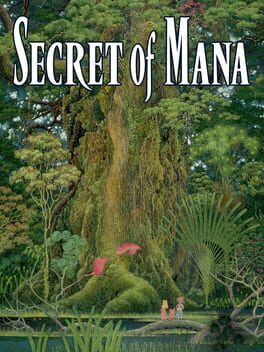
Secret of Mana is a top-down real-time action RPG with ring-menu item management, interconnected world exploration, and boss-gated orb upgrades — it is the most direct SNES-era evolution of the original Zelda's action-RPG formula.
Key difference: Co-op multiplayer support and stamina-charge weapon system.
Best for: Players who want original Zelda's feel with co-op and JRPG depth.
Majora's Mask reuses Ocarina's engine and dungeon design but wraps it in a three-day time-loop that forces different exploration priorities. Permanent mask upgrades mirror the original's power-up philosophy.
Key difference: Three-day time loop creates urgency and structural pressure.
Best for: Players who want a darker, more experimental Zelda.
Skip if: Time pressure and juggling side-quests frustrate you.
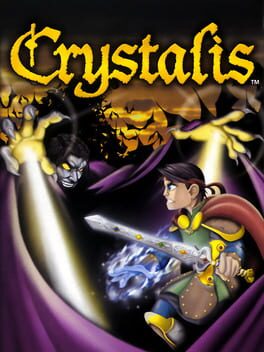
Crystalis is a 1990 NES action-RPG nearly identical in feel to the original Zelda: top-down sword combat, an open world, elemental sword upgrades, and dungeons guarded by bosses. It is the closest NES-era Zelda alternative.
Key difference: Post-apocalyptic sci-fi setting layered over fantasy mechanics.
Best for: Fans of the NES original wanting a direct contemporary parallel.
Skip if: You need a recognized franchise pedigree.
Nintendo
86%💎 Gem
Terranigma 1995
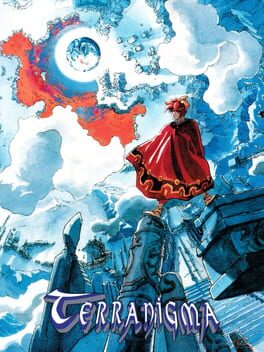
Terranigma is a SNES action-RPG with a top-down overworld, dungeon-style towers, and a combat feel almost identical to early Zelda entries. It adds a world-building narrative where your actions literally resurrect continents and civilizations.
Key difference: RPG progression stats and a world-resurrection meta-narrative.
Best for: SNES-era players who want Zelda with more story weight.
Skip if: You dislike grinding or JRPG stat systems.
Nintendo
85%
Hyper Light Drifter 2016
Hyper Light Drifter is a top-down action-adventure with wordless exploration, secret-laden overworld sectors acting as dungeons, and permanent currency upgrades — its visual language and structure are a direct homage to A Link to the Past.
Key difference: No dialogue, brutally fast combat, and a melancholic sci-fi tone.
Best for: Players who want Zelda's exploration with stylish, punishing combat.
Skip if: You want narrative context or gentler difficulty.
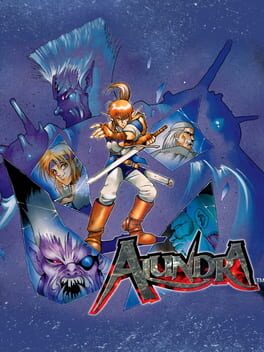
Alundra is a top-down puzzle-dungeon action-RPG on PlayStation that is explicitly modelled on A Link to the Past: overworld exploration, complex multi-room dungeons, and an item-acquisition loop with difficult environmental puzzles.
Key difference: Harder puzzle dungeons and a darker, grief-themed narrative.
Best for: Players who want A Link to the Past's hardest puzzles pushed further.
Skip if: You don't want frustrating difficulty in dungeon puzzles.
PlayStation
83%💎 Gem
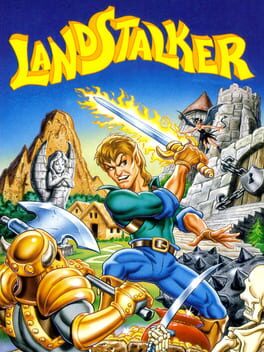
Landstalker 1992
Landstalker is an isometric action-adventure on the Mega Drive with exploration-driven dungeons, chest-hunting, puzzle rooms, and a heroic fantasy world — structurally it mirrors Zelda's loop of overworld travel, dungeon entry, key item, boss.
Key difference: Isometric 3D perspective with platforming elements and comedy tone.
Best for: Sega fans who never got a Zelda on their platform.
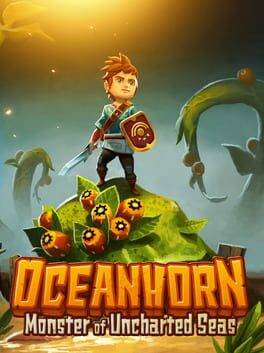
Oceanhorn is a top-down action-adventure designed explicitly as a Zelda tribute: island exploration, dungeon-by-dungeon item acquisition, and a sea-travel overworld. It is the most transparent Zelda-alike on modern platforms.
Key difference: Island-to-island seafaring structure rather than a single contiguous world.
Best for: Mobile or PC players who want a direct Zelda surrogate.
Skip if: You want depth beyond the formula; it rarely innovates.
Hollow Knight is a Metroidvania built around the same pillars as Zelda: an interconnected world full of secrets, power-ups that permanently expand movement and combat, and challenging boss fights guarding progression. Its map-discovery loop is deeply satisfying.
Key difference: 2D side-scrolling perspective and oppressively difficult combat.
Best for: Players who want Zelda's exploration intensity tuned way up.
Skip if: You dislike difficult games or losing progress on death.
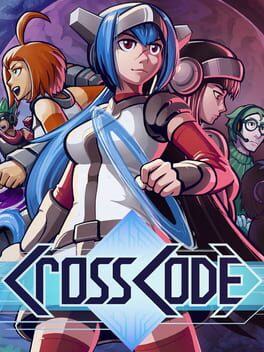
CrossCode is a top-down action RPG with dense puzzle dungeons, a large explorable world, and item-locked progression — it captures the feeling of solving a Zelda dungeon better than almost any non-Nintendo game, wrapped in an MMO framing story.
Key difference: Element-switching puzzle system and MMO-within-a-game narrative framing.
Best for: Players who love Zelda's dungeon puzzles and want them doubled in complexity.
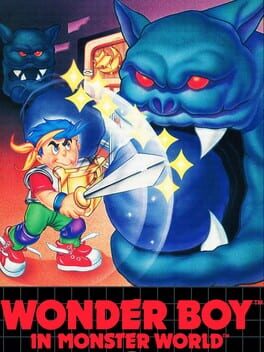
Wonder Boy in Monster World is an action-RPG that mixes side-scrolling adventure with town-hub exploration, permanent equipment upgrades, and boss-gated progress — the same item-gating loop Zelda pioneered, just on a 2D plane.
Key difference: Side-scrolling with RPG shop economy instead of top-down.
Best for: Players wanting a lighter, shorter Zelda-style quest.
Skip if: You need a top-down perspective to feel the Zelda vibe.
Wonder Boy III: The Dragon's Trap chains together monster forms as permanent power-ups — each transforming your movement and combat options — which is the closest any 8-bit game gets to Zelda's item-acquisition rhythm.
Key difference: Platforming focus; each form is a new character with unique skills.
Best for: Retro fans who want an 8-bit Zelda-adjacent hidden gem.
Skip if: You want a top-down overworld rather than sidescroller.
Nintendo
75%💎 Gem
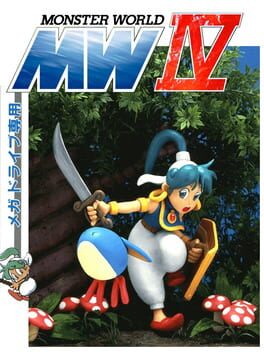
Monster World IV 1994
Monster World IV is the series' most polished entry: a side-scrolling action-adventure with a young heroine, interconnected world, and gear-based progression that rewards backtracking — essentially a 2D Zelda on Sega hardware.
Key difference: All-female cast; shorter and more linear than a Zelda game.
Best for: Retro action-adventure fans who missed this Sega gem.
Skip if: You need a large overworld to feel explored.
PlayStationNintendo
72%
Metroid 1987
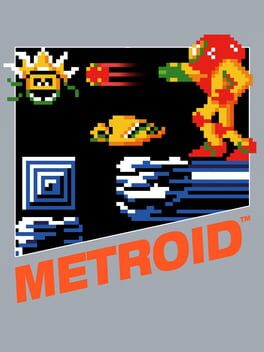
Metroid shares Zelda's 1986 DNA — a continuous world, hidden power-ups that permanently expand abilities, and no hand-holding. The game's nonlinear structure and item-gated exploration defined the other half of what became the Metroidvania genre.
Key difference: Sci-fi atmosphere, side-scrolling, and a sole focus on atmosphere over puzzle dungeons.
Best for: Players who want Zelda's exploration feel in a sci-fi skin.
Skip if: You dislike getting lost without a map in the original NES style.
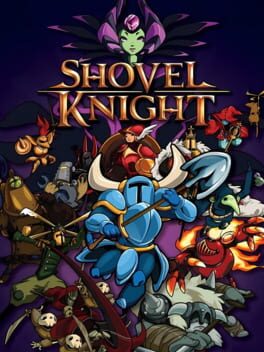
Shovel Knight is a love letter to NES action-adventure that captures the item-unlocking progression and stage-by-stage boss structure of early Zelda and Mega Man. Relics (items) permanently alter traversal and combat just like Zelda's inventory.
Key difference: Linear stage select structure, not an open overworld.
Best for: Players who want tight NES-era design with modern polish.
Skip if: You need free overworld roaming, not a stage-select map.
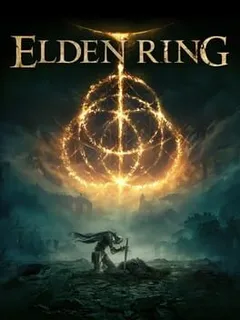
Elden Ring is the closest modern game to Zelda's original promise of a vast, hostile open world that rewards curiosity — hidden caves, optional bosses, permanent upgrades hidden in obscure corners. Its dungeon design echoes Zelda's item-gating philosophy.
Key difference: Punishing Soulslike difficulty and stamina-based combat.
Best for: Players who want the exploration and discovery cranked to extremes.
Skip if: You don't want steep difficulty alongside exploration.
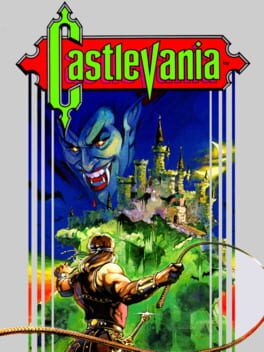
Castlevania launched the same year as Zelda and shares its NES-era DNA: a gothic adventure with stage-by-stage dungeon progression, sub-weapons as a limited inventory, and boss fights at each chapter's end.
Key difference: Linear stage progression with no open overworld exploration.
Best for: Retro fans interested in Zelda's NES-era action-adventure sibling.
Skip if: You want freedom to roam and explore at will.
Dark Souls' interconnected world design — where shortcuts loop back to the hub and exploration reveals hidden paths — inherits directly from Zelda's philosophy of a continuous, secret-laden world. Permanent upgrade items reward thoroughness.
Key difference: Third-person 3D, brutally difficult, no puzzles in dungeons.
Best for: Players who want Zelda's world-design density in a hardcore action RPG.
Skip if: You want accessible difficulty or classic puzzle-solving.
Larger, more polished SNES production with a parallel dark world.
Nintendo
The Legend of Zelda: Breath of the Wild
95%
Adventure, Action
Fully 3D, physics-driven, and nearly limitless in approach.
Nintendo
The Legend of Zelda: Ocarina of Time
93%
Adventure, Action
3D perspective with cinematic storytelling and z-targeting.
Nintendo
The Legend of Zelda: The Minish Cap
91%
Adventure, Action
Size-shifting mechanic opens hidden micro-paths in familiar areas.
Nintendo
Secret of Mana
90%
Adventure, Action
Co-op multiplayer support and stamina-charge weapon system.
PlayStation, PC
The Legend of Zelda: Majora's Mask
88%
Adventure, Action
Three-day time loop creates urgency and structural pressure.
Nintendo
Crystalis
88%
Adventure, Action
Post-apocalyptic sci-fi setting layered over fantasy mechanics.
Nintendo
Terranigma
86%
Adventure, Action
RPG progression stats and a world-resurrection meta-narrative.
Nintendo
Hyper Light Drifter
85%
Adventure, Action
No dialogue, brutally fast combat, and a melancholic sci-fi tone.
PlayStation, PC, Nintendo, Xbox
Alundra
84%
Adventure, Action
Harder puzzle dungeons and a darker, grief-themed narrative.
PlayStation
Landstalker
83%
Action, Fantasy
Isometric 3D perspective with platforming elements and comedy tone.
PC, Nintendo
Oceanhorn: Monster of Uncharted Seas
82%
Adventure, Action
Island-to-island seafaring structure rather than a single contiguous world.
PlayStation, Mobile, PC, Xbox, Nintendo
Hollow Knight
80%
Adventure, Action
2D side-scrolling perspective and oppressively difficult combat.
Xbox, PlayStation, PC, Nintendo
CrossCode
80%
Adventure, Action
Element-switching puzzle system and MMO-within-a-game narrative framing.
PlayStation, PC, Xbox, Nintendo
Wonder Boy in Monster World
78%
Action, Fantasy
Side-scrolling with RPG shop economy instead of top-down.
PlayStation, PC, Nintendo
What makes a game truly feel like The Legend of Zelda?
Three things must align: a traversable overworld that hides meaningful secrets, dungeons whose rooms build logically toward a key item and a boss, and upgrades that permanently expand what you can reach. Games that share only a fantasy tag or only an action loop miss the point. Hollow Knight and Elden Ring both nail the exploration side — hidden passages, off-path power-ups, a world that withholds as much as it offers — while Terranigma and Landstalker replicate the dungeon-and-overworld rhythm on hardware contemporary with the SNES era.
The Zelda series' own catalogue remains the benchmark: A Link to the Past and The Minish Cap are the purest expressions of the 1986 formula, while Breath of the Wild radically expands the open-world promise the original made. If you want one game from outside Nintendo, Secret of Mana and Crystalis come closest to replicating the complete package.
Best hidden gems for Zelda fans
Most "games like Zelda" lists stop at Hollow Knight and Breath of the Wild, but several lesser-known games are startlingly faithful to the original's feel. Terranigma (SNES, 1995) is a top-down action-RPG that never reached North America and remains unknown to most Western players despite a 90-rated score — its dungeon towers and world-resurrection loop are unlike anything else. Landstalker on the Mega Drive gave Sega owners an isometric action-adventure with chest-hunting, puzzle rooms, and a dungeon-by-dungeon item structure that Nintendo fans will immediately recognize.
From the 8-bit era, Crystalis on NES is the closest thing to a competing Zelda: top-down, open world, elemental sword upgrades, boss-gated dungeons. It remains criminally under-discussed. And on modern platforms, CrossCode deserves far more attention for its puzzle dungeon design — each dungeon is a masterclass in environmental logic that rivals anything in the Zelda series.
If you want the dungeons more than the open world
The original Zelda's dungeons are tightly authored spaces where every room has a purpose. If that puzzle-dungeon satisfaction is what you're after, The Minish Cap delivers eight compact, clever dungeons with minimal fat, and Alundra pushes the puzzle complexity even further with some of the most demanding environmental puzzles in the genre. Hollow Knight takes a different approach — its "dungeons" are biome-wide areas full of sub-bosses and hidden upgrades — but the sense of earned progression and the moment you finally beat a boss after many attempts is closer to Zelda's emotional register than almost any other modern game.
What is the best modern game like The Legend of Zelda?
The Legend of Zelda: Breath of the Wild is the most obvious answer within the series itself. Outside Nintendo, Elden Ring comes closest to the original's promise of an open world dense with hidden secrets and dungeon-style spaces to conquer, while Hollow Knight replicates the item-locked exploration loop in a 2D Metroidvania format with exceptional production quality.
Are there any games like the original top-down Zelda on NES?
Yes — Crystalis (NES, 1990) is the closest contemporary parallel: top-down sword combat, an open world, elemental weapon upgrades, and boss-locked dungeons. Within the Zelda series, A Link to the Past and The Minish Cap preserve the top-down format. The Wonder Boy in Monster World series offers a similar item-gating loop in 2D side-scrolling form.
What games have the same dungeon-exploration feel as Zelda?
A Link to the Past and Ocarina of Time are the gold standard within the series. Outside it, Alundra (PS1) is a top-down action-adventure designed explicitly as a Zelda successor with complex multi-room dungeons. CrossCode (PC/consoles) is a modern hidden gem praised specifically for dungeon puzzle design on par with Nintendo's best.
Is Hollow Knight similar to The Legend of Zelda?
In spirit, yes. Both games feature a large interconnected world, permanent ability upgrades that unlock new areas, secret passages that reward thorough exploration, and challenging boss fights at major milestones. The key differences are perspective (2D side-scrolling vs top-down), tone (oppressively dark vs heroic fantasy), and difficulty (Hollow Knight is significantly harder). If you love Zelda's exploration loop, Hollow Knight is one of the best alternatives available.
What Zelda-like games are available on PC?
Hyper Light Drifter is a top-down action-adventure explicitly inspired by A Link to the Past and is available on PC. CrossCode offers Zelda-quality dungeon puzzle design wrapped in a modern action-RPG. Elden Ring brings open-world exploration with dungeon-gated progression. Hollow Knight is also on PC and captures the item-locked exploration rhythm better than almost any other indie game.
 97%
97%