Subnautica earns its devoted fanbase through a rare combination: a vast, hand-crafted alien ocean that rewards curiosity with genuine wonder and genuine dread in equal measure. Its genius is the layered depth gating — every new vehicle or oxygen upgrade opens a darker, stranger biome, making progression feel like peeling back the unknown rather than grinding numbers. The isolation, the bioluminescent beauty, and the careful environmental storytelling through PDA logs give it an atmosphere few games have matched.
When players ask for "games like Subnautica," they're really after one or more of three feelings: the survival-crafting loop in a hostile alien environment, the awe of exploring a strange, living ecosystem that clearly doesn't care whether you survive, or the slow-burn sci-fi mystery delivered through exploration rather than cutscenes. The best recommendations target whichever of those three hooks grabbed you hardest.
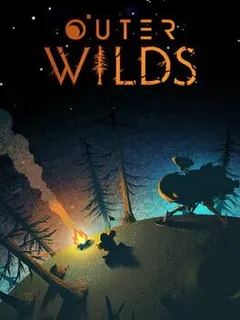
Top pick:Outer Wilds is the single closest match to what makes Subnautica truly special: both games are built entirely around the reward of curiosity, gate progress behind knowledge rather than stats, deliver their story through environmental discovery, and produce the same stomach-dropping mix of beauty and existential dread — even if Outer Wilds swaps ocean depths for outer space.
Some store buttons are affiliate links — we may earn a commission at no extra cost to you.
15 games like Subnautica
97%
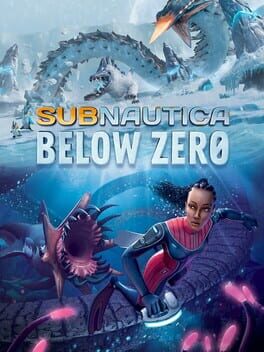
Subnautica: Below Zero 2021
Below Zero is a standalone companion game set on the same alien ocean planet, adding a colder arctic biome, new creatures, deeper story, and new crafting trees while keeping the exact same survival-exploration DNA.
Key difference: Smaller, more story-driven map; less open-ended than the original.
Best for: Anyone who finished Subnautica and wants more of the exact same feel.
Skip if: You bounced off the original's pacing or crafting loop.
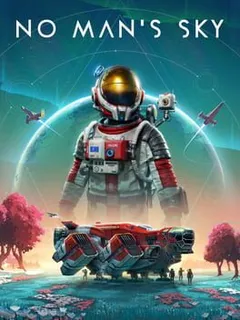
No Man's Sky is the closest large-budget match: first-person sci-fi survival crafting across procedurally generated alien worlds, with underwater biomes, base-building, and a story that unfolds through environmental exploration. The scale and freedom mirror Subnautica closely.
Key difference: Spans entire galaxies and multiple planets; loses the focused underwater tension.
Best for: Players who want Subnautica's loop with vastly more content and co-op.
Skip if: You prefer a hand-crafted, focused alien world over procedural sprawl.
Outer Wilds puts you in a hand-crafted alien solar system that rewards pure curiosity and environmental storytelling, with no combat and a strong emphasis on awe and dread. Like Subnautica, progress is gated entirely by knowledge discovered through exploration rather than levelled stats.
Stranded Deep strands you on a Pacific island with only ocean between you and survival — you craft rafts, dive coral reefs for resources, hunt sharks, and build shelters. The first-person ocean survival loop is the closest single-player match to Subnautica on land.
Key difference: Tropical island survival, not alien sci-fi; much smaller scope.
Best for: Players wanting a grounded, low-tech ocean survival experience.
Skip if: You need sci-fi wonder or elaborate underwater base-building.
Minecraft shares Subnautica's core survival-crafting loop: gather resources, craft tools, build bases, and push into increasingly dangerous biomes. The ocean update even adds underwater temples, deep trenches, and bioluminescent squid.
Key difference: Blocky sandbox with no alien narrative or linear story arc.
Best for: Players who want base-building and crafting as the primary draw.
Skip if: You need a story reason to explore and atmospheric tension.
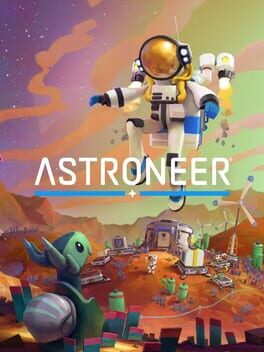
Astroneer replaces the alien ocean with alien planets but keeps the first-person exploration, resource extraction, base-building, and escalating equipment progression in a visually striking sci-fi setting. The sense of wonder at discovering new terrain is near-identical.
Key difference: Above-ground planetary exploration; no underwater tension or creatures.
Best for: Players who loved crafting, base-building, and sci-fi exploration above all else.
Skip if: You specifically want the underwater fear and bioluminescent ocean world.
SOMA is set almost entirely in an underwater sci-fi research facility, sharing Subnautica's themes of isolation, alien biology, and existential dread. It trades crafting for a story-driven horror-puzzle experience with genuinely unsettling atmosphere.
Key difference: Linear narrative horror; no survival mechanics or open exploration.
Best for: Subnautica fans who found the story and lore the most compelling part.
Skip if: You want freedom to roam and gather resources at your own pace.
Raft puts you on a small floating platform surrounded by endless ocean, gathering debris to expand your raft, crafting survival tools, and diving to ocean floors where sharks circle. The oceanic survival loop with incremental crafting progression closely echoes Subnautica.
Key difference: You build upward on a raft; ocean is a hazard to manage, not to inhabit.
Best for: Co-op players who want ocean survival crafting with friends.
Skip if: You want a rich alien story or deep underwater biome exploration.
Abzu is a wordless underwater exploration game with the same sense of alien ocean wonder, vivid bioluminescent coral reefs, and awe-inspiring megafauna encounters. The pace is gentle and meditative rather than tense.
Key difference: No survival, crafting, or danger — purely a guided visual poem.
Best for: Players who love Subnautica's peaceful moments and sea creature spectacle.
Skip if: You need tension, resource management, or mechanical depth.
Dave the Diver alternates between daytime free-diving sessions to hunt and discover sea creatures and nighttime sushi-restaurant management. The underwater world grows stranger and more exotic as you descend, echoing Subnautica's sense of layered ocean mystery.
Key difference: Splits into a restaurant management sim; much lighter survival threat.
Best for: Players wanting a chill underwater exploration loop with progression hooks.
Skip if: You want open-world freedom, base-building, or sustained tension.
Don't Starve drops you in a hostile alien-feeling wilderness and demands you craft, forage, and build shelter to survive ever-escalating threats — the same core anxiety loop as Subnautica on land. Its stark art style and unforgiving ecology create a similar sense of a world indifferent to your survival.
Key difference: Top-down roguelike-ish land survival; permadeath by default, no narrative arc.
Best for: Players craving the crafting-and-base-building loop in a different skin.
Skip if: You hate permadeath or want a first-person underwater atmosphere.
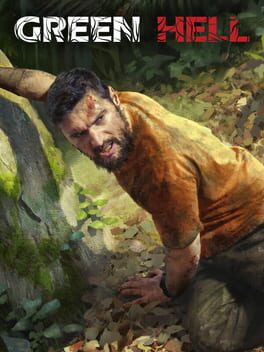
Green Hell is a hyper-realistic first-person jungle survival game with deep crafting, base-building, and an environmental story told through audio logs — structurally similar to Subnautica but far more punishing and land-locked.
Key difference: Dense jungle setting; survival is grounded and brutally realistic.
Best for: Players who loved Subnautica's survival tension and want a harder challenge.
Skip if: You want sci-fi aesthetics or underwater exploration.
BioShock shares the underwater sci-fi setting — Rapture is a crumbling art-deco city on the ocean floor — and the same sense of eerie beauty hiding mortal danger. The atmospheric environmental storytelling and isolation echo Subnautica's mood.
Key difference: Linear shooter with combat focus, not a survival/crafting open world.
Best for: Players who want an underwater sci-fi world with a gripping narrative.
Skip if: You want open exploration, resource gathering, or non-combat gameplay.
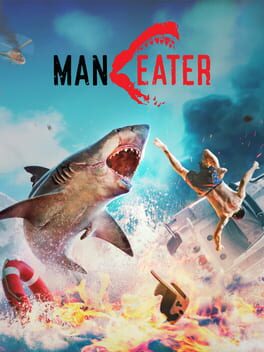
Maneater is an underwater open-world RPG where you navigate an ocean ecosystem, avoid apex predators, and unlock new zones by growing stronger — structurally mirroring Subnautica's layered depth gating. The oceanic environments range from sunlit shallows to crushing dark trenches.
Key difference: You are the apex predator; gameplay is combat-forward, not survival/crafting.
Best for: Subnautica fans curious about a shark-eye-view of the ocean food chain.
Skip if: You want crafting, base-building, or a contemplative exploration pace.
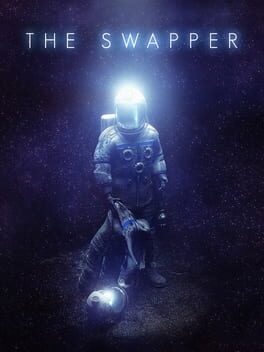
The Swapper takes place on an abandoned space-station with a strong atmosphere of eerie isolation and a slow-burn sci-fi mystery delivered through environmental logs — tonal cousins to Subnautica's PDA entries. Its puzzle-exploration loop rewards patience and curiosity.
Key difference: 2D puzzle-platformer in space; no survival mechanics or open ocean.
Best for: Players who loved Subnautica's lore, logs, and sense of cosmic dread.
Skip if: You need open-world freedom or survival/crafting progression.
Tropical island survival, not alien sci-fi; much smaller scope.
PlayStation, PC, Xbox, Nintendo
Minecraft: Java Edition
80%
Adventure, Survival
Blocky sandbox with no alien narrative or linear story arc.
PC
Astroneer
80%
Adventure, Indie
Above-ground planetary exploration; no underwater tension or creatures.
PlayStation, PC, Xbox, Nintendo
Soma
78%
Adventure, Indie
Linear narrative horror; no survival mechanics or open exploration.
PlayStation, PC, Xbox, Nintendo
Raft
75%
Adventure, Indie
You build upward on a raft; ocean is a hazard to manage, not to inhabit.
Xbox, PC, PlayStation
Abzu
72%
Adventure, Indie
No survival, crafting, or danger — purely a guided visual poem.
PlayStation, PC, Xbox, Nintendo
Dave the Diver
65%
Adventure
Splits into a restaurant management sim; much lighter survival threat.
Xbox, PlayStation, Nintendo, PC
Don't Starve
62%
Adventure, Indie
Top-down roguelike-ish land survival; permadeath by default, no narrative arc.
PlayStation, PC, Xbox, Nintendo
Green Hell
62%
Adventure, Indie
Dense jungle setting; survival is grounded and brutally realistic.
Xbox, PlayStation, PC, Nintendo
BioShock
58%
Adventure, Science fiction
Linear shooter with combat focus, not a survival/crafting open world.
PC, Xbox
Maneater
50%
Adventure, Indie
You are the apex predator; gameplay is combat-forward, not survival/crafting.
Xbox, PlayStation, PC, Nintendo
The Swapper
45%
Adventure, Indie
2D puzzle-platformer in space; no survival mechanics or open ocean.
PlayStation, PC, Nintendo, Xbox
What actually makes a game feel like Subnautica?
The key ingredients are exploration as the primary loop, a world that withholds its secrets behind physical or mechanical depth, and an atmosphere that makes you feel small and alone in something vast and alive. Most open-world survival games check the survival and crafting boxes but lose the wonder — which is why Outer Wilds and SOMA land so high despite having no crafting at all. They nail the feeling of being an undersized creature in an uncaring alien ecosystem, communicating story purely through the environment.
On the crafting-survival side, Minecraft and the off-list No Man's Sky are the closest mechanical fits — both share the resource-gather → tool-craft → new area unlocked loop. But Subnautica's narrow first-person focus on a single, hand-built world gives it a coherence and tension that procedural generation rarely replicates. If that crafted quality matters most to you, Stranded Deep or Subnautica: Below Zero are the honest next steps.
Best picks if the underwater setting is non-negotiable
SOMA is the strongest pick for players who need deep ocean specifically — its Pathos-II facility sits on a real ocean floor, flooded corridors and all, and the monster-avoidance gameplay translates Subnautica's fear of large creatures into something genuinely terrifying. Abzu goes the opposite direction, offering a wordless, peaceful celebration of the same bioluminescent ocean majesty without a single survival threat — ideal after a stressful playthrough of the Crater. Dave the Diver is a left-field gem that captures the pleasure of descending into stranger, deeper water each day while wrapping it in a charming restaurant-management loop.
For players who want the ocean as a sandbox to inhabit rather than just visit, Maneater flips the predator dynamic (you are the apex creature this time) and structures its open underwater world in zone-gated tiers that feel recognizably Subnautica-adjacent, even if the tone is far more action-oriented.
If you want the sci-fi mystery and isolation without ocean survival
Outer Wilds is the unanimous recommendation here — its mystery unfolds entirely through player-driven exploration, rewards patience and note-taking in exactly the way Subnautica's PDA does, and produces the same sense of standing on the edge of something ancient and indifferent. The absence of crafting or inventory management means nothing is between you and pure discovery. Off-list, Astroneer offers the closest equivalent with crafting restored: a first-person sci-fi exploration game on alien worlds that shares Subnautica's visual wonder and base-building loop, just without the water.
Is there a game exactly like Subnautica but on land?
The closest land-based equivalent is No Man's Sky, which shares first-person sci-fi survival crafting, base-building, and escalating equipment unlocking new areas across alien worlds. For a more grounded take, Green Hell replicates the isolation, crafting depth, and audio-log storytelling in a jungle setting.
What game has the same sense of wonder and dread as Subnautica?
Outer Wilds is the most-recommended alternative for that specific feeling — the awe at an alien world combined with genuine stomach-dropping fear. SOMA recreates the dread specifically in an underwater sci-fi context, while Abzu captures the wonder without the threat.
Are there games like Subnautica with base-building and multiplayer?
No Man's Sky is the best option: it supports up to four players, features extensive base-building, and shares the crafting progression loop. Raft is a more focused co-op ocean survival experience with satisfying raft-expansion mechanics.
Is BioShock similar to Subnautica?
Superficially yes — both are set in underwater sci-fi environments and deliver lore through environmental exploration. But BioShock is a linear shooter with no survival mechanics or open exploration; it scratches the atmospheric underwater sci-fi itch but not the crafting-survival or open-world exploration urge.
What should I play after finishing Subnautica?
Start with Subnautica: Below Zero for more of the exact same experience in a new arctic biome. After that, Outer Wilds for the wonder-and-mystery angle, No Man's Sky for the survival-crafting continuation, and SOMA if you want the underwater horror atmosphere pushed much further.
 97%
97%