Factorio's hold on players comes from a specific and almost addictive loop: you start helpless on an alien world and painstakingly transform raw stone and ore into a roaring automated megafactory, connecting every step with belts, inserters, and pipes until production runs without you lifting a finger. The combination of deep systems design, incremental tech-tree unlocking, and constant pressure from the planet's hostile wildlife keeps the 'just one more upgrade' feeling alive for hundreds of hours.
When someone asks for games like Factorio they usually want one or more of these things: the satisfaction of designing interlocking production chains, the optimization itch of eliminating bottlenecks, the slow-burn automation payoff, or the base-defense tension of protecting something you built yourself. The best alternatives deliver at least two of those pillars.
Top pick:Satisfactory is the single closest pick — it is Factorio's resource-chain, belt-laying, tech-tree loop rebuilt in a gorgeous 3D alien world by a studio that clearly studied Factorio obsessively, making it the first recommendation for any Factorio fan.
Some store buttons are affiliate links — we may earn a commission at no extra cost to you.
Satisfactory is Factorio rebuilt in 3D: mine ore veins, build conveyor lines, assemble machines into production chains, and eventually cover an alien planet in automated infrastructure. It is the single closest experience to Factorio in existence.
Key difference: Full 3D first-person perspective instead of top-down.
Best for: Factorio fans who want the same loop in an immersive 3D world.
Skip if: You dislike first-person navigation of large factory floors.
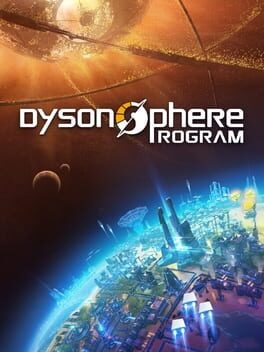
Dyson Sphere Program escalates Factorio's factory-building across an entire star system, tasking you with automating resource extraction on multiple planets to ultimately build a Dyson sphere around a sun. The tech tree and belt-logistics feel is nearly identical.
Key difference: Interstellar scale; stunning visuals but fewer combat threats.
Best for: Players who want Factorio's automation scaled to a galaxy.
Skip if: You want constant enemy pressure and base defense tension.
RimWorld puts you in charge of a struggling colony on an alien world, demanding interlocking resource chains, power grids, and production logistics while waves of raiders test your defenses — the same core loop as Factorio but from an overhead colony-sim perspective. The storyteller AI constantly disrupts your carefully optimized systems in ways Factorio's biters only hint at.
Key difference: Focus is on colonists' individual needs, moods, and relationships.
Best for: Fans who want automation plus compelling narrative emergences.
Skip if: You dislike managing individual character stats.
Oxygen Not Included tasks you with keeping duplicant colonists alive inside an asteroid by designing interlocking systems for oxygen, water, food, heat, and power — a Factorio-style engineering puzzle where every pipe and wire placement matters enormously.
Key difference: Colony survival sim; no enemies, focus on thermodynamics.
Best for: Players who love Factorio's complex systems but want biological survival.
Skip if: You dislike micromanaging individual colonist needs.
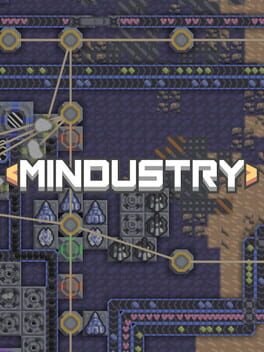
Mindustry blends Factorio-style conveyor-belt factory building directly with tower defense: you build ore-processing chains to feed turrets and walls that defend against waves of enemies. It is arguably the purest hybrid of Factorio's two pillars.
Key difference: More arcade tower-defense pacing; simpler automation depth.
Best for: Players who love Factorio's combat-factory balance most of all.
Skip if: You want deep logistics complexity over tower-defense action.
Terraria shares Factorio's progressive crafting chains — you mine raw ore, smelt it, craft components, and unlock increasingly exotic tiers of tech — while also building a fortified base to hold off nightly invasions. The side-scrolling action layer adds a skill dimension absent in Factorio.
Key difference: Side-scrolling action combat; much less automation depth.
Best for: Players who want the crafting ladder with more direct action.
Skip if: You dislike manual combat and platforming.
Anno 1800 is the fully realized production-chain simulator: dozens of goods must pass through carefully placed buildings, connected by trade routes across islands and continents, satisfying layered population tiers with increasingly complex supply lines.
Key difference: Historical industrial setting; slower pace, no enemy raids.
Best for: Players obsessed with Factorio's supply-chain design above all.
Skip if: You want combat pressure and a sci-fi tech progression.
Cities: Skylines is pure infrastructure design — zoning, traffic routing, utilities, budgets — hitting the same itch as laying Factorio belts and managing throughput bottlenecks. The satisfaction of watching a well-designed network hum without friction is identical.
Key difference: No enemies, no survival; purely peaceful city logistics.
Best for: Factorio players who love optimizing flow but hate combat.
Skip if: You need resource-gathering loops and a tech tree.
Shapez is a pure factory-automation puzzle: extract geometric shapes, route them through cutter, painter, and stacker machines, and deliver combined shapes to fulfill orders — no enemies, no survival, just the optimization loop of Factorio distilled to its essence.
Key difference: Purely abstract puzzle; no exploration, enemies, or narrative.
Best for: Players who want Factorio's belt-optimization with zero friction.
Skip if: You need exploration, tech trees, and survival stakes.
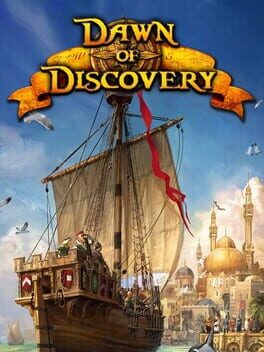
Dawn of Discovery (Anno 1404) is built entirely around production chains: you plant crops, mill flour, bake bread, and chain dozens of goods to satisfy growing populations, with maritime logistics connecting islands. The chain-building satisfaction maps almost directly onto Factorio's manufacturing lines.
Key difference: Slow, elegant historical pace; no enemies threatening factories.
Best for: Players who love Factorio's supply-chain puzzle above all else.
Skip if: You require real-time base defense and combat pressure.
Minecraft's survival mode is the ur-ancestor of Factorio's resource-to-product pipeline: punch trees, smelt ore, craft components, build machines and eventually automate with redstone contraptions. The open-ended sandbox gives enormous creative latitude but far less structured optimization pressure.
Key difference: No automation imperative; creativity over efficiency.
Best for: Players who want a gentler, more exploratory factory experience.
Skip if: You need a goal-driven tech tree and measurable throughput.
Prison Architect tasks you with designing a working facility where resource flows, staff routing, prisoner needs, and security systems must all interconnect — the same systems-design headspace as Factorio. Watching a well-organized prison run itself scratches an identical optimization itch.
Key difference: Human behavior replaces machines; no tech tree or combat.
Best for: Players who love Factorio's layout puzzles over the combat.
Skip if: You want sci-fi tech progression and enemy waves.
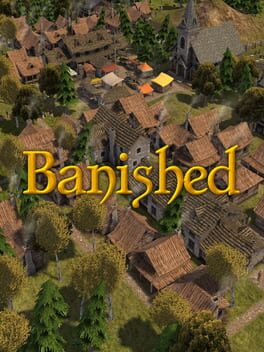
Banished is a stripped-down settlement sim where every resource chain — wood to firewood, grain to flour to bread — must be deliberately designed and balanced, mirroring the early-game logistical thinking in Factorio. Starvation and harsh winters replace biters as existential threats.
Key difference: No automation, no tech tree; purely manual chain optimization.
Best for: Players who want pure resource-chain management without combat.
Skip if: You expect technology progression or enemy raids.
Don't Starve demands you gather, process, and stockpile resources across seasons while crafting increasingly advanced structures from a tiered recipe tree — a survival take on Factorio's early progression. The gothic art and brutal permadeath give it a very different emotional texture.
Key difference: Permadeath roguelike; no base automation or enemies at scale.
Best for: Players who want Factorio's survival tension in a roguelike.
Skip if: You dislike permadeath and want large-scale automation.
Stardew Valley's farm management loop — planting, processing crops into artisan goods, optimizing field layouts, unlocking machines that automate output — echoes Factorio's incremental automation satisfaction at a much gentler pace. The community and RPG layer adds warmth Factorio lacks.
Key difference: Cozy, relationship-driven; automation is optional and shallow.
Best for: Players who want a relaxed, story-layered factory loop.
Skip if: You want high-complexity optimization and enemy threats.
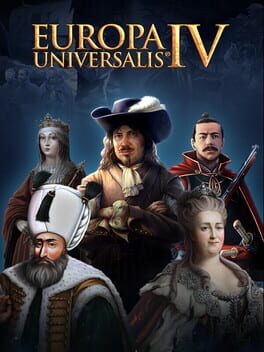
Europa Universalis IV is a grand strategy game where managing trade routes, production nodes, and technology research across centuries scratches the same long-horizon optimization brain as Factorio's late-game megabase planning. The complexity ceiling is comparable.
Key difference: Political/historical map game; no physical factory-building.
Best for: Factorio veterans who want strategy depth without action.
Skip if: You want hands-on building and real-time systems.
Civilization V shares Factorio's satisfying technology research ladder and the pressure of optimizing output (production, science, gold) across expanding infrastructure, though the base-building is abstracted. The 'one more turn' compulsion is identical.
Key difference: Turn-based, abstract; no physical belt-laying or automation.
Best for: Factorio fans who want strategic expansion with a tech tree.
Skip if: You want real-time automation and base-building.
FTL: Faster Than Light asks you to manage the interconnected systems of a spaceship — power allocation, crew routing, oxygen, shields — under constant real-time pressure, mirroring Factorio's feel of keeping a complex machine alive. It's a micro-scale factory under attack.
Key difference: Roguelike, tiny scope; no base-building or resource chains.
Best for: Players who love Factorio's 'fix the failing system' tension.
Skip if: You want macro-scale factory design and long sessions.
StarCraft II shares the base-building and resource-harvesting loop that influenced Factorio's early design — expand your mineral income, construct production structures, research upgrades, and defend against enemy attacks. The pressure of an aggressive opponent sharpens every decision.
Key difference: Competitive real-time strategy; no automation or logistics depth.
Best for: Players who love Factorio's base defense under pressure.
Skip if: You want deep automation rather than micro-intensive combat.
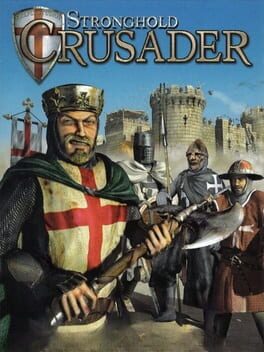
Stronghold Crusader chains resource production buildings — woodcutters to fletchers, farms to granaries to rations — then defends the resulting castle with walls and troops, hitting both the supply-chain and base-defense notes that define Factorio. It's medieval Factorio with a simpler chain depth.
Key difference: Medieval castle defense; no technology research or automation.
Best for: Players who love Factorio's production chains plus siege warfare.
Skip if: You want complex automation and a deep tech tree.
Full 3D first-person perspective instead of top-down.
Xbox, PC, PlayStation
Dyson Sphere Program
92%
Simulator, Strategy
Interstellar scale; stunning visuals but fewer combat threats.
PC
RimWorld
88%
Simulator, Strategy
Focus is on colonists' individual needs, moods, and relationships.
PC
Oxygen Not Included
88%
Simulator, Strategy
Colony survival sim; no enemies, focus on thermodynamics.
PC
Mindustry
85%
Strategy, Indie
More arcade tower-defense pacing; simpler automation depth.
PC, Mobile
Terraria
82%
Simulator, Strategy
Side-scrolling action combat; much less automation depth.
PlayStation, PC, Nintendo, Mobile, Xbox
Anno 1800: Deluxe Pack
80%
Simulator, Strategy
Historical industrial setting; slower pace, no enemy raids.
PC
Cities: Skylines
78%
Simulator, Strategy
No enemies, no survival; purely peaceful city logistics.
PC
Shapez
78%
Simulator, Strategy
Purely abstract puzzle; no exploration, enemies, or narrative.
PC, Mobile
Dawn of Discovery
77%
Simulator, Strategy
Slow, elegant historical pace; no enemies threatening factories.
PC
Minecraft: Java Edition
76%
Simulator, Survival
No automation imperative; creativity over efficiency.
PC
Prison Architect
74%
Simulator, Strategy
Human behavior replaces machines; no tech tree or combat.
PlayStation, PC, Mobile, Xbox, Nintendo
Banished
68%
Simulator, Strategy
No automation, no tech tree; purely manual chain optimization.
PC
Don't Starve
65%
Simulator, Indie
Permadeath roguelike; no base automation or enemies at scale.
PlayStation, PC, Xbox, Nintendo
Stardew Valley
62%
Simulator, Strategy
Cozy, relationship-driven; automation is optional and shallow.
PlayStation, PC, Nintendo, Mobile, Xbox
What makes a game feel like Factorio?
Factorio's DNA has three interlocking strands: a multi-step production chain where raw materials pass through many conversion stages, a technology research tree that continually opens new automation possibilities, and an external threat that forces you to protect what you build. Games that nail all three — like Satisfactory and Dyson Sphere Program — are the closest matches. Games that nail two out of three, like RimWorld (chains + defense but colony-sim perspective) or Cities: Skylines (chains + optimization but no enemies), are still excellent alternatives depending on which strand you love most.
Dawn of Discovery (Anno 1404) is an underrated pick here: its production chains — flax to linen to robes, passing through multiple specialist buildings — map almost one-to-one onto Factorio's assembly lines, and it's consistently overlooked on mainstream
If you love the base-defense side of Factorio
Factorio's biters are genuinely threatening and make every expansion feel earned. If that defensive tension is what keeps you playing, Mindustry is the hidden gem to seek out first — it builds its entire design around feeding conveyor-belt factories directly into turret networks, and wave pressure is constant. RimWorld delivers a slower but narratively richer equivalent, where coordinated raids dismantle systems you spent hours building and the emotional stakes are higher than any Factorio assault.
Terraria also deserves mention: its boss progression gates your access to new materials in a way that structurally mirrors Factorio's military research unlocking better turrets, and defeating each boss opens a new tier of crafting that feels like a major factory upgrade.
If you want the automation depth without the sci-fi survival stress
Cities: Skylines and Prison Architect are the two best picks for players who want to design optimized systems without enemies threatening to tear them down. Cities: Skylines rewards the same traffic-flow thinking as Factorio belt layout — a badly placed intersection is as painful as a belt bottleneck — while Prison Architect challenges you to route staff, goods, and prisoners through a facility with the same logistical care as routing items through a Factorio production floor. Both are excellent palate cleansers between Factorio campaigns.
Satisfactory is the closest equivalent — it is explicitly inspired by Factorio, features the same belt-and-machine production chain loop and tech tree, and runs in a full 3D first-person perspective on a lush alien planet. Dyson Sphere Program is another strong 3D option that scales the concept across an entire star system.
What is a good Factorio alternative for beginners?
Mindustry is free, approachable, and teaches factory-building alongside tower defense in short sessions. Stardew Valley offers a much gentler version of the resource-processing and automation loop with a forgiving, cozy pace. Both are good entry points before tackling Factorio's steeper complexity.
Are there any Factorio-like games with more story or characters?
RimWorld is the best answer here — it wraps a deep colony-management and resource-chain simulation in procedurally generated stories about the colonists themselves, with an AI storyteller that creates memorable emergent drama. Oxygen Not Included similarly gives your duplicant workers individual traits that make the survival challenges feel personal.
What strategy games scratch the same itch as Factorio without the factory-building?
Sid Meier's Civilization V and Europa Universalis IV both share Factorio's long-horizon optimization mindset and technology research trees, translating the 'scale up your output' satisfaction into grand strategy. FTL: Faster Than Light captures the 'keep a complex system alive under pressure' tension in a compact roguelike format.
Does Terraria feel like Factorio?
Partially — Terraria shares Factorio's tiered crafting progression where ore becomes bars become components become advanced gear, and you build a base to defend against nightly enemies. However, Terraria's focus is on action-platformer combat and exploration rather than automation, so it satisfies the 'crafting ladder and base defense' parts of Factorio but not the factory-design or logistics optimization parts.
 97%
97%