No Man's Sky earns its devoted fanbase through a specific alchemy: the genuine shock of cresting a hill on an alien world you've never seen before, paired with a survival loop that keeps each new planet feeling earned rather than handed to you. Its four pillars — explore, survive, build, trade — reinforce one another so that a mining run becomes a base upgrade becomes a new hyperdrive jump to somewhere stranger still.
When players ask for games like No Man's Sky, they're really asking for that feeling of procedural cosmic discovery — the sense that the universe is genuinely bigger than any one session, combined with enough survival or crafting tension to make exploration feel meaningful rather than hollow. Pure open-world action RPGs rarely scratch that itch; the games that do share NMS's resource loops, base building, and that specific sci-fi solitude.
Top pick:Astroneer is the single closest match: it puts you on procedurally generated alien planets, tasks you with mining soil and exotic minerals, connects bases across multiple worlds, and lets friends join your solar system in co-op — all wrapped in a tone of calm wonder that feels like NMS at its most meditative, without a moment of padding.
Some store buttons are affiliate links — we may earn a commission at no extra cost to you.
18 games like No Man's Sky
93%💎 Gem
Astroneer 2019
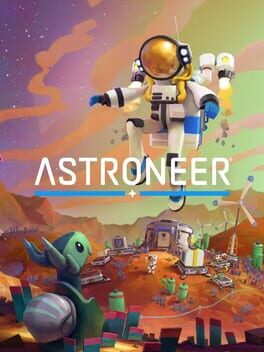
Astroneer drops you on procedurally generated alien planets to mine resources, build bases, and hop between star systems in a shared solar system. Its core loop of terrain deformation, soil extraction, and platform-linking feels like NMS distilled to its purest exploration-and-base-building form.
Key difference: No combat; far smaller, handcrafted solar system rather than a true infinite universe.
Best for: Players who prioritize serene base building and co-op exploration.
Skip if: You need space combat or a grand narrative.
Subnautica strands you on an alien ocean planet, forcing you to dive deeper for resources, craft equipment, and build underwater bases while uncovering an alien plague mystery. Its survival-exploration loop is arguably the closest experience to NMS in tone and structure.
Key difference: Entirely underwater on a single alien planet; no space travel.
Best for: Players craving NMS's alien wonder and survival loop in a tighter package.
Skip if: You have thalassophobia or want open star-system traversal.
Elite: Dangerous is a 1:1 scale Milky Way simulation where you pilot ships between thousands of real star systems, trade commodities, mine asteroids, and dogfight in space. It shares NMS's sense of genuine cosmic scale and the satisfaction of upgrading your ship through earned credits.
Key difference: Steep learning curve; almost no planet-surface survival loop.
Best for: Players who want authentic spaceflight and economy depth.
Skip if: You dislike grinding reputation and steep control schemes.
Starbound places you in a procedurally generated galaxy of unique planets, each with its own biome, alien species, and loot, while you craft gear, build colonies, and follow a quest line to uncover a cosmic mystery. It mirrors NMS's explore-survive-build loop in a 2D side-scrolling format.
Key difference: 2D side-scroller rather than first-person 3D space flight.
Best for: Players who want richer NPC colonies and mod support.
Skip if: You need first-person immersion or seamless space flight.
The Planet Crafter tasks you with terraforming a barren alien world by mining resources and building machinery, watching your planet visibly transform from dead rock to breathable biosphere. The solo survival-to-builder arc mirrors NMS's early-game loop almost beat for beat.
Key difference: Single planet only; terraforming progress replaces inter-system exploration.
Best for: Players obsessed with NMS's base building and planetary transformation.
Skip if: You need space travel, combat, or multiplayer.
Outer Wilds puts you in a handcrafted solar system full of ruins and secrets to decode through pure exploration and curiosity, with no combat or inventory grind. The sense of discovering how an alien civilization worked mirrors NMS's Atlas lore moments at their best.
Key difference: No crafting, survival, or procedural generation — purely mystery-driven.
Best for: Players drawn to NMS's lore and sense of cosmic wonder.
Skip if: You want resource loops, base building, or open-ended sandbox play.
Space Engineers lets you build ships and stations block by block, mine asteroids, and pilot your creations between planets in a physics-simulated sandbox — NMS's engineering fantasy taken to its logical extreme.
Key difference: Engineering complexity is extremely deep; steep learning curve.
Best for: Players who want NMS's ship-and-base building without limits.
Skip if: You want streamlined progression or narrative-driven exploration.
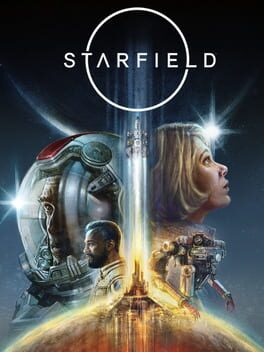
Starfield lets you pilot between star systems, explore planet surfaces for resources, build outposts, and trade across factions — a direct structural parallel to NMS but framed as a story-rich RPG with Bethesda's signature quest density.
Key difference: RPG character builds and deep faction storylines dominate the loop.
Best for: Players who want NMS-style exploration with voiced quests and lore.
Skip if: You dislike loading screens between every landing and orbit.
Spore walks you through procedurally generated creature evolution from cell to space empire, culminating in a galaxy-spanning 4X phase where you trade, colonize, and make first contact with alien species. Its space stage shares NMS's galaxy map traversal and diplomatic tone.
Key difference: Five distinct gameplay phases that shift genre entirely between them.
Best for: Players interested in creature creation and civilisation-building.
Skip if: You want tight survival mechanics or consistent moment-to-moment depth.
Kerbal Space Program tasks you with designing rockets, launching them from a procedurally detailed solar system, and reaching alien moons — the authentic engineering counterpart to NMS's wonder of reaching a new planet for the first time.
Key difference: Hard physics simulation; success requires real orbital mechanics knowledge.
Best for: Players who want the science behind NMS's spaceflight fantasy.
Skip if: You want streamlined traversal or survival and base-building.
Slime Rancher has you exploring colourful alien range-lands, collecting strange creatures, and building a farming operation to sustain your off-world life. Its cheerful discovery loop and alien ecosystem cataloguing echo NMS's exploration without the survival pressure.
Key difference: No space travel; wholesome farming management replaces crafting survival.
Best for: Players wanting NMS's alien-world wonder with a relaxing, stress-free tone.
Skip if: You need space combat, base building complexity, or procedural variety.
FTL: Faster Than Light sends your crew through procedurally generated sector maps, managing ship systems, trading at stations, and making narrative choices under permadeath pressure. It captures NMS's jump-by-jump cosmic journey in a top-down roguelike package.
Key difference: Roguelike permadeath; turn-based ship combat with no planet exploration.
Best for: Players who love NMS's hyperdrive map traversal in a strategy context.
Skip if: You want open-world freedom or first-person planetary exploration.
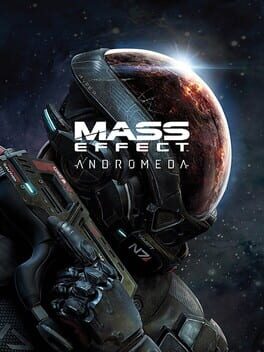
Mass Effect: Andromeda directly chases NMS's promise — scanning alien worlds, driving across uncharted planet surfaces, establishing outposts, and cataloguing flora and fauna while piecing together a civilization mystery. Its planetary exploration loop is the closest in the Mass Effect series.
Key difference: Story-driven RPG with companion relationships and cover-based combat.
Best for: Players wanting NMS exploration with cinematic RPG storytelling.
Skip if: You dislike linear mission structure gating open-world progression.
Minecraft's core loop of punching resources, crafting tools, building shelters, and pushing into increasingly dangerous biomes shares NMS's survival-to-builder progression arc. Both reward curiosity and self-directed goals in a procedurally generated sandbox.
Key difference: Fantasy setting, no space travel, fully block-based construction.
Best for: Players drawn to NMS's base-building and crafting above all else.
Skip if: You need a sci-fi setting or the feeling of visiting distinct planets.
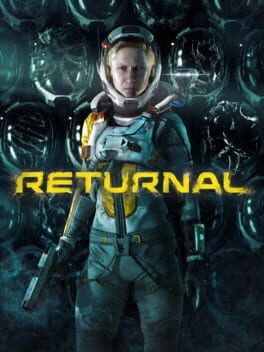
Returnal strands you on a hostile alien planet with shifting biomes, cryptic alien glyphs to decode, and a punishing roguelike loop of survival and discovery. The eerie sense of being an outsider on a world that doesn't want you echoes NMS's survival tension.
Key difference: Roguelike permadeath twin-stick shooter with no base building or trading.
Best for: Players who love NMS's alien hostility but want intense action.
Skip if: You want a relaxing, open-ended sandbox or base building.
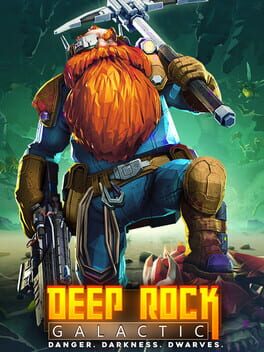
Deep Rock Galactic sends dwarven miners into procedurally generated alien cave systems to extract resources and fight off bug swarms — NMS's mining and resource loop translated into a chaotic four-player co-op shooter.
Key difference: Pure cooperative shooter; no base building, exploration, or open world.
Best for: Players who loved NMS's mining loop and want it in frantic co-op.
Skip if: You play solo or want open exploration beyond mission structure.
The Forest puts you on a mysterious island where you build shelters, gather materials, and uncover a dark alien mystery underground — sharing NMS's survival-base-building rhythm in a horror-tinged setting.
Key difference: Horror survival on a single Earth-like island, no space or sci-fi.
Best for: Players who love NMS's survival tension and base building.
Skip if: You want sci-fi scale, procedural planets, or space travel.
Fallout 4 combines open-world exploration, resource scavenging, and settlement construction in a post-apocalyptic sci-fi wasteland, mirroring NMS's resource-gather-craft-build loop in a dense handcrafted world.
Key difference: Dense scripted narrative; terrestrial setting with no space travel.
Best for: Players who want NMS's base-building depth with richer quest storytelling.
Skip if: You need the sense of endless planetary variety or space flight.
No combat; far smaller, handcrafted solar system rather than a true infinite universe.
PlayStation, PC, Xbox, Nintendo
Subnautica
93%
Adventure, Indie
Entirely underwater on a single alien planet; no space travel.
Xbox, PlayStation, Nintendo, Mobile, PC
Elite: Dangerous
91%
Shooter, Simulator
Steep learning curve; almost no planet-surface survival loop.
PlayStation, PC, Xbox
Starbound
86%
Adventure, Indie
2D side-scroller rather than first-person 3D space flight.
Xbox, PC
Planet Crafter
84%
Simulator, Adventure
Single planet only; terraforming progress replaces inter-system exploration.
Xbox, PC, PlayStation
Outer Wilds
82%
Simulator, Adventure
No crafting, survival, or procedural generation — purely mystery-driven.
Xbox, PlayStation, PC, Nintendo
Space Engineers
80%
Simulator, Adventure
Engineering complexity is extremely deep; steep learning curve.
PlayStation, PC, Xbox
Starfield
78%
Shooter, Adventure
RPG character builds and deep faction storylines dominate the loop.
Xbox, PC, PlayStation
Spore
71%
Simulator, Adventure
Five distinct gameplay phases that shift genre entirely between them.
PC
Kerbal Space Program
70%
Simulator, Indie
Hard physics simulation; success requires real orbital mechanics knowledge.
PlayStation, PC, Nintendo, Xbox
Slime Rancher
70%
Shooter, Simulator
No space travel; wholesome farming management replaces crafting survival.
PlayStation, PC, Xbox
FTL: Faster Than Light
65%
Simulator, Indie
Roguelike permadeath; turn-based ship combat with no planet exploration.
PC, Mobile
Mass Effect: Andromeda
65%
Shooter, Adventure
Story-driven RPG with companion relationships and cover-based combat.
PlayStation, PC, Xbox
Minecraft: Java Edition
63%
Simulator, Adventure
Fantasy setting, no space travel, fully block-based construction.
PC
Returnal
60%
Shooter, Action
Roguelike permadeath twin-stick shooter with no base building or trading.
PC, PlayStation
What Actually Makes a Game Feel Like No Man's Sky?
The NMS feeling requires at least three elements working together: a procedurally generated environment large enough to feel genuinely uncharted, a survival or resource loop that gives every landing a purpose, and a sense of sci-fi isolation where the alien world is the protagonist. Astroneer nails all three in a solar system, while Elite: Dangerous scales them to a full galaxy but trades the surface survival for cockpit immersion. Games that only share the "open world sci-fi" tag — like Cyberpunk 2077 or Horizon Zero Dawn — miss the procedural vastness and resource-gather loop that defines NMS's moment-to-moment play.
Starbound is the best 2D translation of this formula, offering a genuinely infinite procedural galaxy with alien biomes, crafting, and colony-building that mirrors NMS so closely that fans of one almost always enjoy the other — just be aware the side-scrolling format changes how exploration feels moment to moment.
If You Want the Space Exploration but More Depth or Story
Elite: Dangerous rewards players who want authentic interstellar travel — its economy, faction politics, and ship customisation go far deeper than NMS, and visiting real astronomical objects named after actual star catalogues creates a sense of cosmic authenticity NMS can't match. For players who want planetary exploration wrapped in cinematic RPG storytelling, Mass Effect: Andromeda is the most structurally similar entry in a beloved franchise, with scanner mechanics and outpost-building that directly echo NMS's systems.
Outer Wilds deserves special mention for players drawn to NMS's lore and Atlas mystery: it abandons all survival mechanics in favour of pure detective-style cosmic investigation, and delivers one of the most affecting endings in the genre. It won't scratch the base-building itch, but it absolutely scratches the "why does this universe exist?" one.
Best Picks for Co-op and Survival-First Fans
NMS's multiplayer updates transformed it into a genuine co-op survival sandbox, and if that's the side you love most, Astroneer again leads the pack with its seamless drop-in co-op planet exploration. For players who want more danger and chaos, Deep Rock Galactic translates NMS's mining-and-extraction loop into a four-player shooter on procedurally generated alien cave networks. If you're open to a single-planet survival focus rather than a galaxy, the missing-from-this-list Subnautica is widely considered the spiritual sister game to NMS — same alien world solitude, same resource-gather-build-discover loop, all underwater on one spectacular world.
Astroneer is generally considered the closest equivalent: it features procedurally generated alien planets, a resource-mining and base-building survival loop, space travel between worlds, and co-op multiplayer. Subnautica is the other most-cited comparison, trading space exploration for underwater alien-world survival with a similarly powerful sense of discovery.
Is Starfield like No Man's Sky?
Structurally yes — Starfield lets you land on hundreds of planets, scan flora and fauna, extract resources, and build outposts, all within a sci-fi open universe. However, Starfield is a Bethesda RPG at heart, so dialogue trees, faction questlines, and character builds take centre stage. NMS players who find Starfield's loading screens and quest-gating frustrating often prefer Astroneer or Elite: Dangerous for purer exploration.
What games have procedurally generated planets like No Man's Sky?
The strongest options are Astroneer (3D alien planets, survival, co-op), Starbound (2D procedural galaxy with biomes and crafting), Elite: Dangerous (1:1 galaxy with landable planets), and the planet-terraforming game The Planet Crafter. Spore's space phase also features procedurally generated alien homeworlds, though its gameplay breadth is shallower.
Is Elite: Dangerous like No Man's Sky?
Yes, in the sense that both games put you in a spacecraft exploring an enormous, largely empty galaxy with trading and ship upgrades at the core. The key differences are that Elite: Dangerous uses a 1:1 simulation of the real Milky Way and emphasises realistic spaceflight physics and deep economy mechanics, while NMS has more accessible survival systems, base building, and far richer planet-surface gameplay. Elite rewards patience and simulation depth; NMS rewards casual exploration and creativity.
Are there free games like No Man's Sky?
Warframe (free-to-play) shares NMS's sci-fi setting and some exploration elements but is primarily a fast-paced action looter. For the genuine survival-exploration loop, free options are limited; Astroneer, Starbound, and Elite: Dangerous (base game) are the best budget picks when on sale. The Early Access game Starbase occasionally offers free weekends and covers space engineering in depth.
 93%💎 Gem