Strands earns its daily audience by doing something word games rarely attempt: hiding both the words and the unifying theme, then asking you to cover every single letter on the board. The satisfaction is double — the micro-reward of tracing a valid word and the macro-reward of suddenly grasping what today's theme actually is.
When people look for games like Strands, they're really chasing one (or both) of two things: the letter-grid word-hunting tactility, or the themed-discovery puzzle where you don't know the answer until the moment you find it. The best alternatives deliver at least one of these, ideally wrapped in the same brief, daily-ritual format.
Top pick:NYT Connections is the single closest pick — built by the same team, released on the same platform, and centered on the same core pleasure of uncovering a hidden thematic category without being told what you're looking for; if Strands is your favourite NYT game, Connections should be open in the next tab.
Some store buttons are affiliate links — we may earn a commission at no extra cost to you.
Wordle is the NYT word puzzle that put daily browser games back on the map — guess a five-letter word in six tries using color-coded letter feedback. Like Strands, it's a single daily challenge with no timer and a social streak culture built around it.
Key difference: No grid or theme; one word, colour-coded deduction only.
Best for: Anyone who wants the same daily NYT ritual in two minutes.
Skip if: You want a spatial, theme-linking grid challenge.
Quordle runs four Wordle puzzles simultaneously on one screen, demanding the same lateral vocabulary thinking as Strands but structured around deduction grids rather than letter paths.
Key difference: Deduction grids for four words at once, not a spatial letter board.
Best for: Strands and Wordle fans who want a stiffer daily word challenge.
Skip if: You prefer organic theme discovery over colour-coded elimination.
Wordscapes puts letters in a circular dial and asks you to fill a crossword grid by swiping to form words — the closest mobile equivalent to Strands' grid-coverage and word-finding loop.
Key difference: No hidden daily theme; thousands of standalone levels.
Best for: Mobile players wanting unlimited Strands-style word-grid play.
Skip if: You want a single shared daily puzzle with cultural moment.
Mobile
72%💎 Gem
Word Cross Puzzle 2018
Word Cross Puzzle is a mobile crossword-style grid game where players fill in letters to discover interconnected words. The grid-based letter coverage mechanic parallels Strands' use-every-cell structure.
Key difference: Static clues instead of self-discovered thematic links.
Best for: Fans of grid word games who want unlimited play.
Skip if: You need a curated daily theme and no clues up front.
Mobile
70%💎 Gem
SpellTower 2011
SpellTower stacks letters in a column and asks you to chain them into words to clear the board — shares Strands' grid-based letter-chaining and the pressure of using every available tile efficiently.
Key difference: Falling-tile pressure mechanic; no thematic groups.
Best for: Strands fans who want more spatial urgency in their word puzzles.
Skip if: You want calm, theme-first discovery with no time pressure.
Whirly Word tasks you with finding as many words as possible from a spinning circle of six letters — pure vocabulary-and-pattern recognition like Strands' discovery phase. No theme, but the same satisfying letter-hunting loop.
Key difference: Random letter set, no theme; score-chasing rather than full coverage.
Best for: Mobile players wanting a quick vocabulary workout.
Skip if: You care about themed word sets and a single puzzle narrative.
Mobile
65%💎 Gem
Word Charm 2017
Word Charm is a swipe-to-connect letter-grid puzzle where you trace paths through a board to spell words — the swipe mechanic is the closest mobile equivalent to Strands' touchscreen letter-drawing.
Key difference: No overarching theme per puzzle; progression is level-gated.
Best for: Mobile players who love the swipe-to-spell feel of Strands.
Skip if: You want a culturally shared daily theme puzzle.
Mobile
45%
Brain Age: Train Your Brain in Minutes a Day! 2005
Brain Age presents daily short-burst mental exercises including word and number puzzles designed to keep the mind sharp, matching Strands' casual-but-cognitively-engaging tone. Less theming, more clinical variety.
Key difference: Broad brain-training mini-games, not word-search focused.
Best for: Players who treat Strands as a daily brain warmup routine.
Skip if: You specifically want vocabulary and linguistic pattern puzzles.
Nintendo
38%
Return of the Obra Dinn 2018
Return of the Obra Dinn is a deduction mystery where you piece together fragmentary evidence to identify 60 sailors — the core pleasure of uncovering a hidden thematic picture from scattered clues echoes Strands' theme-discovery satisfaction.
Key difference: Full narrative game, hours long, no word mechanics at all.
Best for: Strands fans who love the 'aha' theme-reveal moment above all else.
Skip if: You want a quick daily word-grid habit, not a 10-hour commitment.
The Witness is an open-world puzzle game built entirely on decoding visual patterns without explicit instruction — the self-directed discovery of rules mirrors Strands' no-hints ethos.
Key difference: Line puzzles in a 3D world; no language or word mechanics.
Best for: Strands players who love solving without being told what to solve for.
Skip if: You want a two-minute daily habit instead of a deep puzzle game.
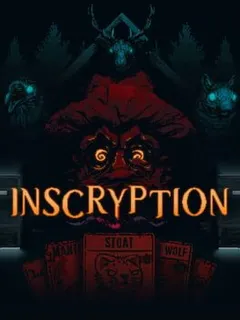
Inscryption layers hidden puzzle meta-games beneath its card game surface, rewarding players who probe for concealed patterns and themes — a structural kinship with Strands' hidden-theme structure.
Key difference: Dark horror card-game wrapper; no word mechanics whatsoever.
Best for: Strands enthusiasts drawn to finding the hidden system behind the surface.
Skip if: You want clean, language-based daily puzzles.
Papers, Please trains players to spot inconsistencies across documents under pressure, building the same pattern-recognition muscle Strands exercises with its letter grid. Both reward attention and punish carelessness.
Key difference: Political dystopia sim with moral weight; no word-finding at all.
Best for: Strands fans who enjoy the focused, systematic scanning of information.
Skip if: You want a relaxing, language-centric experience.
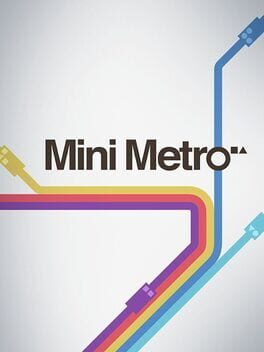
Mini Metro is a minimalist daily-challenge puzzle — routes drawn on a map, efficiency maximized — sharing Strands' clean aesthetic and short-session design. The 'daily' variant replicates Strands' shared-puzzle culture.
Key difference: Spatial/logistical puzzle, no language or word mechanics.
Best for: Players who love Strands' clean daily puzzle ritual and minimalist look.
Skip if: You specifically want vocabulary and letter-grid challenges.
No grid or theme; one word, colour-coded deduction only.
—
Quordle
80%
Puzzle
Deduction grids for four words at once, not a spatial letter board.
—
Wordscapes
75%
Puzzle
No hidden daily theme; thousands of standalone levels.
Mobile
Word Cross Puzzle
72%
Puzzle
Static clues instead of self-discovered thematic links.
Mobile
SpellTower
70%
Puzzle
Falling-tile pressure mechanic; no thematic groups.
Mobile, PC
Whirly Word
68%
Puzzle
Random letter set, no theme; score-chasing rather than full coverage.
Mobile
Word Charm
65%
Puzzle
No overarching theme per puzzle; progression is level-gated.
Mobile
Brain Age: Train Your Brain in Minutes a Day!
45%
Puzzle
Broad brain-training mini-games, not word-search focused.
Nintendo
Return of the Obra Dinn
38%
Puzzle
Full narrative game, hours long, no word mechanics at all.
PlayStation, PC, Xbox, Nintendo
The Witness
33%
Puzzle
Line puzzles in a 3D world; no language or word mechanics.
PlayStation, PC, Mobile, Xbox
Inscryption
30%
Puzzle
Dark horror card-game wrapper; no word mechanics whatsoever.
Xbox, PlayStation, PC, Nintendo
Papers, Please
28%
Puzzle
Political dystopia sim with moral weight; no word-finding at all.
PC, Mobile, PlayStation
Mini Metro
25%
Puzzle
Spatial/logistical puzzle, no language or word mechanics.
PlayStation, PC, Mobile, Nintendo
What makes a game feel like Strands?
Three mechanics define the Strands feel: a letter grid you navigate spatially, words connected by a hidden theme, and a complete-coverage rule that forces you to use every tile. Very few games hit all three. The closest from our list in terms of spatial letter tracing are Word Charm (swipe-to-connect grid) and Wordscapes (circular dial filling a crossword grid). For the theme-discovery element specifically, NYT Connections is the gold standard.
If you relax the word requirement and focus purely on the 'hidden system you must deduce without instructions' feeling, Return of the Obra Dinn and The Witness both deliver intense aha-moments — they're just hour-long commitments rather than five-minute daily habits.
Best daily-ritual alternatives to Strands
Strands' biggest draw for many players is the shared daily experience — one puzzle, everyone's on the same board, compare streaks. Wordle invented that format for the NYT audience and remains its purest expression: one word, one attempt window, one global leaderboard. NYT Spelling Bee extends the session slightly with an open-ended letter set, while Quordle quadruples the Wordle grid for players who find a single daily word too easy.
For mobile players who want unlimited play rather than one daily puzzle, Wordscapes provides thousands of grid-fill levels with the same swipe-to-spell mechanic, and Whirly Word offers a fast vocabulary-scanning loop that fits the same commute-length session as Strands.
If you love Strands for the brain-training habit, not just the words
Some Strands regulars are really in it for the daily cognitive warmup rather than linguistic love. Brain Age: Train Your Brain in Minutes a Day! is the closest structured equivalent — a suite of short mental exercises designed explicitly as a daily brain routine, with tracked performance over time. It lacks the vocabulary focus but nails the 'two minutes every morning' ritual.
Mini Metro's daily challenge mode offers a beautifully minimalist timed puzzle that can be shared and compared, scratching the same scheduled-commitment itch with spatial rather than linguistic logic. Neither replaces Strands word-for-word, but both satisfy the habit loop that keeps Strands players coming back every morning.
NYT Connections is the nearest equivalent — same publisher, same daily format, and the same core mechanic of uncovering a hidden theme linking a set of items you're given without explanation. Wordle is the other obvious companion if you want a shorter daily word challenge.
Are there mobile games similar to Strands?
Yes. Wordscapes uses a swipe-on-letters mechanic to fill crossword grids and offers hundreds of levels. Word Charm traces letter paths on a grid much like Strands' touchscreen drawing. Whirly Word tests vocabulary from a constrained letter set. All three are free-to-start on iOS and Android.
What NYT games are similar to Strands?
The NYT Games app contains Connections (group 16 words by hidden theme), Spelling Bee (make words from 7 letters), the Mini Crossword, and Wordle — all share Strands' daily puzzle rhythm and are playable in the same app. Connections is the most mechanically similar because the theme is the puzzle.
Is there a game like Strands with unlimited puzzles instead of one a day?
Wordscapes offers thousands of themed letter-grid puzzles you can play at your own pace. SpellTower provides endless grid-clearing word chains. Neither has Strands' specific theme-discovery mechanic, but both let you practice the same spatial word-hunting skills without waiting for midnight.
What games have the same 'discover the hidden theme' feeling as Strands?
NYT Connections is the purest match — you group words by a theme that isn't revealed until you find it. For longer games, Return of the Obra Dinn recreates that escalating 'I finally understand what's going on' revelation across a full mystery narrative. Inscryption hides a meta-puzzle layer beneath its surface game that similarly rewards players who probe for patterns.
 95%
95%