NYT Spelling Bee's appeal comes down to one precise mechanic: a locked set of seven letters and the daily challenge of wringing every valid English word out of them, all while the mandatory center letter keeps narrowing your options. The progressive rank feedback — from Beginner to Genius — turns vocabulary depth into a satisfying personal score you can chase every morning.
When people look for games like Spelling Bee, they're really looking for one or more of these things: a constrained-letter word-formation loop, a brief daily puzzle ritual, vocabulary-knowledge as the core skill, and low-friction play that fits inside a coffee break. The list below prioritises games that genuinely share those qualities over games that merely carry a broad "Puzzle" tag.
Top pick:Wordle is the single closest pick: it's made by the same publisher, lives in the same daily-ritual slot, and rewards exactly the same vocabulary intuition — just through deduction rather than open generation. If you only have time for one alternative, start there.
Some store buttons are affiliate links — we may earn a commission at no extra cost to you.
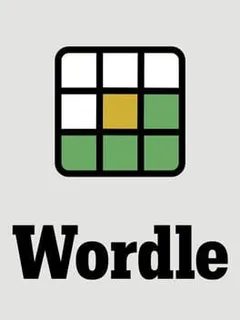
Wordle tasks you with guessing a five-letter word in six tries using colour-coded letter feedback — the same daily-puzzle, one-and-done NYT word-game format as Spelling Bee. Both reward vocabulary and letter intuition in a brief, satisfying daily session.
Key difference: Guessing a hidden word rather than generating words freely.
Best for: Anyone who already plays Spelling Bee and wants a second daily NYT fix.
Skip if: You dislike the guessing-game format and prefer open-ended word building.
Wordscapes gives you a circular set of letters and asks you to fill crossword-style blanks by forming words from them — essentially Spelling Bee's anagram-hunt merged with a crossword grid. The progressive reveal of a scenic background as you find words replaces Spelling Bee's rank praise.
Key difference: Crossword-fill structure guides which words are needed rather than open-ended scoring.
Best for: Spelling Bee fans who want a visually polished mobile equivalent.
Skip if: You dislike mobile freemium ad interruptions or guided word lists.
Mobile
85%💎 Gem
SpellTower 2011
SpellTower asks you to find words in a rising column of random letters — the longer the word, the more tiles cleared — directly rewarding the same obscure-vocabulary knowledge that earns Genius rank in Spelling Bee.
Key difference: Tetris-style rising tile pressure adds time stakes absent from Spelling Bee.
Best for: Spelling Bee devotees who want word-building with spatial arcade tension.
Skip if: You want a zero-pressure daily ritual rather than escalating difficulty.
Whirly Word presents a set of scrambled letters and challenges you to find every valid word hidden within them — nearly identical to Spelling Bee's core loop of extracting all possible words from a fixed letter set. The satisfaction of hitting 100% completion mirrors reaching Genius rank.
Key difference: No mandatory center letter; all letters are optional.
Best for: Spelling Bee fans who want a pure anagram-hunt on mobile.
Skip if: You rely on the daily-reset ritual and progressive praise system.
Mobile
80%
Quordle 2022
Quordle runs four Wordle grids simultaneously, requiring you to find four hidden words in nine guesses — a harder daily word puzzle that shares Spelling Bee's vocabulary depth and daily-reset format.
Key difference: Simultaneous multi-grid Wordle variant rather than open word generation.
Best for: Players who finished Wordle and Spelling Bee and need a tougher daily fix.
Skip if: You find Wordle's guessing format less satisfying than free word building.
Bookworm challenges you to connect adjacent letter tiles on a grid to form words, scoring points and clearing tiles before the board overloads — the same letter-to-word loop as Spelling Bee but with a spatial grid twist and light time pressure.
Key difference: Tile-matching spatial grid adds an arcade pressure element.
Best for: Players who want Spelling Bee's word-building with a bit more tension.
Skip if: You want a calm, untimed daily ritual with no board-state management.
PCMobileXboxNintendo
75%💎 Gem
Letterpress: Word Game 2012
Letterpress is a two-player word game where you claim board tiles by spelling words from the available letters — sharing Spelling Bee's letter-constraint word-formation core but adding competitive territory mechanics.
Key difference: Asynchronous multiplayer competition replaces solo daily puzzle play.
Best for: Spelling Bee fans who want to test their vocabulary against a human opponent.
Skip if: You prefer a solitary, untimed personal challenge over head-to-head play.
MobilePC
72%💎 Gem
Word Charm 2017
Word Charm is a mobile swipe-to-spell puzzle game where you connect letters in a fixed set to form required words, earning stars per level — closely matching Spelling Bee's letter-constrained word formation.
Key difference: Level-based progression replaces a single open daily puzzle.
Best for: Casual players who like Spelling Bee but want guided level structure.
Skip if: You dislike freemium mobile design or prefer no level gating.
Mobile
68%💎 Gem
Semantle 2022
Semantle challenges you to find a secret word by guessing semantically related words, with a similarity score telling you how close you are — a vocabulary-heavy daily puzzle that rewards deep knowledge of word meaning the way Spelling Bee rewards knowledge of obscure valid words.
Key difference: Semantic meaning-distance mechanic instead of letter-set constraints.
Best for: Word nerds who want a tougher, meaning-based daily puzzle challenge.
Skip if: You prefer letter-level pattern play over semantic association.
Brain Age: Train Your Brain in Minutes a Day! 2005
Brain Age includes brief daily word and language exercises alongside number challenges, sharing Spelling Bee's ethos of a short mental workout with scored feedback. The word-recall and reading sections are the closest overlap.
Key difference: Broad brain-training app; word puzzles are a small fraction of content.
Best for: Players who want variety — maths, memory, and words — in one daily session.
Skip if: You want a dedicated word-formation experience with no distractions.
Nintendo
30%
The Typing of the Dead 1999
The Typing of the Dead forces you to type words and phrases on screen to defeat zombie enemies, making correct spelling and fast word recognition the core skill — an unusual word-literacy game with obvious educational DNA.
Key difference: Fast-paced arcade shooter framing is wildly different from calm puzzle play.
Best for: Typing enthusiasts who want absurd action alongside word recognition.
Skip if: You want a relaxing, score-tracking vocabulary puzzle.
Guessing a hidden word rather than generating words freely.
—
Wordscapes
92%
Puzzle
Crossword-fill structure guides which words are needed rather than open-ended scoring.
Mobile
SpellTower
85%
Puzzle
Tetris-style rising tile pressure adds time stakes absent from Spelling Bee.
Mobile, PC
Whirly Word
83%
Puzzle
No mandatory center letter; all letters are optional.
Mobile
Quordle
80%
Puzzle, Quiz/Trivia
Simultaneous multi-grid Wordle variant rather than open word generation.
—
Bookworm
78%
Puzzle
Tile-matching spatial grid adds an arcade pressure element.
PC, Mobile, Xbox, Nintendo
Letterpress: Word Game
75%
Puzzle
Asynchronous multiplayer competition replaces solo daily puzzle play.
Mobile, PC
Word Charm
72%
Puzzle
Level-based progression replaces a single open daily puzzle.
Mobile
Semantle
68%
Puzzle
Semantic meaning-distance mechanic instead of letter-set constraints.
—
Brain Age: Train Your Brain in Minutes a Day!
48%
Puzzle, Quiz/Trivia
Broad brain-training app; word puzzles are a small fraction of content.
Nintendo
The Typing of the Dead
30%
—
Fast-paced arcade shooter framing is wildly different from calm puzzle play.
PC, PlayStation
What makes a game feel like NYT Spelling Bee?
The core sensation is constrained generativity: you're not solving a pre-set answer but actively generating words, yet the letter set is fixed, so every session is a finite puzzle with a knowable perfect score. Games that replicate this most closely — Whirly Word, Wordscapes, and SpellTower — all use a fixed letter pool from which you extract as many valid words as possible. Games that merely test vocabulary (like Wordle's guess-the-hidden-word approach) are adjacent but feel subtly different to long-time Spelling Bee players.
The daily-reset ritual matters too. Wordle and NYT Connections nail this: one puzzle per day, results you can share, and a clean slate tomorrow. If that rhythm is what keeps you coming back to Spelling Bee, those two are your strongest matches even if the underlying mechanic differs.
If you want harder vocabulary challenges
Semantle is a hidden-gem alternative that punishes shallow vocabulary ruthlessly: you must navigate the entire semantic neighbourhood of a secret word using cosine-similarity scores. Reaching the answer with a low guess count feels similar to hitting Genius rank — a personal achievement only vocabulary depth unlocks. Quordle pushes Wordle's letter-deduction to its limit by running four simultaneous grids, demanding the same broad knowledge of uncommon English words that separates Spelling Bee's Genius players from the crowd.
Best mobile word games for Spelling Bee fans
Wordscapes is the smoothest transition for mobile players: swipe to connect letters, fill crossword-style blanks, and unlock scenic backgrounds as you progress — the production quality is high and the core loop is nearly identical to Spelling Bee's. Word Charm is a lighter pick with a level-by-level structure if you prefer guided goals over a single open sandbox. Both are free to start, though Bookworm (available on PC and older mobile platforms) remains a genre classic for its tile-clearing spin on the same letter-to-word loop.
What is the best game to play if you love NYT Spelling Bee?
Wordle is the closest equivalent in terms of format and publisher — a single daily word puzzle from The New York Times that rewards vocabulary knowledge. For a more direct letter-pool experience, Wordscapes and Whirly Word replicate Spelling Bee's core anagram-hunt mechanic on mobile.
Are there any games like Spelling Bee where you form words from a set of letters?
Yes. Whirly Word, Wordscapes, SpellTower, and the classic Bookworm all challenge you to form valid words from a constrained letter set. Whirly Word is the closest structural match: find every word hidden in a fixed group of letters.
Is there a multiplayer version of Spelling Bee?
Spelling Bee itself is single-player, but Letterpress offers a competitive two-player alternative using the same letter-claim word-formation concept. Words With Friends (Scrabble-style) is the most widely played multiplayer word game if you want to go head-to-head on vocabulary.
What NYT puzzle should I play after Spelling Bee?
NYT Connections is the natural next step — same publisher, same daily format, and it tests vocabulary categorisation rather than spelling, which gives your brain a slightly different workout. Wordle is the other obvious choice if you haven't tried it yet.
Are there any Spelling Bee alternatives that are completely free?
Wordle and Semantle are entirely free with no ads or paywalls. NYT Connections requires an NYT Games subscription after a free trial. Wordscapes is free to download but supported by ads and optional purchases.
 95%
95%