Red Dead Redemption 2 earns its legendary status through a specific combination: a painstakingly hand-crafted open world that rewards unhurried exploration, a cinematic narrative centered on moral reckoning and brotherhood loyalty, and simulation systems — hunting, camp life, honor — that make the frontier feel genuinely alive. Arthur Morgan is one of gaming's great tragic protagonists precisely because the game gives you quiet moments to sit with him.
When players look for "games like RDR2," they're usually after one of two things: that same grand cinematic sweep and character depth, or the specific pleasure of an open frontier to roam with a horse under you and the horizon ahead. The best matches deliver at least one of those things exceptionally well.
Top pick:Red Dead Redemption (2010) is the single closest match — same world, same DNA, same tone — and if you haven't played it, it's not optional; but for players who want that feeling in a different genre skin, Ghost of Tsushima (see additional) is the next-best thing: a vast historical open world, a morally burdened outlaw protagonist, horseback traversal through breathtaking landscapes, and side content that rivals the main story's emotional weight.
Some store buttons are affiliate links — we may earn a commission at no extra cost to you.
The direct prequel/predecessor set in the same world, following outlaw John Marston across a beautifully realized frontier. Every systemic mechanic — honor, hunting, camp life, open-world storytelling — that RDR2 perfects originates here.
Key difference: Shorter, less detailed simulation; John Marston is a less nuanced lead.
Best for: Anyone who wants more of the exact same world and tone.
Skip if: You need modern fidelity and simulation depth.
An open-world samurai epic set on a beautifully realized historical island, Ghost of Tsushima mirrors RDR2's pace — slow traversal on horseback, a morally burdened protagonist, side stories as rich as the main quest, and a world that rewards simply riding through it.
Key difference: Feudal Japan setting; fluid katana combat replaces gunfighting.
Best for: RDR2 fans who want the same atmospheric open-world historical formula.
Skip if: You need firearms, Americana, or Rockstar-style sandbox chaos.
Rockstar's modern-era open world uses the same design philosophy as RDR2: dense systemic sandbox, cinematic heist narrative, and a cast of morally complex criminals. The creative DNA is identical, only the era and tone shift.
Key difference: Satirical, comedic tone versus RDR2's elegiac seriousness.
Best for: Fans who want Rockstar's sandbox craft in a contemporary setting.
Skip if: You specifically love RDR2 for its slow, contemplative pacing.
The Witcher 3 matches RDR2's ambition for a hand-crafted open world stuffed with morally gray NPCs, rich side quests that rival the main story, and a protagonist caught between duty and humanity. Both reward patience and exploration equally.
Key difference: Fantasy setting with magic; faster, more gamey combat.
Best for: RPG fans who prize narrative depth and world-building above all.
Skip if: You dislike reading quest text or managing inventory systems.
Rockstar-published and set in 1940s Los Angeles, L.A. Noire shares RDR2's cinematic period detail, morally complex protagonist, and systemic open world — but centers on interrogation and detective work rather than gunfighting.
Key difference: Detective interrogation focus; largely linear case-by-case structure.
Best for: RDR2 fans who loved the period atmosphere and character drama over action.
Skip if: You need open-world freedom or fast-paced combat.
GTA IV is Rockstar's most story-driven, thematically serious crime game — Niko Bellic's immigrant tragedy shares RDR2's tone of a man trapped by his violent past. Cover shooting, morality moments, and a grim cinematic mood connect them strongly.
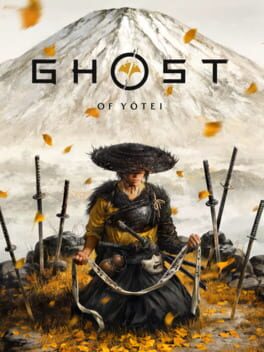
Ghost of Yotei places you in a vast historical open world as a lone warrior navigating a dying frontier era, with a strong emphasis on environmental storytelling, honor, and slow deliberate traversal — a spiritual cousin to RDR2 in feudal Japan.
Key difference: Samurai-era Japan; more stylized katana combat over gunplay.
Best for: RDR2 fans who want a similarly atmospheric historical open world.
Skip if: You need the period-accurate American West specifically.
Mafia (2002) is a cinematic crime drama set in 1930s America with a tightly scripted narrative about a man drawn into organized crime against his will — thematically and structurally very close to RDR2's tale of loyalty and regret.
Key difference: Linear story structure; small open world used mainly as backdrop.
Best for: Players who loved RDR2's crime-family loyalty themes and period drama.
Skip if: You need a sprawling open world with systemic freedom.
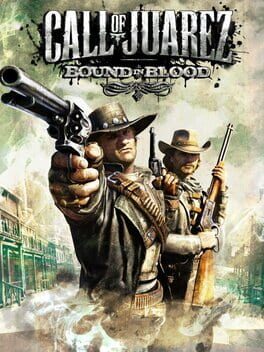
A Western prequel following two outlaw brothers in a violent gunslinger's story, Call of Juarez: Bound in Blood nails the frontier atmosphere, cover-based shooting, and morally charged narrative of the genre RDR2 perfects.
Key difference: Linear levels; much shorter and less systemic than RDR2.
Best for: Pure Western fans who want a grounded gunfighter story.
Skip if: You need open-world exploration and crafting depth.
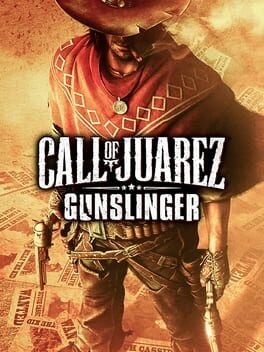
Call of Juarez: Gunslinger is a tight arcade-ish Western shooter dripping with frontier mythology, tall-tale narration, and satisfying gunplay. It captures the outlaw spirit of RDR2 in a punchy three-hour form.
Key difference: Arcade shooter; unreliable narrator conceit; very short runtime.
Best for: Players who want Western gunfighter tone without a 60-hour commitment.
Skip if: You require open-world exploration and character simulation.
The Last of Us shares RDR2's single greatest strength: a character study wrapped in an action-adventure, where the bond between two people drives every scene. Third-person cover shooting, crafting, and a devastating story connect both games.
Key difference: Post-apocalyptic setting; more linear and horror-inflected.
Best for: RDR2 fans who prioritize emotional storytelling over open-world freedom.
Skip if: You dislike horror atmosphere or linear level design.
Uncharted 4 is the most cinematic, character-driven entry in the series, following a man wrestling with his past and brotherhood loyalty — themes that echo Arthur Morgan's story directly. Climbing, cover shooting, and stunning set-pieces define both.
Key difference: Far more linear; quippy pulp-adventure tone rather than somber drama.
Best for: RDR2 fans who want cinematic polish and a strong bromance narrative.
Skip if: You need open-world freedom and systemic simulation.
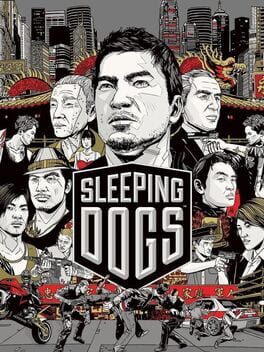
Sleeping Dogs casts you as an undercover cop embedded in Hong Kong's triads — a man torn between duty and brotherhood, exactly the loyalty-vs-survival tension Arthur Morgan faces. The open world, cover shooting, and narrative momentum are comparable.
Key difference: Contemporary Hong Kong setting; martial arts combat system.
Best for: RDR2 fans who loved the infiltrating-a-criminal-family narrative.
Skip if: You want a frontier or historical setting specifically.
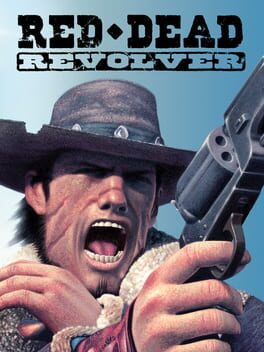
Red Dead Revolver is the original Western that birthed the franchise — a grindhouse-flavored bounty hunter story with cover shooting and boss duels set across a stylized frontier. Rough by modern standards but tonally on target.
Key difference: Arcade-style, very short; no open world or simulation depth.
Best for: Franchise completionists and fans of classic spaghetti-Western aesthetics.
Skip if: You expect modern production values or open-world exploration.
God of War (2018) is a masterclass in cinematic third-person action with father-son emotional weight and a world that slowly reveals its mythological depth — the same measured, character-first approach RDR2 uses.
Key difference: Norse mythology; fast hack-and-slash combat replaces gunplay.
Best for: RDR2 fans who love mature, emotionally grounded cinematic adventures.
Skip if: You want an open world with realistic simulation and slow pacing.
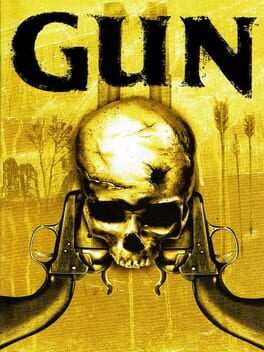
Gun (2005) is essentially the direct ancestor of Red Dead Redemption: a Western open-world game with bounty hunting, horseback gunfights, and a frontier revenge narrative. Dated but unmistakably in the same mold.
Key difference: PS2-era production; much simpler systems and short runtime.
Best for: Western genre fans curious about the games that inspired RDR.
Skip if: You need modern graphics and deep simulation mechanics.
Days Gone is a third-person open-world survival story following a biker and his brotherhood in a post-apocalyptic Pacific Northwest — slow traversal, crafting, camp loyalty, and a grief-driven narrative closely echo RDR2's systemic and emotional design.
Horizon Zero Dawn matches RDR2's love of a richly detailed open world with layered lore, crafting from hunted creatures, and a strong protagonist navigating a dying civilization. The hunting-to-upgrade loop is nearly identical in feel.
Key difference: Post-apocalyptic sci-fi; Aloy's personal stakes feel less weighty than Arthur's.
Best for: Players who loved RDR2's hunting, crafting, and world-lore depth.
Skip if: You specifically want a grounded historical or realistic setting.
Cyberpunk 2077 evolved into a dense, cinematic open-world RPG with a morally complex protagonist, richly detailed city, and story driven by loyalty and betrayal — the same narrative pillars as RDR2, just in a neon-lit future.
Key difference: Dense urban cyberpunk; faster, more fragmented open-world structure.
Best for: RDR2 fans who want cinematic RPG storytelling in a different era.
Skip if: You loved RDR2's naturalistic pacing and wilderness exploration.
Assassin's Creed IV Black Flag swaps RDR2's frontier for the open Caribbean seas, but the loop of exploring a vast historical world, building a crew's loyalty, and slowly dismantling an empire of violence is directly analogous.
Firewatch is a first-person walk through a stunningly realized natural landscape where atmosphere, solitude, and a slowly unraveling character story take precedence over action — the same contemplative mood RDR2 cultivates in its quieter half.
Key difference: Walking simulator; no combat, no open world, very short.
Best for: Players who loved Arthur Morgan's journal entries and quiet wilderness moments.
Skip if: You play for action, shooting, or systemic open-world content.
Telltale's The Walking Dead uses the same moral weight RDR2 delivers through Arthur's choices: decisions about protecting your group, sacrificing strangers, and living with consequences define both narratives. The gang-as-family theme resonates directly.
Key difference: Point-and-click adventure; minimal action; no open world.
Best for: RDR2 fans who loved the Van der Linde camp's emotional dynamics.
Skip if: You need action gameplay or open-world exploration.
Shorter, less detailed simulation; John Marston is a less nuanced lead.
PlayStation, PC, Xbox
Ghost of Tsushima
90%
Role-playing (RPG), Adventure
Feudal Japan setting; fluid katana combat replaces gunfighting.
PlayStation
Grand Theft Auto V
88%
Shooter, Adventure
Satirical, comedic tone versus RDR2's elegiac seriousness.
PlayStation, PC, Xbox
The Witcher 3: Wild Hunt
84%
Role-playing (RPG), Adventure
Fantasy setting with magic; faster, more gamey combat.
Xbox, PlayStation, PC, Nintendo
L.A. Noire
84%
Adventure, Action
Detective interrogation focus; largely linear case-by-case structure.
PlayStation, PC, Xbox
Grand Theft Auto IV
83%
Shooter, Adventure
Gritty urban crime story; lacks RDR2's naturalistic open world.
PlayStation, PC, Xbox
Ghost of Yotei
82%
Role-playing (RPG), Adventure
Samurai-era Japan; more stylized katana combat over gunplay.
PlayStation
Mafia
80%
Shooter, Adventure
Linear story structure; small open world used mainly as backdrop.
Xbox, PC, PlayStation
Call of Juarez: Bound In Blood
79%
Shooter, Adventure
Linear levels; much shorter and less systemic than RDR2.
PlayStation, PC, Xbox
Call of Juarez: Gunslinger
78%
Shooter, Adventure
Arcade shooter; unreliable narrator conceit; very short runtime.
PlayStation, PC, Xbox, Nintendo
The Last of Us
77%
Shooter, Adventure
Post-apocalyptic setting; more linear and horror-inflected.
PlayStation
Uncharted 4: A Thief's End
76%
Shooter, Adventure
Far more linear; quippy pulp-adventure tone rather than somber drama.
PlayStation
Sleeping Dogs
75%
Shooter, Adventure
Contemporary Hong Kong setting; martial arts combat system.
PlayStation, PC, Xbox
Red Dead Revolver
74%
Shooter, Adventure
Arcade-style, very short; no open world or simulation depth.
Xbox, PlayStation
God of War
73%
Role-playing (RPG), Adventure
Norse mythology; fast hack-and-slash combat replaces gunplay.
PlayStation, PC
What makes a game feel like Red Dead Redemption 2?
RDR2's core is the intersection of three things most open-world games separate: a cinematic, character-driven story with genuine dramatic weight; a simulation layer (hunting, crafting, morality, camp upkeep) that makes the world feel inhabited rather than decorative; and a deliberate, unhurried pace that trusts the player to find beauty in riding through fog at dawn. Games that nail all three — The Witcher 3: Wild Hunt and Ghost of Tsushima — feel unmistakably like RDR2 even across genre differences.
Games that match only the narrative depth (The Last of Us, God of War 2018) still scratch a significant part of the itch, while games that match the open-world Western setting specifically (Call of Juarez: Bound in Blood, Gun) satisfy players who love the frontier atmosphere even if the systemic depth isn't there.
Best picks for the Western setting specifically
If the frontier era is what draws you rather than the open-world RPG structure, the Western genre has more options than most players know. Call of Juarez: Bound in Blood and Call of Juarez: Gunslinger are both excellent — the former is a grounded brothers-in-violence drama, the latter a snappy arcade shooter dripping with tall-tale mythology. Red Dead Revolver is rough but worth playing as the grindhouse original that started the Red Dead lineage.
For something more obscure, Gun (2005) is essentially a primitive proof-of-concept for Red Dead Redemption itself: horseback combat, bounty hunting, frontier towns, and a revenge-driven outlaw narrative. It's dated but unmistakably a spiritual predecessor, and it holds up better than you'd expect.
If you want the cinematic narrative without the Western setting
RDR2's greatest achievement is making you care deeply about Arthur Morgan and the Van der Linde gang — and several games in entirely different settings do this just as well. The Last of Us delivers the same devastating character study wrapped in cover-based third-person action, while Uncharted 4: A Thief's End leans into the same themes of a man escaping (or failing to escape) his violent past through a brotherhood relationship. Both share RDR2's cinematic production values and willingness to slow down for character moments.
For players who want the open-world scale with that narrative depth, Cyberpunk 2077 (post-update) and The Witcher 3 are the strongest choices — both feature protagonists shaped by their violent histories navigating a world that's changing faster than they can, with side quests that put most main stories to shame.
Is there anything that plays exactly like Red Dead Redemption 2 but in a different setting?
Ghost of Tsushima comes closest overall — it has the same horseback open-world traversal, morally burdened protagonist, honor system, and patient pacing, just set in feudal Japan. Within the same developer's catalog, Grand Theft Auto V uses the identical design philosophy in a modern crime setting.
What games have the same slow, atmospheric pacing as RDR2?
Ghost of Tsushima, The Witcher 3, and Firewatch all reward unhurried exploration and atmosphere over action-per-minute. Death Stranding takes the contemplative pace even further if you want something truly deliberate.
Are there other Western games like Red Dead Redemption 2?
The most direct options are the original Red Dead Redemption, Call of Juarez: Bound in Blood, Call of Juarez: Gunslinger, and the older Gun (2005). For a comedic Western RPG wildcard, West of Loathing is surprisingly charming, and Desperados III offers Western atmosphere in a tactical real-time strategy format.
What should I play after Red Dead Redemption 2 if I loved Arthur Morgan's story?
Play Red Dead Redemption (2010) first — it's the direct sequel and pays off Arthur's arc. Then The Last of Us for a similarly devastating character study, followed by The Witcher 3 for the richest open-world narrative in gaming.
Does The Witcher 3 really feel like RDR2?
More than most people expect. Both games feature a grizzled, morally complicated protagonist on a doomed quest, a massive hand-crafted open world filled with side stories that rival the main plot, and a willingness to let quiet moments breathe. The core loop — ride to a point of interest, investigate, make a morally gray choice — is nearly identical. The fantasy setting and faster combat are the primary differences.
 98%
98%