Cyberpunk 2077's appeal comes from a specific combination: a vast, breathing neon megacity that reacts to your presence; deep character customisation through cyberware, skill trees, and playstyle choice; and a morally complex story delivered through some of the most densely written side quests in RPG history. It's simultaneously a shooter, a stealth game, and a dialogue-driven RPG — and it wraps all of that in a distinctive aesthetic of corporate dystopia and transhumanist dread.
When players ask for games like Cyberpunk 2077, they're usually chasing one (or more) of three things: the open-world RPG freedom with meaningful choices, the sci-fi immersive-sim feel of building a character around stealth/hacking/combat, or the neon-dark atmosphere of a world where corporations own everything and the streets are brutal. The best matches share at least two of these pillars.
Top pick: The single closest pick is Deus Ex: Human Revolution — it is the only game in this list that matches CP2077 on all three fronts simultaneously: a cyberpunk corporate-dystopia setting, an augmentation upgrade system that directly parallels cyberware, and genuine player choice between stealth, hacking, and combat at every encounter, all wrapped around a noir conspiracy thriller with a voiced, morally conflicted protagonist.
Some store buttons are affiliate links — we may earn a commission at no extra cost to you.
22 games like Cyberpunk 2077
97%
Deus Ex: Human Revolution 2011
Deus Ex: Human Revolution is the closest structural twin to Cyberpunk 2077: you play an augmented operative in a corporate-dystopian city, choosing between stealth, hacking, or combat at every moment, while a branching thriller narrative reacts to your decisions. The aug upgrade tree maps directly onto CP2077's cyberware system.
Key difference: More constrained hub levels, not a true open world.
Best for: Players who want the cyberpunk politics and aug-RPG loop tightest.
Skip if: You need a seamless, explorable city with constant emergent activity.
Deus Ex: Mankind Divided refines Human Revolution's formula with a Prague noir setting soaked in transhumanist tension and aug discrimination — themes that map almost one-to-one onto Night City's body-mod underclass. Multi-path level design rewards every playstyle.
Key difference: Shorter campaign, story feels cut short mid-arc.
Best for: Those who want Deus Ex HR's DNA with sharper mechanics.
CD Projekt RED's own RPG masterpiece shares the same DNA: a sprawling open world, deeply written side quests that often outshine the main plot, meaningful choices, and a morally grey protagonist navigating a world of power factions. Fantasy replaces sci-fi, but the feel is identical.
Key difference: Medieval fantasy setting instead of cyberpunk sci-fi.
Best for: Fans who loved CP2077's narrative depth and quest writing above all.
Skip if: You specifically want guns, hacking, and neon-lit urban spaces.
Vampire: The Masquerade – Bloodlines is an urban, first-person RPG set in a dark, neon-lit Los Angeles underworld — player build, dialogue choices, and faction allegiance all change the story. The parallels to CP2077's structure (hub districts, street-level crime, branching endings) are striking.
Key difference: Supernatural vampire setting instead of cybertech sci-fi.
Best for: Players who prioritise RPG depth, dark atmosphere, and faction politics.
Skip if: You can't tolerate early-2000s rough edges and infamous bugs.
Fallout: New Vegas is the gold standard of open-world shooter-RPGs where player choice genuinely matters — faction allegiances, dialogue builds, and moral nuance rival CP2077's approach. Its post-apocalyptic desert replaces Night City, but the freedom of approach is equivalent.
Key difference: Post-apocalyptic Western desert, not a neon megacity.
Best for: Players who want the deepest faction-driven narrative and replayability.
Skip if: You need modern shooting feel and third-person spectacle.
Mass Effect 2 is the tightest sci-fi RPG narrative companion to CP2077: a hand-crafted cast of companions, weighty choices with permanent consequences, and shooter-RPG combat set in a richly detailed future. The squad loyalty missions rival CP2077's side quests in emotional payoff.
Key difference: Linear, mission-based structure — not an open world.
Best for: Fans who loved CP2077's companions and sci-fi narrative above all.
Skip if: You need open-world freedom and a living city to explore.
Obsidian's sci-fi RPG drops you into a corporate-owned solar system with CP2077-style character builds, dialogue-heavy branching quests, and biting anti-capitalist satire. Skills in persuasion, hacking, and combat map directly onto familiar CP2077 playstyles.
Key difference: Smaller, hub-based world rather than a seamless open city.
Best for: Fans who loved CP2077's RPG systems and anti-corporate story.
Skip if: You need a dense explorable city and AAA production scale.
Fallout 4 shares CP2077's first-person open-world RPG loop — shooting, crafting, skill trees, and a voiced protagonist navigating a ruined world controlled by ruthless factions. Exploration and emergent sandbox play are the primary draw.
Key difference: Settlement building and crafting dominate late-game focus.
Best for: Players who want a denser crafting and base-building layer.
Skip if: You want tight narrative choices; Fallout 4 is weak on consequence.
Mass Effect 3 closes out the trilogy's branching narrative with high-stakes choices carrying over from previous entries, and its combat is the series' most polished. The sci-fi military-political intrigue mirrors Night City's corporate warfare.
Key difference: Culmination of trilogy choices; weaker standalone experience.
Best for: ME1/ME2 players continuing their playthrough for narrative payoff.
Arkane's 2017 immersive sim places you aboard a space station overrun with aliens, with a deep skill tree that lets you combine human and alien abilities — echoing CP2077's cyberware philosophy. The corporate conspiracy narrative and freedom of approach are the main connectors.
Key difference: Isolated space station, not an open city; heavier survival horror.
Best for: CP2077 players who loved the cyberware-builds and immersive-sim freedom.
Skip if: You want urban exploration, companions, and cinematic storytelling.
Fallout 3 brings the same FPS-RPG open world to a devastated Washington D.C., with dark storytelling, scavenging, and player-defined character builds. The atmospheric oppression and moral ambiguity echo Night City's tone.
Key difference: Darker, more desolate tone; exploration-first over story-first.
Best for: Those who want bleak atmosphere and systemic RPG freedom.
Skip if: You want sharp combat feel and a modern city to interact with.
BioShock is a first-person shooter-RPG set in a dystopian city built on ideological excess — its plasmid upgrade system and environmental storytelling parallel CP2077's cyberware and lore-soaked world design. Both games weaponise setting as critique.
Key difference: Horror-tinged linear corridors, not an open world.
Best for: Players who love CP2077's genre-as-social-commentary angle.
Skip if: You need open-world freedom and third-person action spectacle.
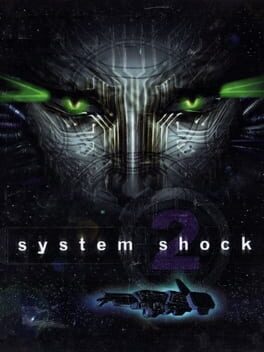
System Shock 2 is the forefather of the immersive-sim RPG-shooter: skill trees, weapon degradation, and a haunted sci-fi space station that tells its story through audio logs. Players who love CP2077's FPS-RPG hybrid will find its DNA here in concentrated form.
Key difference: Horror survival aboard a space station — claustrophobic, not open.
Best for: Immersive-sim fans who want the roots of the genre.
Skip if: You can't handle 1999-era design and survival tension.
NieR: Automata wraps a profound sci-fi story about identity, consciousness, and corporate-military exploitation in fluid action-RPG combat across an open world. Its philosophical themes about what it means to be human/machine resonate directly with CP2077's transhumanism.
Key difference: Post-apocalyptic robot war, not an urban cyberpunk city.
Best for: Players who loved CP2077's existential and identity themes most.
Skip if: You want a city sandbox with character builds and stealth options.
An underrated open-world crime RPG set in a neon-lit Hong Kong underworld — its protagonist goes deep undercover in triad culture, with melee combat, skill progression, and a morally layered story that feels genuinely like a cyberpunk noir cousin to CP2077.
Key difference: Contemporary Hong Kong; no sci-fi technology or RPG stat depth.
Best for: Players who loved CP2077's urban atmosphere and story morality.
Skip if: You want deep character builds, cyberware, and sci-fi worldbuilding.
Disco Elysium is an isometric detective RPG set in a decaying, politically fractured city — its skill-check dialogue system, morally complex factions, and unflinching social critique make it a spiritual cousin to CP2077's street-level storytelling.
Key difference: No combat; pure dialogue and skill-roll mechanics.
Best for: Players who loved the writing and world critique in CP2077.
Skip if: You want gunplay, action, and fast-paced open-world exploration.
Watch Dogs 2 adds a livelier open city, co-op, and a more playful tone while keeping the hacker-in-a-surveillance-city loop. Its San Francisco tech-bro satire parallels CP2077's corporate critique, and its gadget-stealth approach rewards creative problem-solving.
Key difference: Lighter, comedic tone compared to CP2077's noir-tragic register.
Best for: CP2077 hacker-build fans who want a brighter, more social game.
Skip if: You want deep RPG progression and a morally weighty story.
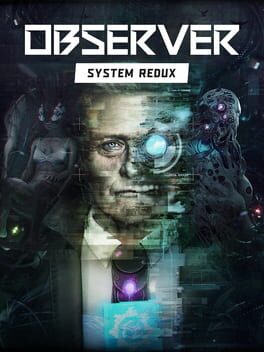
A cyberpunk detective game set in 2084 where you jack into murder victims' memories to investigate crimes — the neon-rot aesthetic, corporate dystopia, and transhumanist horror make it feel like a Night City side quest expanded into a full game.
Key difference: Slow-paced horror adventure; no combat or open world.
Best for: Players who loved CP2077's atmosphere, lore, and detective quests.
Skip if: You want action, combat, and open-world freedom.
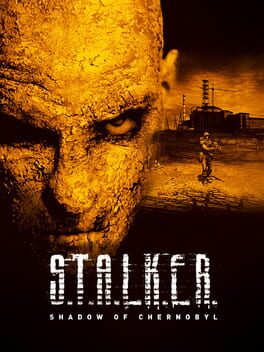
S.T.A.L.K.E.R.: Shadow of Chernobyl is a brutal open-world shooter-RPG where survival, faction allegiance, and player freedom converge in an irradiated exclusion zone. Its immersive-sim approach to a hostile world parallels CP2077's systemic design, with a uniquely oppressive atmosphere.
Key difference: Survival horror atmosphere; no story-driven main character arc.
Best for: Players who want systemic open-world danger and faction politics.
Skip if: You want narrative polish, companions, and cinematic production.
Horizon Zero Dawn blends sci-fi post-apocalyptic world-building with a strong third-person open-world RPG loop — skill trees, stealth, and a protagonist uncovering a corporate-technological conspiracy. The mystery-unravelling narrative structure echoes CP2077's main quest.
Key difference: Prehistoric-meets-robot aesthetic; no urban city or body modification.
Best for: Players who loved CP2077's sci-fi mystery and open-world exploration.
Skip if: You need the neon-urban cyberpunk aesthetic and hacking systems.
A pure cyberpunk fantasy: a katana-wielding augmented warrior climbs a megacity tower in one-hit-kill, wall-running FPS combat. The aesthetic — neon megacity, corporate oppression, augmented protagonist — is CP2077 compressed into an ultra-precise action game.
Key difference: Hardcore precision platformer with no RPG depth or open world.
Best for: CP2077 cyberpunk aesthetic fans who want punishing reflex-based action.
Skip if: You want story choice, character builds, and open exploration.
GTA V shares CP2077's open-world crime sandbox DNA: a massive explorable city, heist-driven narrative, and a dark satire of capitalism and celebrity. The freeform urban playground feel and mission variety echo Night City's structure.
Key difference: Contemporary crime comedy tone, no RPG character builds or sci-fi.
Best for: Players who loved CP2077's open city density and criminal underworld.
Skip if: You want deep RPG customisation and a choice-driven narrative.
More constrained hub levels, not a true open world.
PlayStation, PC, Xbox
Deus Ex: Mankind Divided
94%
Shooter, Role-playing (RPG)
Shorter campaign, story feels cut short mid-arc.
PlayStation, PC, Xbox
The Witcher 3: Wild Hunt
88%
Role-playing (RPG), Adventure
Medieval fantasy setting instead of cyberpunk sci-fi.
Xbox, PlayStation, PC, Nintendo
Vampire: The Masquerade - Bloodlines
87%
Role-playing (RPG), Action
Supernatural vampire setting instead of cybertech sci-fi.
PC
Fallout: New Vegas
86%
Shooter, Role-playing (RPG)
Post-apocalyptic Western desert, not a neon megacity.
PlayStation, PC, Xbox
Mass Effect 2
85%
Shooter, Role-playing (RPG)
Linear, mission-based structure — not an open world.
PlayStation, PC, Xbox
The Outer Worlds
85%
Shooter, Role-playing (RPG)
Smaller, hub-based world rather than a seamless open city.
Xbox, PlayStation, PC, Nintendo
Fallout 4
82%
Shooter, Role-playing (RPG)
Settlement building and crafting dominate late-game focus.
Xbox, PlayStation, PC
Mass Effect 3
82%
Shooter, Role-playing (RPG)
Culmination of trilogy choices; weaker standalone experience.
PlayStation, PC, Xbox
Prey
82%
Shooter, Role-playing (RPG)
Isolated space station, not an open city; heavier survival horror.
PlayStation, PC, Xbox
Fallout 3
80%
Shooter, Role-playing (RPG)
Darker, more desolate tone; exploration-first over story-first.
PlayStation, PC, Xbox
BioShock
80%
Shooter, Role-playing (RPG)
Horror-tinged linear corridors, not an open world.
PC, Xbox
System Shock 2
79%
Shooter, Role-playing (RPG)
Horror survival aboard a space station — claustrophobic, not open.
PC
NieR: Automata
78%
Role-playing (RPG), Action
Post-apocalyptic robot war, not an urban cyberpunk city.
PlayStation, PC
Sleeping Dogs
78%
Shooter, Adventure
Contemporary Hong Kong; no sci-fi technology or RPG stat depth.
PlayStation, PC, Xbox
What makes a game truly feel like Cyberpunk 2077?
The key ingredients are: a sci-fi world built around technology as both liberation and oppression, a protagonist defined by upgrades rather than a fixed class, and quests that offer real player agency rather than cosmetic choices. Deus Ex: Human Revolution and Deus Ex: Mankind Divided nail all three — their augmentation hubs, hub-district cities, and multi-path mission design are the closest structural equivalents to Night City's playstyle freedom. Fallout: New Vegas adds the deepest faction consequence of any game on this list, and Vampire: The Masquerade – Bloodlines delivers a criminally underrated urban-noir RPG with faction politics that mirror CP2077's street-level power struggles.
For pure open-world RPG narrative craft, The Witcher 3: Wild Hunt — made by the same studio — remains the gold standard for side quest writing and a world that feels genuinely alive. Fantasy replaces the neon, but the soul of the design is identical.
Best picks for the cyberpunk aesthetic specifically
If the neon-soaked, corporate-dystopian visual and thematic identity is what you're chasing, the list narrows sharply. Observer: System Redux (in additional) is the most atmospheric cyberpunk game this side of CP2077 — a 2084 detective horror that oozes rotting megacity dread in every corridor. Stray exists in a cyberpunk city but plays as a quiet adventure game, while NieR: Automata channels the same transhumanist anxiety about bodies, identity, and corporate-military exploitation into a philosophical action RPG that will stick with you as long as V's story did.
For players drawn to CP2077's hacking and surveillance critique, Watch Dogs 2 is the most playful alternative — San Francisco's tech-bro landscape is satirised with the same energy that Cyberpunk reserves for megacorporations, and the hacker toolset rewards creative problem-solving in ways that echo the netrunner build.
If you want deeper RPG systems than Cyberpunk 2077
Disco Elysium is the recommendation for players who felt CP2077's skill checks and dialogue choices were the best part — it takes that idea to an extreme, building an entire game out of skill rolls, internal monologue, and a fractured detective unravelling himself in a politically ruined port city. There is no combat: it is pure RPG narrative consequence. Fallout: New Vegas offers the deepest faction-driven replayability on this list — multiple endings genuinely differ based on sustained choices, not just a final decision. And Mass Effect 2 remains the benchmark for companion writing and character loyalty in sci-fi RPGs, with a squad whose survival depends on decisions you made throughout the whole game.
Deus Ex: Human Revolution is the closest equivalent — it shares the cyberpunk setting, augmentation-based character building, and multi-path stealth/combat/hacking approach almost beat for beat. If you want something more open-world and narrative-driven, The Witcher 3 (same developer) is the next best match.
Are there other open-world RPGs like Cyberpunk 2077 with a sci-fi setting?
Yes — Fallout 4 and Fallout: New Vegas both deliver FPS open-world RPGs in post-apocalyptic sci-fi settings with character builds and faction choices. Horizon Zero Dawn offers a more polished third-person take with a strong sci-fi mystery narrative. The Outer Worlds (in our additional picks) is explicitly designed as a shorter, sharper Fallout-style sci-fi RPG with anti-corporate satire.
What should I play after finishing Cyberpunk 2077 if I loved the story?
Start with The Witcher 3: Wild Hunt — CD Projekt RED's previous masterpiece has side quests widely considered the best-written in any RPG. Then try Mass Effect 2 for a tight sci-fi narrative with companions whose fates genuinely depend on your choices. Disco Elysium is essential if dialogue, consequence, and character interiority are what moved you most.
Is there a game like Cyberpunk 2077 for the hacking playstyle specifically?
Watch Dogs 2 is the most direct match — you infiltrate systems, manipulate city infrastructure, and approach objectives through gadgets and remote hacking rather than direct combat. Deus Ex: Human Revolution also has a strong hacking mini-game woven into its multi-path mission design. Observer: System Redux goes full cyberpunk detective, jacking directly into human minds to investigate crimes.
What's a hidden gem similar to Cyberpunk 2077 that most lists miss?
Vampire: The Masquerade – Bloodlines (2004) is the most overlooked recommendation: an urban first-person RPG set in a neon-dark Los Angeles criminal underworld, with faction allegiances, dialogue-driven quest resolution, and multiple character builds that completely change how you interact with the city. Despite being buggy at launch (community patches fix most issues), its atmosphere and RPG depth rival anything on this list.
 97%
97%