Dishonored earns its devotion by making player expression feel genuinely meaningful: every room is a puzzle with a dozen solutions, supernatural powers can be layered in ways the designers clearly didn't fully anticipate, and the chaos system ensures your moral choices reshape the world rather than just your conscience. It sits at the intersection of immersive sim, stealth game, and action-RPG — a genre sometimes called the "immersive sim" lineage that runs from Thief and Deus Ex through BioShock to Arkane's own catalogue.
When someone asks for "games like Dishonored," they're usually looking for at least one of three things: that same mission-sandbox freedom where stealth and violence are equally supported paths; a first-person world that rewards environmental curiosity and creative tool-use; or an assassination-focused game where being a ghost is as satisfying as being a monster. The best picks below deliver at least one of those and often all three.
Top pick:Prey (2017) is the single closest match for most Dishonored players: also made by Arkane Studios, it applies the same immersive-sim philosophy — layered powers, multi-solution level design, consequence-driven systems — to a sci-fi horror setting aboard a space station, and it is arguably the studio's most mechanically ambitious game yet.
Some store buttons are affiliate links — we may earn a commission at no extra cost to you.
The direct sequel to Dishonored, adding a second playable protagonist (Emily Kaldwin) with her own distinct supernatural ability set alongside Corvo's. All the same mission-sandbox design, chaos system, and stealth-or-violence freedom is present in a sun-drenched new city.
Key difference: Adds Emily as a second protagonist with distinct powers.
Best for: Anyone who finished Dishonored and wants more immediately.
Skip if: You found Dishonored's world too linear or want something fresh.
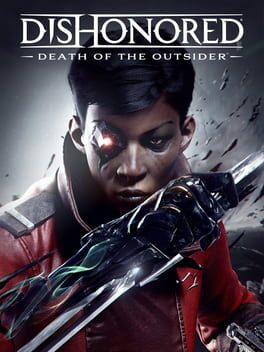
A standalone spinoff starring assassin Billie Lurk, set in the same Karnaca world as Dishonored 2, with three major assassination targets and a stripped-down but refined Outsider-power toolkit. Shorter and tighter, but just as mechanically expressive.
Key difference: Three large assassination sandboxes, then it's done.
Best for: Players who want a concise, pure Dishonored hit.
Skip if: You want a full-length campaign with a sprawling story.
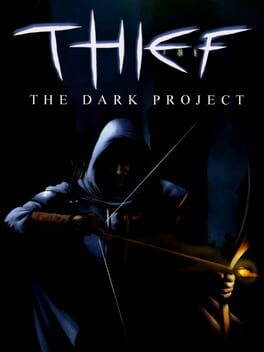
The 1998 first-person stealth game that directly inspired Dishonored: you play Garrett the thief, using light and shadow, rope arrows, and environmental awareness to ghost through missions. Arkane explicitly cites it as a foundational reference.
Key difference: 1998 engine; very little action; pure stealth focus.
Best for: Players who want Dishonored's stealth at its purest origin.
Skip if: You can't play past dated graphics and controls.
PC
92%
Prey 2017
Also made by Arkane Studios, Prey puts you aboard a space station overrun by shape-shifting aliens and hands you a growing toolkit of human and alien powers to mix creatively. The immersive-sim DNA — multiple solutions per room, environmental storytelling, player-defined playstyle — is identical to Dishonored.
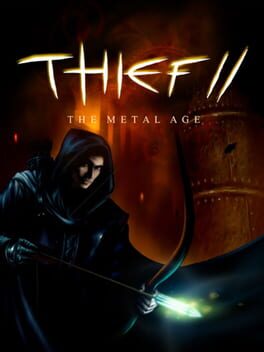
The follow-up to Thief: The Dark Project, refining Garrett's tool set with more gadgets and larger levels — the shadow-and-sound stealth still feels remarkably close to Dishonored's predator fantasy.
Key difference: Early-2000s engine; no supernatural powers.
Best for: Hardcore stealth fans tracing Dishonored's lineage.
Skip if: You need modern visuals or fluid controls.
The grandfather of the immersive sim: a first-person game where augmentations let you hack, sneak, fight, or talk your way through every obstacle, and your choices reshape the world. Dishonored's design philosophy is directly descended from Deus Ex.
Key difference: 1990s cyberpunk setting; more RPG dialogue and systems.
Best for: Players who want Dishonored's depth with richer writing.
Skip if: You can't stomach dated graphics and clunky gunplay.
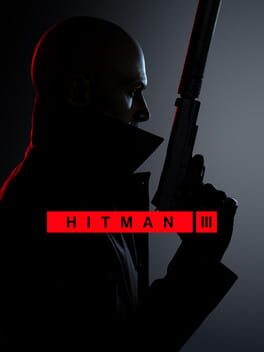
IO Interactive's Hitman World of Assassination trilogy culminates here: each location is a densely layered assassination sandbox where disguise, poison, distraction, and brute force are all valid tools — the same mission-sandbox philosophy as Dishonored without the supernatural twist.
Key difference: Third-person; disguise system instead of magic powers.
Best for: Fans of Dishonored's assassination sandboxes at their most elaborate.
Skip if: You need supernatural abilities or stealth tension over social stealth.
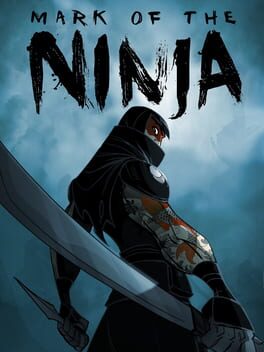
Mark of the Ninja is a 2D side-scrolling stealth game where you use a ninja's shadow-manipulation tools to ghost through levels or silently eliminate guards — the same predator fantasy Dishonored delivers, reframed elegantly in 2D. Its level design rewards experimentation as much as any immersive sim.
Key difference: 2D side-scrolling instead of first-person 3D.
Best for: Stealth purists who want tight, mechanically rewarding levels.
Skip if: You need first-person perspective or open-ended mission sandboxes.
BioShock is a first-person shooter in a flooded Art Deco city where you combine guns with Plasmid powers — electricity, fire, telekinesis — in ways that echo Dishonored's ability-stacking creativity. The atmospheric world-building and moral undertones are equally strong.
Key difference: Far more shooter-focused; less stealth and route choice.
Best for: Players drawn to Dishonored's supernatural powers and lore.
Skip if: You played Dishonored mainly for stealth; BioShock is combat-first.
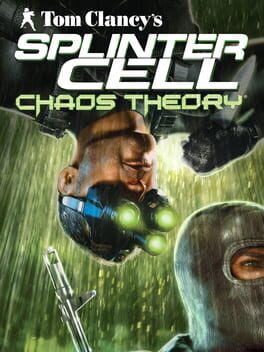
Chaos Theory is the pinnacle of the Splinter Cell series: a first-person-adjacent stealth sandbox where light, sound, and the environment are all tools, and most missions can be completed lethal or non-lethal. The tone and guard AI anticipate Dishonored by years.
Key difference: No supernatural powers; pure gadget-and-environment stealth.
Best for: Players who want Dishonored-style stealth without magic.
Skip if: You rely on supernatural abilities to feel powerful.
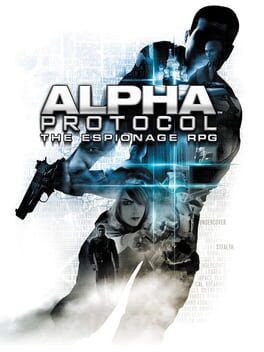
A spy RPG where every conversation and mission approach is a choice with branching consequences — the chaos/order system maps loosely onto Dishonored's, and stealth or combat builds both work. Criminally overlooked.
MGS3 is a third-person stealth epic set in Soviet jungles where you can tranq, trap, or kill every enemy while managing hunger and camouflage — multiple approaches, meaningful consequences, and a rich spy thriller story. Its creative problem-solving spirit maps well onto Dishonored.
Shadow of Mordor centres on assassinating Orc captains in an open world using a combination of stealth takedowns, ranged attacks, and supernatural abilities — the Nemesis system makes each target a living personality. It shares Dishonored's assassination-sandbox loop.
Key difference: Open world structure; no non-lethal approach needed.
Best for: Dishonored fans who want more action and a nemesis system.
Skip if: You prefer tight level design over open-world systems.
Batman: Arkham City's Predator rooms capture the same "hunter in a room full of enemies" tension as Dishonored: you use gadgets and grappling to pick off armed guards one by one without being detected. The detective vision and gadget toolkit echo Dishonored's tool-stacking.
Arkham Knight expands the Predator formula further with more gadgets, more enemy types to neutralise creatively, and a Batmobile that can be used to set traps. The sense of being an apex predator in a dark Gothic city resonates with Dishonored.
Key difference: Heavy vehicle sections break up the stealth rhythm.
Best for: Players who loved Arkham City and want scale and polish.
Cyberpunk 2077 in its current state is a first-person RPG where hacking powers, stealth takedowns, and brute-force combat are all equally valid — the player-defined approach mirrors Dishonored's flexibility. Its Night City has Dishonored-level environmental storytelling.
Key difference: Massive open world; far more RPG dialogue and builds.
Best for: Dishonored fans who want a modern open-world immersive sim.
Skip if: You want tight mission-sandbox design over open-world sprawl.
Skyrim shares Dishonored's first-person perspective, stealth skill tree, and magical ability system — you can play as a shadow assassin using Illusion spells and daggers in a way that rhymes with Corvo's playstyle. The Dark Brotherhood questline especially mirrors Dishonored's assassination theme.
Key difference: Huge open world RPG; no mission-sandbox structure.
Best for: Players who want Dishonored's assassin feel in a vast world.
Skip if: You want authored level design and a chaos system.
New Vegas is built around player choice and consequence in a way few games match — your faction decisions, speech options, and stealth or combat approach all matter. The Courier can be a ghost assassin using sneak, silenced weapons, and companions just as fluidly as Corvo.
Key difference: Post-apocalyptic open world; isometric shooting roots show.
Best for: Dishonored fans who love player agency over pure mechanics.
Skip if: You need real-time stealth tension over RPG systems.
Heavy vehicle sections break up the stealth rhythm.
PlayStation, PC, Xbox, Nintendo
What makes a game truly feel like Dishonored?
The immersive sim core — multiple routes, stacking abilities, environments that reward curiosity — is what separates Dishonored from a generic action-stealth game. Deus Ex (2000) and its sequel Deus Ex: Mankind Divided are the clearest ancestors: every hub level can be approached via vents, hacking, conversation, or outright violence, and your augmentation load-out changes how you read each room. Prey (2017) is the purest modern heir — when you combine Kinetic Blast with a recycling grenade and a turret you've reprogrammed, you're doing exactly what Dishonored wants from you.
For players who love Dishonored's stealth specifically, Mark of the Ninja translates that predator fantasy brilliantly into 2D: its light-and-shadow visibility system and tool-based level design are as expressive as anything in the Dishonored series, just viewed from the side rather than behind Corvo's eyes.
If you loved Dishonored's assassination sandboxes
Dishonored 2 and Dishonored: Death of the Outsider are the obvious next stops — the same mission-sandbox structure with even more inventive level design, including a clockwork mansion that literally reshapes itself. Beyond Arkane's own work, Hitman 3 (in the "additional" list above) is the genre's other sandbox-assassination masterclass: its Dartmoor or Berlin levels rival anything in Dishonored for the number of ways you can eliminate a target. Middle-earth: Shadow of Mordor also delivers a target-driven open world, where the Nemesis system makes every assassination attempt feel personal — though it leans more toward action than stealth.
For the stealth purists: gadgets without the magic
Tom Clancy's Splinter Cell: Chaos Theory remains the benchmark for first-person-adjacent stealth where the environment itself — light levels, noise floors, guard patterns — is your primary tool. If you want to stress-test your stealth skills without supernatural safety nets, Chaos Theory is the game. Metal Gear Solid 3: Snake Eater adds camouflage, survival mechanics, and a richly dramatic story to a similar stealth sandbox, rewarding improvisation just as Dishonored does. Both games demonstrate that you don't need Blink or Possession to feel like a ghost — you just need smart design.
Is Dishonored 2 worth playing if I loved the first game?
Yes — Dishonored 2 is a direct continuation with two distinct protagonists (Corvo and Emily), each with unique power sets, and some of the best individual level designs in the immersive sim genre, including the acclaimed Clockwork Mansion. Most fans consider it at least as good as the original.
What is the closest game to Dishonored made by the same studio?
Prey (2017) is Arkane Studios' other immersive sim and shares the most DNA with Dishonored: layered powers, multi-solution level design, environmental storytelling, and a non-lethal vs. lethal philosophy. It's set on a space station rather than a steampunk city, but the design philosophy is nearly identical.
Are there any games like Dishonored on a smaller budget?
Mark of the Ninja is an excellent lower-cost alternative — it's a 2D indie stealth game with a tool-and-ability system that rewards exactly the same creative problem-solving as Dishonored. Deus Ex (2000) is very cheap today and arguably offers even greater depth for players who can tolerate dated visuals.
What game should I play if I want more stealth and less supernatural powers?
Tom Clancy's Splinter Cell: Chaos Theory is the go-to recommendation — its gadget-based stealth is deep, the levels are highly replayable, and the tension of threading through guarded spaces is very similar to Dishonored. The original Thief: The Dark Project (a direct ancestor of Dishonored) is even purer but requires tolerance for a 1990s engine.
Does BioShock feel like Dishonored?
Partially. Both games are first-person, feature a supernatural ability toolkit, and build atmospheric worlds layered with environmental storytelling. However, BioShock is far more combat-focused and offers little meaningful stealth — you can combine powers creatively in fights, but you can't ghost most encounters. Think of it as Dishonored's louder, more action-oriented cousin.
 98%
98%