Pax Historia's core appeal is the ultimate alternate-history sandbox: you pick a nation, a moment in time, and ask "what if?"—then let generative AI and 4X strategy mechanics play out the answer. Whether that's Rome's survival, the Soviet Union's persistence, or an alien invasion, the game fuses the grand scope of turn-based civilization-building with genuinely freeform narrative creativity.
When players search for games like Pax Historia, they're really looking for two things: historically grounded strategy with real counterfactual depth (not just vaguely "historical" skins), and sandbox freedom to steer empires, rewrite timelines, and watch emergent stories unfold. The games below scratch those specific itches—prioritizing TBS/4X titles with historical or alternate-history DNA over generic action games that merely share a tag.
Top pick:Crusader Kings III is the single closest match: it's an alternate-history sandbox where your ruler's decisions create genuinely divergent timelines—dynasties that shouldn't have survived do, empires that should have risen fall, and every playthrough reads like a "what if?" thought experiment, which is precisely the soul of Pax Historia.
Some store buttons are affiliate links — we may earn a commission at no extra cost to you.
19 games like Pax Historia
95%
Crusader Kings III 2020
Crusader Kings III is the closest analog to Pax Historia's alternate-history sandbox: play a medieval dynasty, make decisions that reshape kingdoms, and watch emergent alternate histories unfold over centuries. Its ruler-level RPG layer on top of grand strategy is nearly identical in spirit.
Key difference: No generative AI narration; emergent story comes from systemic simulation.
Best for: Players wanting the deepest alternate-history sandbox with RPG ruler mechanics.
Skip if: You find complex Paradox UI and steep learning curves off-putting.
Europa Universalis IV lets you guide any nation from 1444 to 1821, making decisions that create wildly divergent alternate timelines—exactly the "what if Rome never fell" counterfactual spirit of Pax Historia, realized through deep grand strategy systems.
Key difference: Pure strategy; no RPG characters or AI-generated narrative text.
Best for: Players who want maximum geopolitical complexity and historical scope.
Skip if: You want approachable onboarding rather than hundreds of interlocking systems.
Civilization V is the genre benchmark for historical 4X turn-based strategy: build a civilization from antiquity, steer it through the ages, and watch alternate histories unfold through your choices. The research tree, diplomacy, and war mechanics mirror exactly what Pax Historia systematizes with its country/era selection.
Key difference: No AI-generated narrative; outcomes emerge purely from deterministic systems.
Best for: Players wanting deep, proven 4X mechanics over freeform storytelling.
Skip if: You need narrative flexibility or alternate "what-if" premises.
Civilization VI's Gathering Storm expansion adds natural disasters, a world congress, and a climate system that reshape history dynamically, making each run feel like a diverging alternate timeline. The same 4X historical sandbox loop as Pax Historia, with more granular civics.
Key difference: Expansion-dependent; no generative AI or scenario scripting.
Best for: Civ V fans wanting richer historical depth and environmental stakes.
Skip if: You dislike managing many interconnected systems simultaneously.
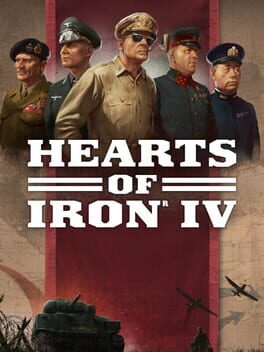
Hearts of Iron IV simulates WWII with enough flexibility to let players rewrite its outcome entirely—fascist USA, Soviet world conquest, restored Roman Empire via focus trees. Its alternate-history sandbox is the most direct mechanical parallel to Pax Historia's premise.
Key difference: Locked to the 1936–1948 period; no AI narrative generation.
Best for: Players whose favorite Pax Historia scenarios involve WWII-era divergence.
Skip if: You want to explore eras beyond the 20th century.
Humankind lets you blend cultures across eras—mixing Rome with Aztec or Mongolia with France—making it explicitly about rewriting history. Its era-based culture-switching and fame system create exactly the alternate-history sandbox feel Pax Historia promises.
Key difference: No custom scenario editor or AI narration; divergence is mechanical, not story-driven.
Best for: Players who want alternate history baked into the 4X loop itself.
Skip if: You prefer pre-set historical factions with fixed identities.
Stellaris applies the Paradox grand-strategy sandbox to space, generating alternate galactic histories through emergent alien empires, crises, and diplomatic blocs. Its "what if alien life developed differently" sandbox mirrors Pax Historia's sci-fi scenario mode.
Key difference: Fully science-fiction; no Earth history or real-world civilizations.
Best for: Players drawn to Pax Historia's alien-invasion or speculative scenarios.
Skip if: You want terrestrial historical settings rather than space opera.
Victoria 3 simulates 19th-century industrialization and geopolitics, letting players guide any nation through alternate paths of colonialism, revolution, and diplomacy. Its political economy model makes "what if the Soviet Union rose earlier" counterfactuals feel grounded.
Key difference: Focused on economics and politics rather than military conquest.
Best for: Players interested in alternate industrial-revolution and Cold War timelines.
Skip if: You prefer combat-focused strategy over economic simulation.
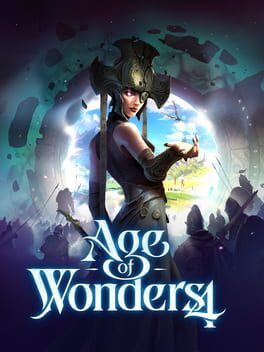
Age of Wonders 4 combines turn-based 4X empire-building with deep RPG customization, letting players design custom factions and rewrite fantasy history through procedurally generated worlds. Its scenario and faction editor parallels Pax Historia's custom map and actor tools.
Key difference: High fantasy setting; no real-world history or alternate Earth scenarios.
Best for: Players who want Civilization-style 4X with RPG faction customization.
Skip if: You specifically want Earth-based historical or alternate-history scenarios.
Heroes of Might and Magic III: The Restoration of Erathia 1999
Heroes of Might and Magic III combines turn-based empire-building with RPG hero management, letting you conquer maps through strategy and combat. Its slow, methodical expansion loop scratches the same TBS itch as Pax Historia without the historical setting.
Key difference: Pure fantasy setting; no historical or alternate-history framing.
Best for: TBS fans who want deep combat tactics over geopolitical simulation.
Skip if: You specifically want real-world civilizations and historical scenarios.
PC
63%
Baldur's Gate III 2023
Baldur's Gate III uses a turn-based tactical combat system layered over rich branching narrative choices, where party composition and decisions create wildly divergent outcomes. The "what if you chose differently" sandbox feel resonates with Pax Historia's alternate-history premise.
Key difference: High-fantasy D&D setting; no civilization-scale strategy.
Best for: RPG players who want turn-based decisions with sweeping narrative consequences.
Skip if: You want macro-level empire management, not party-level adventuring.
Dawn of Man puts you in charge of a prehistoric settlement, managing population, technology, and survival across tens of thousands of years of human history. Its slow-burn historical simulation of civilization's birth is a quieter take on the same historical sandbox impulse.
Key difference: Purely prehistoric; no scripted alternate-history scenarios or AI narration.
Best for: Players who want to simulate humanity's origins before written history.
Skip if: You want to steer recognizable empires or historical nations.
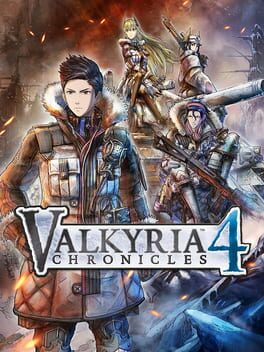
Valkyria Chronicles 4 blends turn-based tactical combat with a fictional-but-grounded WWII-era alternate history, giving each battle a narrative weight reminiscent of "what if" war scenarios. The TBS mechanics and historical-military aesthetic align closely.
Key difference: Fixed linear story; no sandbox or player-authored scenarios.
Best for: Players who want emotional, story-driven alternate-WWII TBS combat.
Skip if: You want open-ended empire building rather than scripted campaigns.
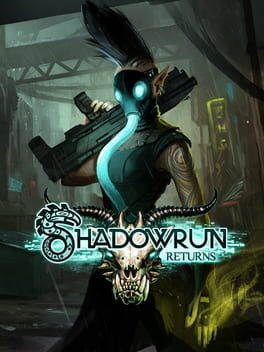
Shadowrun Returns is a turn-based RPG set in a near-future alternate timeline where magic has returned to a cyberpunk Earth—a radically rewritten history. Its tactical grid combat and branching dialogue echo the RPG/TBS hybrid at Pax Historia's core.
Key difference: Cyberpunk-fantasy genre blend; no civilization-scale strategy.
Best for: Players wanting turn-based RPG depth with strong alternate-world lore.
Skip if: You dislike cyberpunk aesthetics or want historical rather than speculative settings.
Shadowrun: Dragonfall improves on Returns with a tighter narrative and deeper character writing, all within the same alternate-history magical-cyberpunk world. Its TBS combat and moral choices reward the same thoughtful decision-making Pax Historia encourages.
Key difference: Linear narrative; no custom scenario creation or historical sandbox.
Best for: Players who want the best writing in the Shadowrun TBS trilogy.
Skip if: You need historical settings rather than speculative alternate futures.
Shadowrun: Hong Kong continues the alternate-history cyberpunk TBS formula with a new setting and improved systems. Its dense world-building around a rewritten global timeline aligns thematically with Pax Historia's "what if" framing.
Key difference: Set in a single city; no macro-scale geopolitical decisions.
Best for: Players who finished Dragonfall and want more of the same formula.
Skip if: You've already played the other Shadowrun games without enjoying them.
Command & Conquer: Red Alert 2 is literally built on an alternate history premise—Einstein's time machine erased Hitler, causing the Soviet Union to invade the United States. Its RTS sandbox around a divergent WWII timeline captures the same imaginative "what if" energy.
Key difference: Real-time not turn-based; action-focused rather than empire simulation.
Best for: Players who want alternate Cold War history with fast-paced combat.
Skip if: You prefer turn-based pacing and long-term empire management.
Age of Empires II builds historical civilizations through resource management and military expansion, covering a sweep of real medieval empires that Pax Historia's historical scenarios often reference. Its campaign structure follows real and counterfactual battles.
Key difference: Real-time strategy; no scenario editor for alternate-history "what if" premises.
Best for: Players who want tight historical RTS with well-researched civilizations.
Skip if: You need turn-based pacing or narrative-driven alternate history.
Spore is one of gaming's most ambitious sandbox 4X experiments, letting a creature evolve from microbe to galactic empire across five distinct phases. Its "what if life evolved differently" premise is the biological equivalent of Pax Historia's historical what-ifs.
Key difference: Biological/sci-fi progression; no human history or geopolitics.
Best for: Players who want the widest possible scope of civilization growth.
Skip if: You want historically grounded civilizations rather than alien creature design.
No generative AI narration; emergent story comes from systemic simulation.
Xbox, PC, PlayStation
Europa Universalis IV
93%
Historical
Pure strategy; no RPG characters or AI-generated narrative text.
PC
Sid Meier's Civilization V
90%
Turn-based strategy (TBS), Historical
No AI-generated narrative; outcomes emerge purely from deterministic systems.
PC
Sid Meier's Civilization VI: Gathering Storm
89%
Turn-based strategy (TBS), Historical
Expansion-dependent; no generative AI or scenario scripting.
PC
Hearts of Iron IV
88%
Historical
Locked to the 1936–1948 period; no AI narrative generation.
PC
Humankind
87%
Turn-based strategy (TBS), Historical
No custom scenario editor or AI narration; divergence is mechanical, not story-driven.
Xbox, PlayStation, PC
Stellaris
82%
4X (explore, expand, exploit, and exterminate)
Fully science-fiction; no Earth history or real-world civilizations.
Xbox, PlayStation, PC
Victoria 3
80%
Historical
Focused on economics and politics rather than military conquest.
PC
Age of Wonders 4
72%
Turn-based strategy (TBS), 4X (explore, expand, exploit, and exterminate)
High fantasy setting; no real-world history or alternate Earth scenarios.
Xbox, PC, PlayStation
Heroes of Might and Magic III: The Restoration of Erathia
68%
Role-playing (RPG), Turn-based strategy (TBS)
Pure fantasy setting; no historical or alternate-history framing.
PC
Baldur's Gate III
63%
Role-playing (RPG), Turn-based strategy (TBS)
High-fantasy D&D setting; no civilization-scale strategy.
Xbox, PC, PlayStation
Dawn of Man
62%
Role-playing (RPG), Indie
Purely prehistoric; no scripted alternate-history scenarios or AI narration.
PlayStation, PC, Xbox
Valkyria Chronicles 4
60%
Role-playing (RPG), Turn-based strategy (TBS)
Fixed linear story; no sandbox or player-authored scenarios.
PlayStation, PC, Xbox, Nintendo
Shadowrun Returns
58%
Role-playing (RPG), Turn-based strategy (TBS)
Cyberpunk-fantasy genre blend; no civilization-scale strategy.
Xbox, PlayStation, PC, Mobile, Nintendo
Shadowrun: Dragonfall - Director's Cut
58%
Role-playing (RPG), Turn-based strategy (TBS)
Linear narrative; no custom scenario creation or historical sandbox.
Xbox, PlayStation, PC, Mobile, Nintendo
What makes a game truly feel like Pax Historia?
Three pillars define the Pax Historia experience: historical grounding (real civilizations, real eras), counterfactual freedom (the ability to diverge meaningfully from recorded history), and empire-scale decision-making rather than individual hero or squad tactics. Games like Sid Meier's Civilization V and Humankind nail all three in a polished 4X package, while Paradox titles like Europa Universalis IV and Hearts of Iron IV push counterfactual depth even further with their systemic simulation of real geopolitics.
Pax Historia's additional twist—generative AI narrative framing—is currently unique, but the closest analog is the emergent storytelling of Crusader Kings III, where systemic events combine into a personalized alternate history that feels authored even when it isn't.
Best picks if you love the "What If?" alternate-history premise specifically
If the alternate-history concept is your primary draw, start with Hearts of Iron IV (rewrite WWII from any nation's perspective, including absurd ahistorical focus trees), Humankind (culture-blending across eras that mechanically forces divergence), and Command & Conquer: Red Alert 2 (built entirely on an Einstein-erases-Hitler premise). For a slower, more narrative take, Valkyria Chronicles 4 delivers a grounded fictional-WWII alternate history with strong character writing.
For players who love Pax Historia's speculative scenarios beyond history—alien invasions, dystopian futures—Stellaris and the Shadowrun series (Returns, Dragonfall, Hong Kong) offer alternate timelines where the world's rules themselves have changed.
If you want deeper RPG mechanics alongside the strategy
Baldur's Gate III and Heroes of Might and Magic III bring the strongest RPG layer to turn-based strategy, letting you invest in individual heroes and characters rather than purely abstract empires. Crusader Kings III sits between both worlds: your ruler is an RPG character with traits, ambitions, and relationships, but they lead a civilization-scale empire.
For a hidden-gem pick, Dawn of Man offers a quieter but deeply satisfying historical RPG-simulation hybrid, tracing humanity's earliest civilizations through tool innovation and survival—the origin story that Pax Historia's Roman scenarios often implicitly reference.
Is there a game like Pax Historia that lets you rewrite history from any nation or time period?
Europa Universalis IV and Crusader Kings III come closest: EU4 covers 1444–1821 with nearly every real nation playable, while CK3 covers 867–1453. Both let you steer your chosen civilization in directions completely counter to recorded history.
What 4X games have the same historical sandbox feel as Pax Historia?
Civilization V and Civilization VI (especially the Gathering Storm expansion) are the most polished historical 4X sandboxes. Humankind adds a unique culture-blending system that makes every run feel like an alternate history. All three use turn-based mechanics matching Pax Historia's TBS genre.
Are there games like Pax Historia on PC that include alternate-history scenarios like "what if the Soviet Union survived"?
Hearts of Iron IV has focus trees explicitly designed for scenarios like a surviving USSR, fascist USA, or restored Byzantine Empire. It's the closest mainstream game to Pax Historia's Cold War and 20th-century counterfactuals.
What games let you build and customize scenarios the way Pax Historia does with its map and actor editors?
Age of Wonders 4 has a robust faction and map customization system. Civilization VI includes a scenario editor modding community. For the deepest customization, Crusader Kings III's modding tools allow complete historical rewrites including custom rulers, dynasties, and starting conditions.
Is there a simpler, more accessible alternative to Pax Historia for people new to 4X historical games?
Sid Meier's Civilization V with the Brave New World expansion is the most accessible entry point—it has a gentle learning curve, clear historical framing, and enough strategic depth to satisfy the same empire-building itch without Pax Historia's complexity. Humankind is another beginner-friendly option with a strong historical theme.
 95%
95%