Hitman (2016) works because each mission is essentially a living puzzle box: a sprawling, crowd-filled location where a target moves on a routine and dozens of overlapping systems — disguises, overheard conversations, poisoned food, falling chandeliers — all become potential tools. The pleasure is not shooting; it's engineering the perfect, untraceable kill from the chaos of a busy space.
When players ask for games like Hitman, they really want two things: sandbox stealth with multiple creative solutions to a defined objective, and the satisfaction of executing a plan in a densely simulated environment. The best picks below share that improvisational, systems-driven philosophy — even if their settings differ wildly.
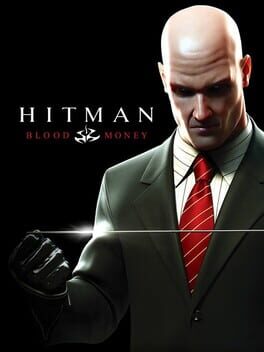
Top pick:Hitman: Blood Money is the single closest pick — it is literally the game Hitman (2016) was designed to surpass, with the same disguise-and-accident sandbox formula, and playing it today reveals exactly how consciously the 2016 reboot refined every idea it contained.
Some store buttons are affiliate links — we may earn a commission at no extra cost to you.
18 games like Hitman
97%
Hitman 2 2018
Direct sequel expanding every sandbox in Hitman (2016) with larger crowds, briefcase weapon concealment, and new mechanics like wall-peeking. The Whittleton Creek and Miami maps are among the best in the franchise.
Key difference: Adds multiplayer Ghost Mode and new mission story breadcrumbs.
Best for: Anyone who finished the 2016 entry and wants more immediately.
Skip if: You've already played it — it shares saves with Hitman 3.
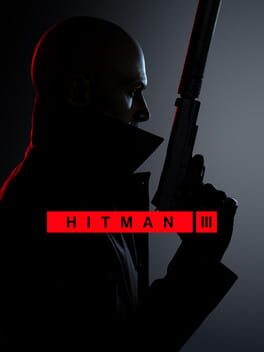
The World of Assassination trilogy's finale with the most technically ambitious levels — the Berlin nightclub and Dartmoor manor are masterclasses in sandbox assassination design, and all prior maps are playable from one client.
Key difference: Story-focused finale with some more linear 'cinematic' beats.
Best for: Anyone starting the trilogy or wanting the definitive single package.
The closest spiritual predecessor to Hitman (2016): sandbox assassination maps, the iconic disguise system, and wildly creative 'accident' kills are all here. Blood Money remains the benchmark the 2016 reboot consciously improved on.
Key difference: Older engine, smaller maps, less NPC density.
Best for: Players wanting the pure sandbox kill-creativity formula.
Skip if: You need modern visuals or online contracts.
MGSV gives you a massive open-world stealth sandbox where every outpost can be tackled through disguise, distraction, sniping, or brute force — the same improvisational DNA as Hitman. Mission planning and multiple extraction routes mirror Hitman's pre-mission prep.
Key difference: Military open world, not curated crowd sandbox levels.
Best for: Fans who want stealth freedom across a huge persistent world.
Skip if: You dislike grinding resources or open-world filler.
Dishonored casts you as an assassin in a densely designed city, where each target can be eliminated or neutralized via a dozen routes — poison, possessing NPCs, staging accidents, or going full ghost. The 'how do I reach this person undetected' puzzle is identical to Hitman.
Key difference: Supernatural powers replace disguise as the main tool.
Best for: Hitman fans who want a richer narrative and abilities.
Skip if: You dislike first-person perspective or fantasy settings.
Hitman: Absolution stars Agent 47 with the same disguise and instinct mechanics, though levels are more linear than the 2016 reboot. Still essential for fans who want more time with the character.
Key difference: More scripted, corridor-driven missions; less open sandbox feel.
Best for: Hitman story fans who've played everything else.
Skip if: Pure sandbox assassination is your sole interest.
Deus Ex: Human Revolution is an immersive sim where every mission — including assassination and extraction objectives — can be completed through stealth, hacking, social manipulation, or combat. The layered approach to level design mirrors Hitman's ethos perfectly.
Key difference: RPG progression and augment upgrades shape your playstyle over time.
Best for: Hitman fans who want narrative depth and cyberpunk atmosphere.
Skip if: You dislike RPG systems or first-person segments.
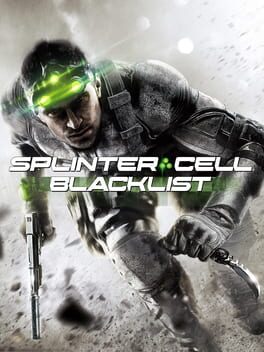
Blacklist's Paladin hub and optional 'perfectionist' mode enforce the same ghost-only discipline as Hitman: no kills, no alerts, creative use of distractions and gadgets across densely layered environments.
Key difference: Gadget-focused third-person cover stealth; no crowd or disguise system.
Best for: Hitman players who want tactical military stealth with co-op missions.
Skip if: You need the social infiltration and disguise sandbox loop.
Deus Ex: Mankind Divided tightens HR's sandbox into more compact, densely designed Prague districts where every target encounter has parallel solutions. Its 'Criminal Past' DLC especially channels Hitman-style contained-sandbox thinking.
Key difference: Feels unfinished story-wise; sequel was cancelled.
Best for: Players wanting Deus Ex with cleaner, smaller sandbox levels.
MGS3 has you stalk a single-mission Russian jungle as a spy-assassin, using disguises, poison food, traps, and environmental kills to neutralize targets — the tonal blueprint for spy-assassin sandbox design.
Key difference: Linear jungle environments rather than crowd-filled urban sandboxes.
Best for: Fans of the spy-assassin aesthetic with cinematic storytelling.
Skip if: You want modern UI and third-person camera controls.
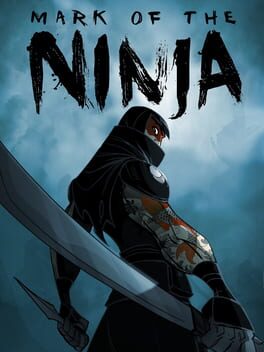
A 2D stealth game where every guard has a cone of vision and hearing radius, and every kill or evasion demands the same methodical planning as Hitman — with an optional ghost-only scoring system that rewards zero-kill runs.
Key difference: 2D side-scrolling; ninja setting; no open-world sandbox.
Best for: Hitman fans who want pure stealth mechanics in a tight 2D format.
Skip if: 3D sandbox environments are non-negotiable for you.
Prey (2017) is a first-person immersive sim set aboard a space station that lets you approach every obstacle — including eliminating specific threats — through hacking, mimicry, stealth, or improvisation. The same 'systems talking to systems' design philosophy underpins Hitman.
Key difference: Horror atmosphere; survival resource management; no human crowd.
Best for: Hitman fans who want immersive-sim depth in a sci-fi setting.
Skip if: Open-ended design without clear mission structure frustrates you.
Alien: Isolation demands pure stealth patience: you learn an enemy's patrol, exploit distractions, and survive by observation rather than firepower — the same discipline Hitman teaches. Level layouts reward memorization and timing.
Key difference: Horror survival; you're the prey, not the predator.
Best for: Hitman ghost-run players who enjoy tension over creativity.
Skip if: Horror atmospheres or lack of agency over kills bother you.
A third-person shadow-teleportation stealth game where you assassinate targets in Japanese fortress levels that each have multiple shadow-based routes — the same 'plan your route through a static sandbox' loop as Hitman at a budget price.
Key difference: Fantasy shadow powers replace disguises; no crowd simulation.
Best for: Budget-conscious Hitman fans who want third-person assassination levels.
Skip if: You need dense NPC simulation and modern production values.
Batman: Arkham City's 'Predator' rooms are mini-Hitman puzzles: a group of armed guards, multiple vantage points, and you must neutralize all of them without being seen, using gadgets and environment to stage takedowns.
Key difference: Primarily a brawler; stealth is one mode among many.
Best for: Players who want Hitman-style predator rooms in a superhero package.
Skip if: You want assassination creativity over beat-em-up combat.
Brotherhood adds assassination contracts across Renaissance Rome — optional side missions where you plan a kill and escape from a defined social space, which directly echoes Hitman's escalation design. Social stealth via crowds is central.
Key difference: Parkour traversal and combat are the dominant verbs.
Best for: Players who want the assassination-in-a-crowd feel with open-world scope.
Skip if: You want pure stealth with no mandatory sword combat.
Ghost of Tsushima features a full stealth assassination mode (Ghost stance) where you can chain-kill groups via distractions, tall grass positioning, and environmental kills — structurally reminiscent of Hitman's approach but in feudal Japan.
Key difference: Large open world, samurai combat focus; stealth is optional.
Best for: Players who want Hitman-style kills in a gorgeous open-world action game.
Skip if: Pure stealth sandboxes with no combat requirement are your priority.
L.A. Noire puts you in crime scenes where reading NPC behaviour, gathering intelligence, and making deductions before acting mirrors Hitman's reconnaissance phase. Both games reward observing a space before intervening.
Key difference: You're a detective gathering evidence, not an assassin eliminating targets.
Best for: Hitman fans drawn to the 'read the environment' loop over the killing.
Skip if: You need active stealth or assassination as the payoff.
Adds multiplayer Ghost Mode and new mission story breadcrumbs.
PlayStation, PC, Xbox
Hitman 3
96%
Shooter, Tactical
Story-focused finale with some more linear 'cinematic' beats.
Xbox, PlayStation, PC
Hitman: Blood Money
95%
Shooter, Action
Older engine, smaller maps, less NPC density.
Xbox, PC, PlayStation
Metal Gear Solid V: The Phantom Pain
90%
Shooter, Tactical
Military open world, not curated crowd sandbox levels.
PlayStation, PC, Xbox
Dishonored
90%
Adventure, Action
Supernatural powers replace disguise as the main tool.
PlayStation, PC, Xbox
Hitman: Absolution
84%
Shooter, Tactical
More scripted, corridor-driven missions; less open sandbox feel.
PlayStation, Mobile, PC, Xbox, Nintendo
Deus Ex: Human Revolution
83%
Shooter, Action
RPG progression and augment upgrades shape your playstyle over time.
PlayStation, PC, Xbox
Tom Clancy's Splinter Cell: Blacklist
82%
Shooter, Tactical
Gadget-focused third-person cover stealth; no crowd or disguise system.
PlayStation, PC, Nintendo, Xbox
Deus Ex: Mankind Divided
80%
Shooter, Adventure
Feels unfinished story-wise; sequel was cancelled.
PlayStation, PC, Xbox
Metal Gear Solid 3: Snake Eater
77%
Shooter, Tactical
Linear jungle environments rather than crowd-filled urban sandboxes.
PlayStation
Mark of the Ninja
74%
Adventure, Action
2D side-scrolling; ninja setting; no open-world sandbox.
PC, Xbox
Prey
72%
Shooter, Adventure
Horror atmosphere; survival resource management; no human crowd.
PlayStation, PC, Xbox
Alien: Isolation
70%
Adventure, Action
Horror survival; you're the prey, not the predator.
PlayStation, PC, Xbox, Nintendo
Aragami
70%
Adventure, Action
Fantasy shadow powers replace disguises; no crowd simulation.
PlayStation, PC, Xbox, Nintendo
Batman: Arkham City
67%
Adventure, Action
Primarily a brawler; stealth is one mode among many.
PlayStation, PC, Xbox, Nintendo
What makes a game feel like Hitman (2016)?
Three pillars define the Hitman feel: a densely simulated level with NPCs on routines, a disguise or social infiltration system that lets you walk in plain sight, and multiple converging paths to a single target. Games that nail all three — like Dishonored and Metal Gear Solid V: The Phantom Pain — are the truest matches, even though their settings are completely different from Paris or Tokyo.
The Deus Ex trilogy (original, Human Revolution, Mankind Divided) earns its place here for the same reason: every mission is a layered sandbox where hacking a camera, bribing a guard, or venting through a ceiling are all equally valid paths to the objective. That 'solve it your way' promise is Hitman's core.
If you want pure stealth creativity over open-world scope
Hitman's maps are not open worlds — they are contained, handcrafted sandboxes. If that concentrated design is what you love, Dishonored 2's individual mission levels (particularly the Clockwork Mansion) and Hitman: Blood Money's opera house or New Orleans mardi gras maps are the tightest equivalents available. Both reward replaying a single stage ten times to discover routes you missed.
For a more stripped-back take, the 2D Mark of the Ninja (in Additional) applies the same 'every guard has perfect logic you can exploit' discipline in a side-scrolling format — an underrated pick that Hitman fans consistently enjoy once they try it.
Sandbox stealth with a darker, more oppressive tone
Alien: Isolation inverts the Hitman power dynamic — you are the one being hunted — but the core skill is identical: memorize patrol routes, use distractions, and survive by observation. It rewards the same patience and spatial awareness that makes Hitman's ghost runs satisfying. Prey (2017) offers the immersive-sim equivalent in zero-gravity sci-fi: every room is a puzzle with multiple entry points, and the game never tells you the 'correct' solution.
Is Hitman (2016) connected to the older Hitman games?
Yes — it's a soft reboot that serves as a prequel/origin story for Agent 47 within the existing lore. You don't need to have played Blood Money or Absolution to follow it, but Blood Money is the most direct predecessor in terms of gameplay style.
What is the closest game to Hitman if I want the same disguise and sandbox kill mechanics?
Hitman: Blood Money (2006) is the closest single game — it essentially invented the modern template the 2016 reboot perfected. After that, Dishonored and Metal Gear Solid V: The Phantom Pain are the strongest matches from outside the franchise.
Are the Deus Ex games similar to Hitman?
In terms of design philosophy, yes. Deus Ex: Human Revolution and Mankind Divided share the 'multiple solutions to every problem' sandbox ethos, and both support a full ghost/stealth run. The moment-to-moment feel is different (more RPG, more cover-shooting), but the spirit of creative problem-solving is the same.
Is Dishonored basically Hitman in a fantasy world?
It's a fair shorthand. Dishonored gives you a single assassination target per mission in a richly simulated environment and lets you choose any approach — ghost, accident kill, frontal assault, or even a non-lethal takedown that changes the ending. The key difference is supernatural powers replace the disguise system as the primary infiltration tool.
What should I play after finishing the entire World of Assassination trilogy?
The Dishonored series (both games and their DLC) is the most structurally similar follow-up. After that, Metal Gear Solid V: The Phantom Pain for open-world stealth freedom, and Deus Ex: Human Revolution for immersive-sim mission design with strong writing.
 97%
97%