Manor Lords earns its fanbase through a rare combination: an organic, non-grid medieval city-builder where burgage plots grow naturally along roads, paired with a deep production-chain economy (malt to beer, hides to shoes) that feeds a living population with real needs. Its historical grounding in late 14th-century Franconia and the shift from village survival to territorial conquest give it a texture most strategy games lack.
When players ask for "games like Manor Lords" they're really chasing one or more of these things: the satisfaction of watching a village organically grow, the puzzle of interlocking supply chains, the tension of medieval resource scarcity, or the thrill of commanding small-scale historical battles for land. The best alternatives nail at least two of these pillars.
Top pick:Banished is the single closest match for the city-building and survival-management core of Manor Lords — if you strip away the conquest layer and want pure, punishing medieval settlement growth where every harsh winter tests your supply chains, Banished delivers that experience better than anything else on this list.
Some store buttons are affiliate links — we may earn a commission at no extra cost to you.
19 games like Manor Lords
92%
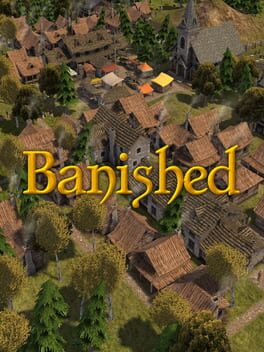
Banished 2014
Banished is the closest structural twin to Manor Lords: grow a small band of settlers into a self-sustaining medieval village by managing food, firewood, clothing, and population health. Both games demand tight supply-chain thinking and punish overexpansion harshly.
Key difference: No military or conquest layer whatsoever.
Best for: Players who want pure city-building without combat pressure.
Skip if: You need territory expansion and tactical battle.
Medieval Dynasty drops you into 14th-century Europe to build a village from a single character upward, constructing individual buildings, managing villager jobs and food, and expanding into a dynasty — sharing Manor Lords' historical accuracy and production-chain depth with a first-person RPG layer added.
Key difference: First-person RPG perspective alongside the settlement management.
Best for: Players who want to live inside their village, not just watch it.
Skip if: You dislike first-person survival RPG elements.
Stronghold blends medieval castle construction with an economic simulation of farms, markets, and food chains, then tests them against enemy sieges. The dual economy/military loop mirrors Manor Lords' village-to-domain structure closely.
Key difference: Stylized, arcadey feel rather than historical realism.
Best for: Players who want sieges and castle design front and center.
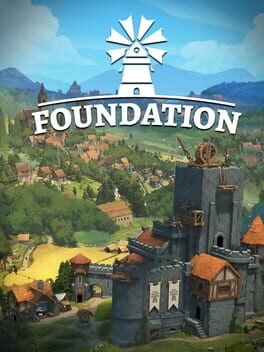
Foundation is an organic medieval city-builder with no fixed grids — villagers find their own paths and buildings slot into natural landscapes, producing goods through interlocking chains. The non-grid medieval urbanism is nearly identical in spirit to Manor Lords.
Key difference: No military or territory-conquest layer; purely a city builder.
Best for: Players who want Manor Lords' organic city layout without combat.
Skip if: You need battles and territorial expansion.
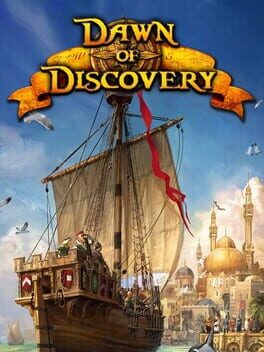
Dawn of Discovery (Anno 1404) is built around deep, interlocking production chains in a medieval/Renaissance setting — supply cloth to tailors, hops to breweries — with a layered population happiness system. The historical European aesthetic and trade-focused loop feel remarkably close to Manor Lords.
Key difference: Naval trade and island colonization replace land-based territory expansion.
Best for: Players who love Manor Lords' production chains above all else.
Skip if: You dislike sea exploration or lack of ground combat.
Frostpunk challenges you to build a survival city around a coal generator, managing production chains, population morale, and laws under extreme resource scarcity. The same tightly coupled supply-chain stress and moral weight of city governance mirror Manor Lords' feel.
Key difference: Dystopian ice-age setting with a survival-horror tone.
Best for: Players who want Manor Lords' resource tension cranked to maximum.
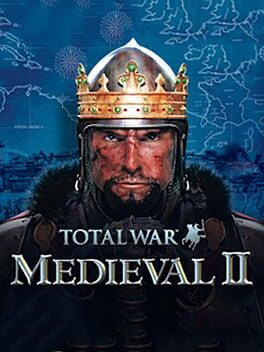
Medieval II: Total War places you in command of a medieval European kingdom, building towns, managing trade, and commanding armies in detailed real-time battles across the same late-medieval period Manor Lords draws from.
Key difference: Full grand-strategy campaign across all of Europe; much larger scope.
Best for: Players who want Manor Lords' era with epic battlefield command.
Skip if: You find grand strategy maps and diplomacy overwhelming.
Mobile
81%
Anno 1800 2019
Anno 1800 delivers some of the most elaborate production chains in strategy gaming, with citizens who demand specific goods to level up — a direct structural relative of Manor Lords' burgages. The city-building detail and supply-chain depth are outstanding.
Key difference: Industrial-era setting and heavy maritime economy instead of medieval.
Best for: Manor Lords fans who want more complex supply chains and longer campaigns.
Skip if: The 19th-century theme breaks immersion for medieval purists.
Age of Empires II tasks you with raising a medieval civilization from a town center outward, gathering wood, food, stone, and gold across distinct technology ages. The medieval European theme and resource-into-military pipeline share clear DNA with Manor Lords.
Key difference: Faster-paced RTS with abstract economy rather than organic city layout.
Best for: Players who want competitive multiplayer medieval RTS.
Skip if: You prefer organic city growth over base-building grids.
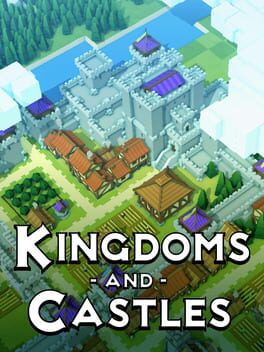
Kingdoms and Castles has you grow a medieval village, tax citizens, manage food and stone production chains, and defend against Viking raids and dragons. It shares Manor Lords' village-to-kingdom arc in a more accessible, low-poly package.
Key difference: Stylized visuals and simplified systems; more casual pacing.
Best for: Players who want Manor Lords' loop without micromanagement depth.
Skip if: You want historical realism and complex production chains.
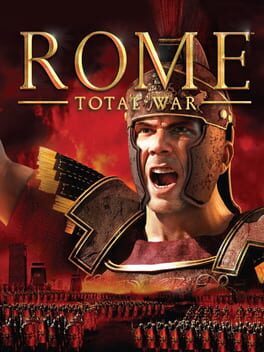
Rome: Total War separates grand strategic map management from real-time tactical battles — a split that Manor Lords also uses. Building up provinces, managing trade, and then commanding armies in field battles scratches the same conquest itch, just in a Roman setting.
Key difference: Roman antiquity setting with large-scale pitched battles instead of small skirmishes.
Best for: Players who want richer battlefield tactics and historical campaigns.
Skip if: You only care about city-building, not tactical combat.
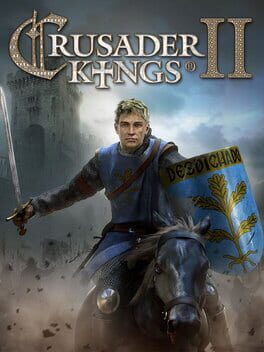
Crusader Kings II models medieval lordship at the dynasty and realm level — managing vassals, marriages, claims, and wars for territory in a way that captures the political texture of being a medieval lord. The feudal economy and land expansion feel thematically adjacent to Manor Lords.
Key difference: Abstracted map-based grand strategy with no real-time battle or city layout.
Best for: Players fascinated by medieval politics, succession, and intrigue.
Skip if: You want visible village construction and resource chains.
Northgard has you guide a Viking clan to settle a new continent by assigning workers to zones, managing food and lore, and fending off rivals. The zone-control expansion and population/food balancing parallel Manor Lords' core loop in a tighter, more accessible package.
Key difference: Norse mythology theme; faster-paced and less realistic than Manor Lords.
Best for: Players who want Manor Lords' loop in shorter, friendlier sessions.
Skip if: You want historical realism and organic city layouts.
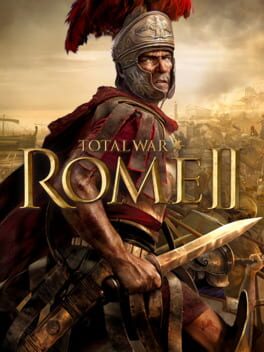
Total War: Rome II uses the familiar split between a province-management campaign map and real-time battles. Building cities, managing food and income, and fielding historically accurate armies in tactical engagements mirrors the dual-layer design of Manor Lords.
Key difference: Ancient Rome setting; much larger armies and more complex diplomacy.
Best for: Players who want a deep historical campaign with grand-scale battles.
Skip if: You prefer medieval setting and village-level micromanagement.
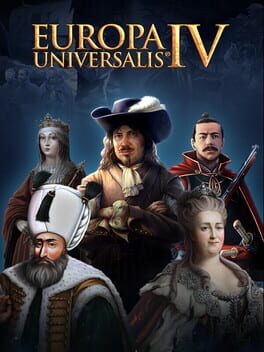
Europa Universalis IV puts you in charge of a historical European nation from the 15th century onward, managing trade, provinces, and warfare — overlapping Manor Lords' territory-expansion theme at a macro level. The late medieval start date aligns with Manor Lords' era.
Key difference: Pure grand strategy spreadsheet; no city layout or production chains.
Best for: Players craving deep geopolitical strategy after finishing Manor Lords.
Skip if: You want visible cities and hands-on village management.
Rise of Nations blends Civilization's empire-building progression with Age of Empires-style real-time combat, letting you construct cities and advance through historical eras. The mix of economy, expansion, and military has genre kinship with Manor Lords.
Key difference: Spans all history ages, not focused on medieval; faster RTS pace.
Best for: Players who want historical RTS spanning many eras competitively.
Skip if: You want slow, immersive medieval settlement detail.
RimWorld tasks you with growing a small colony into a functioning settlement by managing production chains, moods, and external threats — the core survival-management loop mirrors Manor Lords even in a sci-fi skin. Both games punish neglected production with cascading crises.
Key difference: Science-fiction setting; colony builder not a city-layout game.
Best for: Players who love deep resource and colonist management.
Skip if: The sci-fi theme is a dealbreaker; you want historical medieval.
Civilization V's strategic layer of building city improvements, managing trade routes, and advancing through ages shares the empire-building satisfaction of Manor Lords. The historical theming and territory expansion by culture or force overlap thematically.
Key difference: Turn-based 4X with no city construction detail or real-time combat.
Best for: Players who want a complete historical civilization arc.
Skip if: You need real-time village-building and direct battle command.
Cities: Skylines focuses on organic city layout, road networks, and zoning — the closest analogue to Manor Lords' organic burgage-plot urbanism in a modern setting. Both games reward thinking about traffic flow and citizen access to services.
Key difference: Modern city planning with no medieval setting, military, or survival pressure.
Best for: Players who love the city-layout design side of Manor Lords most.
Skip if: You want medieval theme and resource/production chains.
First-person RPG perspective alongside the settlement management.
Xbox, PlayStation, PC
Stronghold
87%
Real Time Strategy (RTS), Simulator
Stylized, arcadey feel rather than historical realism.
PC
Foundation
87%
Simulator, Strategy
No military or territory-conquest layer; purely a city builder.
PC
Dawn of Discovery
86%
Real Time Strategy (RTS), Simulator
Naval trade and island colonization replace land-based territory expansion.
PC
Frostpunk
83%
Simulator, Strategy
Dystopian ice-age setting with a survival-horror tone.
PlayStation, PC, Xbox
Total War: Medieval II
82%
Strategy
Full grand-strategy campaign across all of Europe; much larger scope.
Mobile
Anno 1800
81%
Real Time Strategy (RTS), Simulator
Industrial-era setting and heavy maritime economy instead of medieval.
Xbox, PC, PlayStation
Age of Empires II: The Age of Kings
79%
Real Time Strategy (RTS), Strategy
Faster-paced RTS with abstract economy rather than organic city layout.
PC, PlayStation
Kingdoms and Castles
78%
Simulator, Strategy
Stylized visuals and simplified systems; more casual pacing.
Xbox, PlayStation, PC
Rome: Total War
77%
Real Time Strategy (RTS), Simulator
Roman antiquity setting with large-scale pitched battles instead of small skirmishes.
Mobile, PC
Crusader Kings II
75%
Simulator, Strategy
Abstracted map-based grand strategy with no real-time battle or city layout.
PC
Northgard
74%
Real Time Strategy (RTS), Simulator
Norse mythology theme; faster-paced and less realistic than Manor Lords.
PlayStation, PC, Mobile, Xbox, Nintendo
Total War: Rome II
72%
Real Time Strategy (RTS), Strategy
Ancient Rome setting; much larger armies and more complex diplomacy.
PC
Europa Universalis IV
65%
Real Time Strategy (RTS), Simulator
Pure grand strategy spreadsheet; no city layout or production chains.
PC
What makes a game truly feel like Manor Lords?
Three pillars define the Manor Lords experience: organic city layout (roads and buildings placed freely, not on a grid), production-chain depth (raw material → processed good → citizen need satisfied), and dual-layer strategy (village management plus territorial combat). Very few games hit all three. Banished nails the first two but has no military layer. Dawn of Discovery (Anno 1404) has perhaps the most satisfying production chains in the genre and a beautiful medieval aesthetic, but routes them through maritime trade rather than land conquest. Stronghold is the best blend of medieval economy and siege combat if you can tolerate its more arcade feel.
For the territorial conquest side specifically, Rome: Total War and Total War: Medieval II (not in the candidate pool but highly recommended) offer the most satisfying historical battles paired with province management — just at a much grander scale than Manor Lords' intimate skirmishes.
Best picks if you love Manor Lords' historical medieval setting
Manor Lords' commitment to late-14th-century accuracy is unusual. Dawn of Discovery / Anno 1404 shares that Renaissance-adjacent European aesthetic and similarly avoids fantasy tropes, making it the most visually and thematically coherent alternative. Crusader Kings II captures medieval feudal politics — lords, vassals, marriage alliances — with extraordinary depth, though entirely through map-and-menu abstraction rather than city construction. Age of Empires II covers the same era and lets you experience the Dark Age through the Feudal Age to the Castle Age with iconic medieval units and architecture.
For a lesser-known gem, Medieval Dynasty is exceptional: you build your village from the ground up in first-person, manage crop rotations, assign villager roles, and watch your dynasty grow across generations — with arguably the most immersive "you are the lord" feel of any game on this list.
If you want deeper production chains than Manor Lords
Manor Lords' production chains are satisfying but relatively compact. If that's the mechanic you want taken further, Anno 1800 is the gold standard — its industrial-era city-building demands multi-stage supply chains across islands with thousands of citizens demanding specific goods. Dawn of Discovery (Anno 1404) delivers the same Anno production-chain depth in a medieval European wrapper that feels immediately familiar to Manor Lords players. For a more experimental take, Foundation (an indie title not in the candidate pool) offers organic non-grid medieval city-building with an emphasis on resource flow that mirrors Manor Lords' philosophy almost exactly.
Is there a game exactly like Manor Lords but with more content?
Medieval Dynasty is the closest in spirit — it shares the 14th-century European setting, organic village growth, and production chains, but adds a first-person RPG layer and a dynasty progression system that gives it significantly more long-term content.
What is the best Manor Lords alternative for city-building without combat?
Banished is the top pick for pure medieval settlement management with no military pressure. Foundation is also excellent if you want an organic, non-grid medieval builder focused entirely on city growth and supply chains.
Are there games like Manor Lords with bigger battles?
Total War: Medieval II and Rome: Total War both let you command large historical armies in real-time tactical battles, combined with a strategic empire-management map. They share Manor Lords' historical grounding but scale battles up dramatically.
What games have production chains like Manor Lords?
Anno 1800 and Anno 1404 (Dawn of Discovery) are the genre leaders for deep, interlocking production chains in a city-building context. RimWorld offers similarly complex colony logistics in a sci-fi setting.
Is Crusader Kings II similar to Manor Lords?
Thematically yes — both simulate medieval lordship, territory expansion, and feudal relationships. But Crusader Kings II is a grand-strategy game played through menus and map clicks, with no city construction or resource chain management, so the day-to-day feel is quite different.
 92%
92%