Slither.io works because its ruleset fits on a single sentence: eat glowing pellets to grow your snake longer, and trap rivals into colliding with your body before they do the same to you. That simplicity, combined with a live server full of real human opponents and the permanent threat of losing everything in an instant, creates an arcade tension loop that is almost impossible to put down.
When players look for games like Slither.io, they are really chasing three things: an accessible pick-up-and-play control scheme, a competitive multiplayer arena where skill and size both matter, and that specific satisfaction of outmaneuvering a bigger opponent. The best alternatives either replicate the .io browser format directly or capture the eat-to-grow survival tension in a different setting.
Top pick:Agar.io is the single closest match — it comes from the same .io browser-game lineage, runs in any browser without a download, and centres on an identical grow-by-consuming loop against live opponents, making it the essential first stop for any Slither.io fan.
Some store buttons are affiliate links — we may earn a commission at no extra cost to you.
15 games like Slither.io
95%
Agar.io 2015
Agar.io is the most direct sibling to Slither.io: a browser-based multiplayer arena where you control a cell that grows by consuming smaller pellets and other players, while evading larger cells that can absorb you. The core loop is nearly identical.
Key difference: Cell/blob rather than snake; no trail-collision mechanic.
Best for: Slither.io fans wanting the purest eat-and-grow multiplayer formula.
Skip if: You specifically prefer the snake movement and trail-trap strategy.
Little Big Snake is a direct Slither.io evolution: a browser multiplayer snake game where you eat orbs and insects to grow longer, trap rivals with your body, and climb server leaderboards, with added RPG leveling and team modes.
Key difference: Adds RPG progression, quests, and persistent upgrades between sessions.
Best for: Slither.io veterans wanting the same core loop with more long-term depth.
Skip if: You prefer the minimalist no-frills presentation of the original.
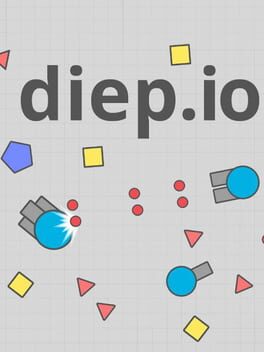
Diep.io is a browser multiplayer arena shooter where you control a tank that levels up by destroying shapes and enemy tanks, blending Slither.io's grow-to-dominate loop with projectile combat and upgradeable stats.
Key difference: Tank shooter with RPG upgrade trees, not a snake-movement game.
Best for: Players who want the .io multiplayer format with more combat depth.
Skip if: You dislike shooting mechanics and prefer pure movement-based gameplay.
Paper.io 2 puts you in a multiplayer arena where you expand your colored territory by looping back to your own zone, while other players can eliminate you by cutting your trail — a spatial risk/reward loop nearly identical to Slither.io's tail-crossing mechanic.
Key difference: Territory-painting instead of snake-length growth.
Best for: Slither fans who love the trail-vulnerability mechanic above all else.
Skip if: You want length/size as the primary score metric.
Mobile
55%
Pac-Man 1980
Pac-Man shares the core arcade loop of navigating an arena to consume dots while avoiding threats that end your run instantly. Both games are pick-up-and-play competitive experiences built around a single elegant rule set.
Key difference: Single-player maze; no multiplayer growth competition.
Best for: Fans who love the eat-and-avoid loop in a pure arcade format.
Skip if: You need real-time multiplayer rivalry to stay engaged.
Spore's cell stage is the closest mainstream game to Slither.io's DNA: swim around a primordial ocean eating smaller organisms to grow larger while dodging predators bigger than you. The progression from tiny cell to dominant creature mirrors Slither's snowballing size loop.
Key difference: Transitions to a full single-player evolution strategy game after early stages.
Best for: Players who want the eat-to-grow loop with a longer campaign attached.
Skip if: You only want the competitive multiplayer arena format.
Dota 2 is a competitive multiplayer arena where positioning, outmaneuvering opponents, and snowballing an early lead into dominance are central skills — the same meta-game tension as Slither.io's server rankings.
Key difference: Deep team-based strategy game, not a casual arcade experience.
Best for: Slither fans ready to invest hundreds of hours into competitive skill.
Skip if: You want something you can play in a five-minute browser session.
Worms Armageddon pits multiple players against each other in an arena where survival and outlasting opponents is the goal, with playful physics and quick sessions that feel similarly casual-competitive to Slither.io lobbies.
Key difference: Turn-based artillery rather than real-time movement.
Best for: Players who love competitive multiplayer with short, chaotic rounds.
Skip if: You want continuous real-time movement and reaction gameplay.
Minecraft's survival mode shares the core loop of starting with nothing and growing steadily more powerful by consuming resources from the world around you, with an ever-present threat of losing it all.
Key difference: Massive open-world builder, not a competitive multiplayer arena.
Best for: Slither fans who want to extend the resource-accumulation loop into a richer world.
Skip if: You want head-to-head real-time competition against other players.
Mario Kart 8 delivers the same short-session competitive multiplayer feel with simple controls that anyone can pick up, where outmaneuvering rivals in a chaotic arena determines the winner.
Key difference: Racing game, no growth or collection mechanic.
Best for: Casual players who love frantic multiplayer competition with friends.
Skip if: You want a single-player or browser-friendly experience.
Osu! is a free, browser-accessible arcade game with a massive online community and score-chasing competitive loops, matching Slither.io's accessibility and leaderboard-driven appeal.
Key difference: Rhythm-based precision game, not a movement-and-survival arena.
Best for: Players drawn to free, browser-style competitive score chasing.
Skip if: You want spatial movement and outmaneuvering other avatars.
The Binding of Isaac: Rebirth is an arcade-feel survival game where runs start small and snowball in power as you collect items, with permadeath pressure matching Slither.io's risk-of-losing-everything tension.
Key difference: Single-player roguelike dungeon crawler, not a multiplayer arena.
Best for: Slither fans who want deeper run-based progression in a solo format.
Skip if: You specifically need live multiplayer competition.
Cuphead is a pure arcade action game with short sessions, punishing instant-death mechanics, and a pick-up-and-replay feel that matches Slither.io's quick-respawn arcade loop.
Key difference: Structured boss-rush platformer, not an open multiplayer arena.
Best for: Slither fans who want an arcade challenge with beautiful visual style.
Skip if: You want free-form multiplayer rather than fixed levels.
Goat Simulator shares Slither.io's sandbox silliness and accessible chaos, offering a low-stakes environment to just mess around without a serious progression commitment.
Key difference: Chaotic physics sandbox with no competitive multiplayer loop.
Best for: Players who enjoyed Slither.io for pure casual silliness rather than competition.
Skip if: You want a meaningful competitive or growth mechanic.
The original Grand Theft Auto uses a top-down perspective in an open arena where you accumulate points and evade threats, sharing Slither.io's bird's-eye spatial awareness and arcade-action feel from 1997.
Key difference: Single-player mission-based crime game, not a snake-growth arena.
Best for: Retro fans curious about early top-down arcade-style open-world games.
Skip if: You want any form of snake/growth or modern multiplayer.
Cell/blob rather than snake; no trail-collision mechanic.
PC, Mobile
Little Big Snake
88%
Action
Adds RPG progression, quests, and persistent upgrades between sessions.
Mobile
Diep.io
80%
Simulator, Action
Tank shooter with RPG upgrade trees, not a snake-movement game.
Mobile
Paper.io 2
75%
Arcade, Action
Territory-painting instead of snake-length growth.
Mobile
Pac-Man
55%
Arcade, Action
Single-player maze; no multiplayer growth competition.
—
Spore
48%
Simulator, Action
Transitions to a full single-player evolution strategy game after early stages.
PC
Dota 2
38%
Action
Deep team-based strategy game, not a casual arcade experience.
PC
Worms Armageddon
35%
Action
Turn-based artillery rather than real-time movement.
PlayStation, Nintendo, PC
Minecraft: Java Edition
33%
Simulator
Massive open-world builder, not a competitive multiplayer arena.
PC
Mario Kart 8
32%
Arcade, Action
Racing game, no growth or collection mechanic.
Nintendo
Osu!
30%
Arcade, Action
Rhythm-based precision game, not a movement-and-survival arena.
PC, Mobile
The Binding of Isaac: Rebirth
28%
Arcade, Action
Single-player roguelike dungeon crawler, not a multiplayer arena.
PlayStation, PC, Nintendo, Mobile, Xbox
Cuphead
25%
Arcade, Action
Structured boss-rush platformer, not an open multiplayer arena.
PlayStation, PC, Xbox, Nintendo
Goat Simulator
22%
Simulator, Arcade
Chaotic physics sandbox with no competitive multiplayer loop.
PlayStation, PC, Xbox
Grand Theft Auto
20%
Action
Single-player mission-based crime game, not a snake-growth arena.
Nintendo, PC, PlayStation
What Makes a Game Feel Like Slither.io?
The magic of Slither.io rests on three interlocking pillars: frictionless entry (no install, instant session), a snowballing size mechanic where early leads compound, and the spatial mind-game of using your own body as a weapon. Very few big-budget titles replicate all three, which is why the .io genre — Agar.io, Diep.io, Paper.io 2, and Little Big Snake — remains the truest hunting ground for replacements.
Among the games in our wider list, Pac-Man distils the eat-and-avoid arcade loop into its purest retro form, while Spore's cell stage is the only major studio game that faithfully recreates the sensation of being the smallest creature in the pond and growing until you are the apex predator — a remarkable hidden match most "games like Slither" lists completely overlook.
Best Multiplayer and Competitive Alternatives
If competition against other players is the main draw, Dota 2 and Worms Armageddon both deliver genuine head-to-head rivalry with short sessions and high replayability, even though their mechanics diverge significantly from snake movement. Mario Kart 8 captures the same casual-yet-cutthroat multiplayer energy that makes Slither.io lobbies addictive, with split-second decisions determining who comes out on top.
For the truest competitive replacement, Little Big Snake preserves the full Slither.io formula — tail-trapping, orb-eating, leaderboard climbing — while adding persistent upgrades that reward dedicated players across sessions.
If You Want the Arcade Loop Without the Multiplayer
The Binding of Isaac: Rebirth is the standout solo pick: each run begins tiny and powerless, and smart collection of items snowballs into overwhelming dominance — or sudden death wipes everything out, just like a Slither.io round. Pac-Man serves the same eat-and-survive rhythm in its purest, most timeless arcade form. Both games share Slither.io's core emotional beat even without a live opponent on the other end.
Agar.io is the most direct equivalent — it runs in a browser, fills a live server with real opponents, and tasks you with consuming smaller targets to grow while avoiding larger players who can eliminate you. Little Big Snake adds RPG progression on top of the same snake-arena formula and is the best pick if you want more long-term depth.
Are there games like Slither.io on console?
No direct console port of Slither.io exists, but Mario Kart 8 on Nintendo Switch delivers a comparable casual-competitive multiplayer arena feeling. For the growth mechanic specifically, Spore on PC is the closest major-studio experience, particularly its cell-stage opening hours.
What games use the same "eat to grow" mechanic as Slither.io?
Agar.io and Little Big Snake replicate it most faithfully in multiplayer. Spore's cell stage is the best single-player version. Paper.io 2 offers a territory-expansion twist where claiming space is the growth metaphor.
Is there a Slither.io with more depth or RPG elements?
Little Big Snake adds quest systems, insect-hunting, and persistent character leveling between sessions while keeping the snake-arena multiplayer core intact. Diep.io offers upgradeable stats and tank classes if you want the .io format with more mechanical variety.
What should I play if I love Slither.io but want something more challenging?
Diep.io raises the skill ceiling significantly by adding projectile combat and branching upgrade paths to the .io arena formula. For a completely different genre, The Binding of Isaac: Rebirth delivers the same high-risk, all-or-nothing session structure with a steep mastery curve.
 95%
95%