Marvel Rivals earns its audience through a specific formula: a large roster of beloved superheroes, each with wildly distinct ability kits, playing in a 6v6 team format where combining those kits via Team-Up skills creates emergent power. The destructible arenas and the sheer visual spectacle of Marvel supers firing simultaneously make it feel like no other shooter.
When players look for games like Marvel Rivals, they're really asking for one or more of these ingredients: hero-shooter team dynamics, distinct ability identities across a large roster, competitive PvP objective modes, or simply the superhero power fantasy. The best picks here deliver on at least two of those pillars.
Top pick:Overwatch is the single closest pick — it invented the modern hero-shooter format that Marvel Rivals directly inherits, with objective-based 6v6 matches, a large roster of ability-driven heroes each with a passive, skills, and ultimate, and the same requirement to build a synergistic team composition to win.
Some store buttons are affiliate links — we may earn a commission at no extra cost to you.
Overwatch is the direct blueprint Marvel Rivals builds on: two teams of heroes with unique abilities clash over objectives, with team composition and ability synergies deciding fights. Swapping heroes mid-match to counter the enemy is core to both games.
Key difference: No destructible environments and no Marvel IP.
Best for: Players who want a more refined, polished hero-shooter meta.
Skip if: You need the flash and chaos of Marvel's power scale.
Paladins is a free-to-play hero shooter with card-based ability customization per hero — structurally nearly identical to Overwatch and Marvel Rivals, with objective-based 5v5 team modes and a large roster of ability-driven champions.
Key difference: Card deck system replaces fixed abilities; no Marvel license.
Best for: Players who want deep hero customization in a free hero shooter.
Skip if: You need licensed IPs or a large competitive scene.
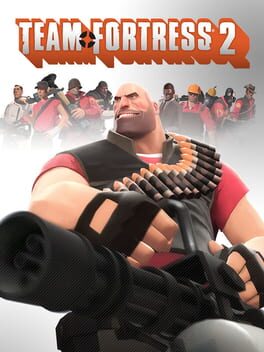
Team Fortress 2 pioneered the class-based team shooter where distinct hero personalities, unique weapons, and synergistic roles define every match. Its DNA runs directly through Marvel Rivals.
Key difference: No hero abilities cooldown system; much older engine and design.
Best for: Players who love team roles but prefer a grounded, humorous tone.
Skip if: You need modern production values and frequent updates.
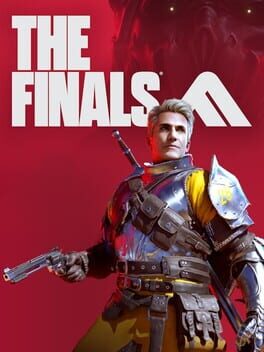
The Finals is a team-based PvP shooter built around fully destructible environments — collapsing buildings and crumbling floors change fights in real time, mirroring one of Marvel Rivals' most distinctive features. Teams combine contestant abilities to take objectives.
Key difference: No licensed superheroes; grounded gunplay rather than ability-dominated.
Best for: Players who love Marvel Rivals' destruction sandbox above all else.
Skip if: You need the superhero power fantasy and Marvel characters.
Apex Legends is a hero shooter where each Legend has a unique passive, tactical, and ultimate ability that the team must combine strategically. The fast movement and ability-chaining feel mirrors Marvel Rivals' kinetic combat.
Key difference: Battle royale format — no respawns until next round.
Best for: Players who want hero abilities married to traditional shooter gunplay.
Skip if: You dislike battle royale pacing and prefer respawn-based modes.
Destiny 2 has players pick classes with distinct superhero-style ability sets (supers, grenades, jumps) and team up in PvP and PvE modes. The power fantasy of firing off a massive elemental ultimate has the same appeal as Marvel Rivals' hero ultimates.
Key difference: Heavy PvE focus; gunplay is primary, abilities are secondary.
Best for: Players who want hero-ability combat in a rich lore-driven world.
Skip if: You only want pure PvP with no PvE grind.
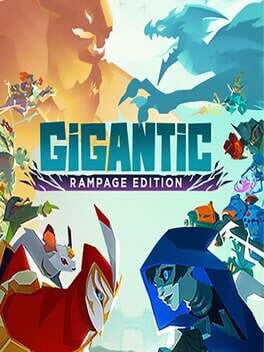
Gigantic: Rampage Edition is a third-person hero shooter where two teams of five battle alongside massive guardian creatures, combining hero abilities and team coordination in chaotic objective fights.
Key difference: Guardian creature mechanic adds a PvE element to the PvP loop.
Best for: Players who want a unique hero-shooter twist beyond standard objectives.
Skip if: You want a massive player base or long-term live service.
Titanfall 2's multiplayer features pilot abilities, wall-running, and giant mech transformations that give each player a unique power identity — the closest feeling of a superhero shooter in a traditional FPS format.
Key difference: No team-synergy system; hero identities are less distinct.
Best for: Players who want a fast, kinetic shooter with ability variety.
Skip if: You prioritize team-vs-team objective modes over arena gunfights.
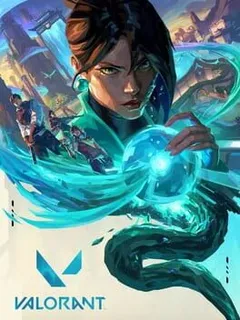
Valorant is a tactical hero shooter where each Agent has unique abilities that define team strategy — stuns, walls, dashes, and ultimates — demanding the same team coordination as Marvel Rivals.
Key difference: Slow, one-life-per-round tactical pacing versus Marvel Rivals' chaos.
Best for: Players who want the hero-ability framework with more strategic depth.
Skip if: You dislike slow-paced tactical shooters with punishing death.
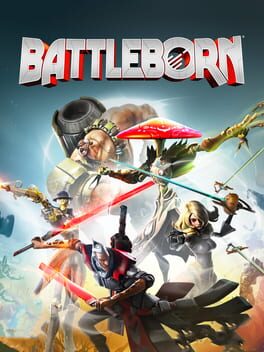
Battleborn was a hero shooter with a large roster of wildly distinct characters, team-based PvP, and over-the-top ability combat — an underplayed precursor to the hero-shooter boom Marvel Rivals participates in.
Key difference: Servers shut down; no longer playable online.
Best for: Historically curious players interested in the genre's evolution.
Halo Infinite's multiplayer offers fast-paced 4v4 and 12v12 objective modes with equipment abilities that shake up team tactics, scratching the team-shooter itch even without a hero system.
Key difference: No hero roster; all players use the same core kit.
Best for: Players who want reliable team-shooter action without hero unlocks.
Skip if: You need distinct hero identities and ability synergies.
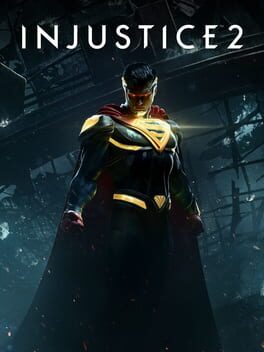
Injustice 2 pits DC superheroes against each other with fully animated super-power move sets, gear systems, and cinematic supers — capturing the superhero power fantasy Marvel Rivals delivers, in a 1v1 fighting-game format.
Key difference: 1v1 fighting game, not a team-based shooter.
Best for: Marvel Rivals fans who want superhero combat with story and lore.
Skip if: You dislike traditional fighting game execution mechanics.
Marvel's Avengers lets you play as iconic Marvel heroes — Thor, Iron Man, Hulk, Black Widow — each with distinct combat abilities and team-up co-op missions, making it the closest thematic cousin to Marvel Rivals.
Key difference: PvE action RPG, no competitive PvP; much-criticized live service.
Best for: Marvel fans who want the IP and heroes but prefer co-op PvE.
Skip if: You want competitive PvP or a healthy live-service community.
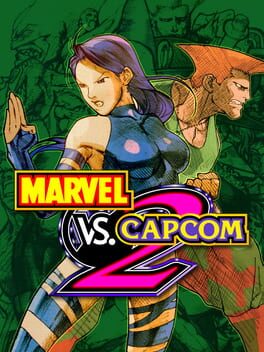
Marvel vs. Capcom 2 assembles 3-hero teams of Marvel characters with wildly over-the-top super moves and assists — the same chaotic Marvel spectacle in a 2D tag-fighter format.
Key difference: 2D tag-team fighting game, not a team shooter.
Best for: Players who want Marvel roster variety in a skill-ceiling fighter.
Skip if: You need a shooter format or modern netcode.
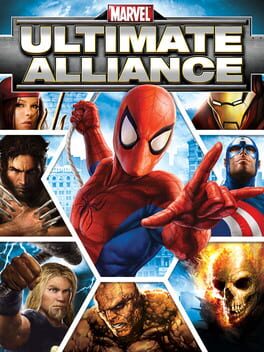
Marvel: Ultimate Alliance is a co-op action RPG where you build a four-hero Marvel squad and combine their powers in battle — an earlier take on the 'assemble your Marvel team' fantasy at Marvel Rivals' core.
Key difference: Single-player/co-op PvE action RPG, not competitive PvP.
Best for: Marvel fans who want a story-driven team experience.
Skip if: You need online competitive PvP or modern visuals.
Smite places mythological gods in third-person MOBA team battles — its over-the-shoulder perspective, big-ability combat, and team composition theory share DNA with Marvel Rivals' approach to hero synergies.
Key difference: MOBA lane structure, not an objective-based shooter.
Best for: Players who love hero diversity and team synergies in a free-to-play format.
Skip if: You dislike MOBA pacing or top-down lane gameplay.
Injustice: Gods Among Us delivers superhero-versus-superhero combat with cinematic super moves, interactive environments used as weapons, and a story featuring DC's biggest names — a fighting-game outlet for the superhero power fantasy.
Key difference: 1v1 story-focused fighting game, not team-based or a shooter.
Best for: Story-driven superhero fans who want fighting-game depth.
Skip if: You only want team multiplayer or shooter mechanics.
Card deck system replaces fixed abilities; no Marvel license.
PlayStation, PC, Xbox, Nintendo
Team Fortress 2
82%
Shooter, Action
No hero abilities cooldown system; much older engine and design.
PlayStation, PC, Xbox
The Finals
80%
Shooter, Action
No licensed superheroes; grounded gunplay rather than ability-dominated.
Xbox, PlayStation, PC
Apex Legends
76%
Shooter, Action
Battle royale format — no respawns until next round.
Xbox, PlayStation, Nintendo, PC
Destiny 2
72%
Shooter, Action
Heavy PvE focus; gunplay is primary, abilities are secondary.
Xbox, PlayStation, PC
Gigantic: Rampage Edition
72%
Shooter, Action
Guardian creature mechanic adds a PvE element to the PvP loop.
Xbox, PlayStation, PC
Titanfall 2
68%
Shooter, Action
No team-synergy system; hero identities are less distinct.
PlayStation, PC, Xbox
Valorant
67%
Shooter, Action
Slow, one-life-per-round tactical pacing versus Marvel Rivals' chaos.
Xbox, PC, PlayStation
Battleborn
65%
Shooter, Action
Servers shut down; no longer playable online.
PlayStation, PC, Xbox
Halo Infinite
62%
Shooter, Action
No hero roster; all players use the same core kit.
Xbox, PC
Injustice 2
57%
Action
1v1 fighting game, not a team-based shooter.
PlayStation, PC, Xbox
Marvel's Avengers
56%
Action
PvE action RPG, no competitive PvP; much-criticized live service.
Xbox, PlayStation, PC
Marvel vs. Capcom 2: New Age of Heroes
55%
Action
2D tag-team fighting game, not a team shooter.
Xbox, PlayStation
Marvel: Ultimate Alliance
54%
Action
Single-player/co-op PvE action RPG, not competitive PvP.
PlayStation, Nintendo, PC, Xbox
What makes a game feel like Marvel Rivals?
The core of Marvel Rivals is the hero-shooter loop: pick a character with a unique ability set, coordinate with five teammates, and contest objectives. Every game on this list that nails team composition theory and ability-driven combat — especially Overwatch and Overwatch 2 — will feel immediately familiar. The secondary ingredient is spectacle: huge ultimates, fast movement, and an anything-goes power scale. Apex Legends and Titanfall 2 both deliver on that kinetic, ability-amplified action even if their hero systems are less central.
Marvel Rivals' most unusual feature is its fully destructible environments — walls, floors, and buildings can be collapsed mid-fight to change sight lines and trap enemies. The Finals is the only other major competitive shooter that makes destruction this central to its design, and it's a must-play for anyone who gravitates to that feature specifically.
Best picks for superhero fans, not just shooter fans
If the Marvel license and superhero power fantasy matter more to you than the shooter format, start with Marvel's Avengers for co-op PvE with the actual Marvel roster, or Injustice 2 for superhero versus superhero combat with deep move sets and story. Marvel: Ultimate Alliance remains the classic 'assemble your Marvel squad' co-op RPG for players who want story-driven team play.
For sheer Marvel roster variety in a competitive setting, Marvel vs. Capcom 2 and Ultimate Marvel vs. Capcom 3 offer 3v3 tag-team fighting with the same enormous cast energy — a very different genre, but the same joy of picking your squad from a wall of beloved characters.
Free-to-play hero shooters to jump into right now
Marvel Rivals itself is free-to-play, and several strong alternatives match that model. Overwatch 2 is the most direct free-to-play equivalent with an active ranked scene. Apex Legends brings hero abilities to the battle royale format for free, while Valorant takes the hero-shooter formula into a tactical, slower-paced direction. Paladins (not in the candidate pool but strongly recommended) is perhaps the most 1:1 structural clone of the hero-shooter format, free on all platforms, with a card-customization twist. Smite applies hero-roster diversity and team synergy to a MOBA format at no entry cost.
Is there anything exactly like Marvel Rivals but not Marvel?
Overwatch and Overwatch 2 are the closest structural matches — 6v6 hero shooters with ability-driven team composition, objective modes, and a large roster. Paladins is another near-identical free-to-play alternative with card-based hero customization.
What game has the same destructible environment as Marvel Rivals?
The Finals is the only major competitive shooter that puts environmental destruction at the same level — entire floors collapse, walls crumble, and the map changes permanently as matches progress.
Are there Marvel Rivals alternatives that are co-op instead of PvP?
Marvel's Avengers lets you team up with friends as Iron Man, Thor, Hulk, and others in PvE missions. Marvel: Ultimate Alliance is an older but beloved co-op action RPG with a huge Marvel roster.
What should I play if I love Marvel Rivals' hero ultimate abilities?
Destiny 2's 'super' abilities — elemental powered attacks that charge over time and unleash in cinematic bursts — give the same cathartic ultimate-firing feeling. Apex Legends and Overwatch 2 also have strong ultimate ability design.
Is Valorant similar to Marvel Rivals?
Partly — both are hero shooters where each character brings unique abilities to team play. But Valorant is slow and tactical (one life per round, precise gunplay), while Marvel Rivals is fast, chaotic, and ability-dominant. They share a genre label but feel very different in practice.
 95%
95%