Guitar Hero's DNA is the note-highway rhythm loop: colored gems scroll toward you in time with a rock song, and nailing every fret button press in sequence triggers that deeply satisfying feeling of playing the music rather than just listening to it. The plastic guitar peripheral, the licensed rock setlist, and the score-attack multiplier system combine into something uniquely social — a game that turns a living room into a concert hall.
When fans ask for "games like Guitar Hero" they're usually chasing one of three things: the physical rhythm feedback of matching inputs to music, the party-room spectacle of performing in front of friends, or the rock-music energy that makes each song feel like a tiny gig. The best recommendations nail at least two of those three pillars.
Top pick:Rock Band 4 is the single closest pick — it was made by Harmonix themselves, uses the same guitar controllers, and is the direct continuation of everything Guitar Hero pioneered, now with drums and vocals to fill out a full band.
Some store buttons are affiliate links — we may earn a commission at no extra cost to you.
16 games like Guitar Hero
98%
Rock Band 4 2015
Rock Band 4 is the most direct spiritual successor to Guitar Hero, developed by Harmonix themselves after they left the GH series — same plastic guitar controller, same note-highway formula, with drums and vocals added and backward-compatible DLC libraries.
Key difference: Full band experience; Harmonix's own continuation of the genre.
Best for: Guitar Hero fans wanting the definitive modern band game.
Skip if: You only want solo guitar play with no band complexity.
Guitar Hero II is the direct follow-up by the same Harmonix team, using the identical plastic guitar controller and note-highway formula with a deeper rock setlist and improved multiplayer. If you loved the original, this is the most natural next step.
Key difference: Larger setlist, co-op mode added, slightly more difficult.
Best for: Anyone who cleared GH1 and wants more of the same.
Skip if: You want something genuinely fresh or new mechanics.
Guitar Hero III keeps the fret-button formula but cranks the difficulty and adds iconic rock battles (Tom Morello, Slash) as boss encounters. It's widely considered the peak of the series in terms of challenge and setlist prestige.
Key difference: Boss battles and online multiplayer added; harder difficulty curve.
Best for: Players who want the definitive, most polished GH experience.
Skip if: You found the original too hard; GH3 is noticeably more demanding.
Amplitude (2003) was made by Harmonix before Guitar Hero and uses a moving track of gem sequences across multiple instrument lanes — the direct prototype for Guitar Hero's note-highway gameplay. It's the game that proves Harmonix's rhythm genius predates GH.
Key difference: No guitar peripheral; uses standard PS2 controller across multi-lane track.
Best for: Guitar Hero fans who want to trace Harmonix's rhythm game roots.
Skip if: You need a physical instrument controller to feel engaged.
PlayStation
88%
Guitar Hero World Tour 2008
Guitar Hero World Tour expands the formula to a full band — drums, microphone, and bass join the guitar — mirroring the Rock Band format. The note-highway rhythm core is identical, now with a broader instrument roster.
Key difference: Full band play replaces pure guitar focus.
Best for: Groups wanting a party band experience beyond solo guitar.
Skip if: You only care about guitar; drum peripheral adds cost and space.
PlayStationNintendoPCXbox
85%
Beat Saber 2018
Beat Saber puts you in VR swinging sabers to slice color-coded blocks in time with music — the same core loop of matching physical inputs to a beat. The dopamine hit of a clean run is almost identical to nailing a Guitar Hero solo.
Key difference: VR headset required; no plastic guitar, uses arm motions instead.
Best for: VR owners wanting the most modern, physically engaging rhythm game.
Skip if: You don't own a VR headset or prefer couch multiplayer.
Dance Dance Revolution is the arcade rhythm game that directly inspired Guitar Hero — you stomp arrow panels on a dance mat in sync with music, chasing high scores and combo chains. The genre DNA is identical, just for feet instead of fingers.
Key difference: Full-body dance mat controller instead of guitar peripheral.
Best for: Arcade rhythm fans wanting the genre's foundational classic.
Skip if: You want to sit down and use a guitar-shaped controller.
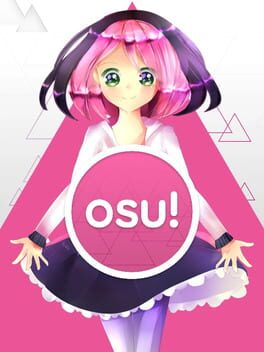
Osu! is a free PC rhythm game where you tap, slide, and spin to music in time with visual cues — the fundamental note-hitting reflex of Guitar Hero translated to mouse and keyboard. It has a vast community-made song library spanning every genre.
Key difference: Free-to-play, mouse/keyboard input, no peripheral required.
Best for: PC players wanting endless song variety at zero cost.
Skip if: You need the physical controller feel or couch party setup.
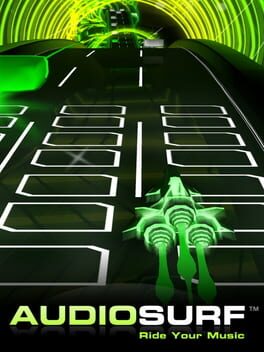
Audiosurf turns any music file from your own library into a playable rhythm track, generating lanes and colored blocks to the beat. Like Guitar Hero it rewards musical instinct and score-chasing, but with your personal collection.
Key difference: Uses your own music library; no setlist, purely generative.
Best for: Music lovers who want to play their own playlists.
Skip if: You want authored, hand-crafted note charts for specific songs.
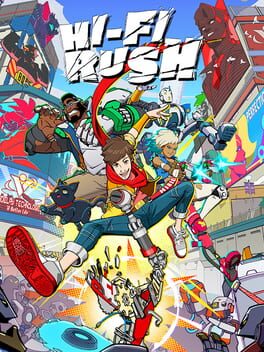
Hi-Fi Rush is a character action game where every attack, dodge, and combo snaps to the beat of a licensed rock soundtrack. It captures Guitar Hero's feeling of being locked in sync with music, but wraps it in a full action-adventure.
Key difference: Full 3D action game, not a note-highway rhythm game.
Best for: Players wanting rhythm-driven gameplay with a story and characters.
Skip if: You want pure rhythm mechanics without action-game complexity.
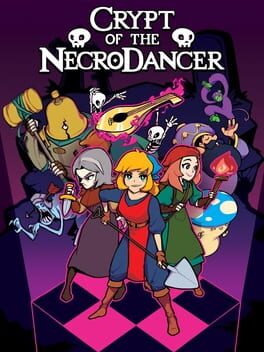
Crypt of the NecroDancer is a dungeon-crawler where every move, attack, and enemy action is locked to the beat — miss the rhythm and you lose your combo multiplier. The musical precision required is very close to Guitar Hero's feel, just in a roguelike skin.
Key difference: Roguelike dungeon structure; no fret buttons, uses arrow keys or D-pad.
Best for: Rhythm-game fans who also enjoy roguelikes and strategy.
Skip if: You dislike permadeath or want a straightforward song-scoring loop.
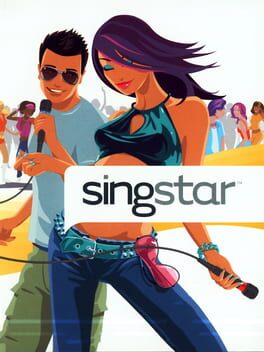
SingStar is a microphone-based party rhythm game where players sing along to popular songs and are scored on pitch accuracy — the same party-room energy and music-game format as Guitar Hero, just for vocals.
Key difference: Microphone singing only; no instrument controllers involved.
Best for: Groups who prefer singing together over playing plastic guitar.
Skip if: You want instrumental play or are not comfortable singing.
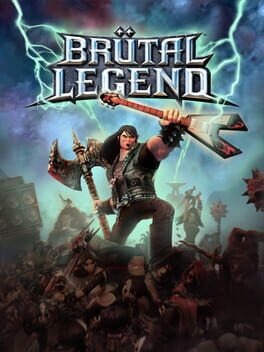
Brütal Legend is an open-world action game drenched in heavy metal culture, with a soundtrack curated by the same era of rock that defines Guitar Hero's setlists. Developed by Tim Schafer at Double Fine with Harmonix veterans in mind, it scratches the rock-music itch even if the gameplay is RTS-hybrid.
Key difference: Open-world RTS-action, not a rhythm game at all.
Best for: Guitar Hero fans who love the rock aesthetic over the rhythm mechanic.
Skip if: You want note-highway gameplay; this is completely different mechanically.
Geometry Dash is a music-synced auto-runner where obstacles are choreographed tightly to the beat — the same muscle-memory and audio-visual synchronization that Guitar Hero demands, distilled into a brutally precise platformer.
Key difference: Auto-runner platformer, no note chart, much shorter bursts of play.
Best for: Players who love music-timing challenges and score attack.
Skip if: You want a social party game or licensed rock songs.
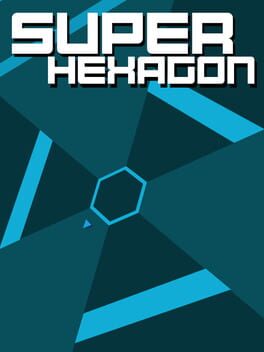
Super Hexagon is an abstract arcade survival game whose difficulty and music are inseparably fused — the pulsing electronic soundtrack is as important as the visuals. Like Guitar Hero it rewards split-second timing and delivers a flow state when you're locked in.
Key difference: Purely abstract; no note charts, electronic music only, brutally short sessions.
Best for: Players who love the rhythm-timing flow state in a pure arcade form.
Skip if: You need recognizable rock songs or a peripheral controller.
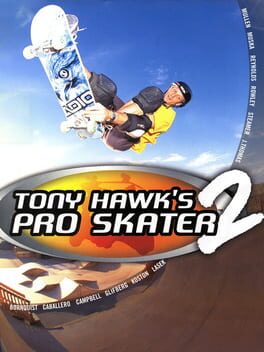
Tony Hawk's Pro Skater 2 shares Guitar Hero's score-attack structure, era, and the feel of chaining together perfect executions in time with a licensed rock soundtrack. It was Guitar Hero's spiritual predecessor in making rock music feel interactive and exciting.
Key difference: Skateboarding game, no rhythm/music mechanics.
Best for: PS2-era fans who want that same score-attack satisfaction.
Skip if: You specifically want music/rhythm gameplay over sports action.
PCMobilePlayStation
At a glance
Game
Match
Shared DNA
Biggest difference
Platforms
Rock Band 4
98%
Music, Party
Full band experience; Harmonix's own continuation of the genre.
PlayStation, Xbox
Guitar Hero II
97%
Music, Party
Larger setlist, co-op mode added, slightly more difficult.
Xbox, PlayStation
Guitar Hero III: Legends of Rock
95%
Music, Party
Boss battles and online multiplayer added; harder difficulty curve.
PlayStation, Nintendo, PC, Xbox
Amplitude
90%
Music, Party
No guitar peripheral; uses standard PS2 controller across multi-lane track.
PlayStation
Guitar Hero World Tour
88%
Music, Party
Full band play replaces pure guitar focus.
PlayStation, Nintendo, PC, Xbox
Beat Saber
85%
Music, Party
VR headset required; no plastic guitar, uses arm motions instead.
PlayStation, PC
Dance Dance Revolution
85%
Music, Party
Full-body dance mat controller instead of guitar peripheral.
PlayStation
Osu!
80%
Music
Free-to-play, mouse/keyboard input, no peripheral required.
PC, Mobile
Audiosurf
78%
Music, Party
Uses your own music library; no setlist, purely generative.
PC
Hi-Fi Rush
75%
Music
Full 3D action game, not a note-highway rhythm game.
Xbox, PC, PlayStation
Crypt of the NecroDancer
72%
Music
Roguelike dungeon structure; no fret buttons, uses arrow keys or D-pad.
PlayStation, PC, Mobile, Xbox, Nintendo
SingStar
72%
Music, Party
Microphone singing only; no instrument controllers involved.
PlayStation
Brütal Legend
65%
Music
Open-world RTS-action, not a rhythm game at all.
PlayStation, PC, Xbox
Geometry Dash
62%
Music
Auto-runner platformer, no note chart, much shorter bursts of play.
Mobile, PC
Super Hexagon
55%
Music
Purely abstract; no note charts, electronic music only, brutally short sessions.
PC, Mobile
What makes a game truly feel like Guitar Hero?
The core of Guitar Hero is authored note charts — a human hand-crafted sequence of inputs mapped precisely to a real song, so hitting every note feels like performing it. That's what separates the best alternatives from generic music games. Guitar Hero II and Guitar Hero III nail this because they use the identical system; Beat Saber gets close with its hand-crafted saber maps set to licensed tracks. Osu! has a massive community of chart authors doing the same thing for free across every genre imaginable.
The peripheral controller matters too. Nothing else replicates the five-fret guitar feel exactly, but Beat Saber's motion controllers deliver a comparable sense of embodied musical performance, and Crypt of the NecroDancer finds a surprising way to make every button press feel rhythmically meaningful.
Best hidden gems for Guitar Hero fans
Audiosurf is the most overlooked recommendation on this list — it generates a playable track from any MP3 on your hard drive, meaning your entire music library becomes a Guitar Hero-style level. It lacks hand-crafted charts but the score-chasing and musical flow state are real. Crypt of the NecroDancer is even more surprising: a dungeon crawler where ignoring the beat is as punishing as missing a note streak in Guitar Hero, and playing in sync rewards you with the same combo-driven dopamine hit.
On the historical side, Amplitude (2003 by Harmonix) is the forgotten prototype — it's essentially Guitar Hero before the guitar controller existed, with multi-lane gem sequences across instrument tracks. Tracking down a copy is worth it for anyone who wants to understand why Harmonix's rhythm design is so effective.
Solo score-attack vs. party multiplayer picks
If you're playing alone and chasing high scores and personal bests, Osu! and Beat Saber have the deepest skill ceilings and largest song libraries. Super Hexagon is brutally pure — just you, the beat, and millisecond timing windows. For solo musical story experiences, Hi-Fi Rush is the best modern option, wrapping rhythm-game precision inside a full action-adventure with a great rock soundtrack.
For the party-room Guitar Hero experience specifically, Guitar Hero World Tour and Rock Band 4 are the correct answers — they scale to four players with instrument peripherals and reproduce exactly the living-room concert feeling. Dance Dance Revolution remains the gold standard for group physical play if you can find the dance mats.
What is the closest game to Guitar Hero available today?
Rock Band 4 (by Harmonix, the original Guitar Hero developer) is the closest modern equivalent — it uses the same guitar controllers, the same note-highway format, and has an enormous backward-compatible DLC library. Beat Saber is the best alternative if you own a VR headset.
Are Guitar Hero guitars compatible with Rock Band?
Most Guitar Hero guitar controllers from the same console generation are compatible with Rock Band games, and vice versa. Compatibility varies by console generation, so checking the specific controller model against the specific game version is recommended.
Is osu! similar to Guitar Hero?
osu! shares the core mechanic of hitting visual cues in time with music, and has a massive library of community-made charts for any song you can imagine. It uses mouse and keyboard rather than a guitar peripheral, but the rhythm-game reflex it trains is nearly identical.
What did Harmonix make after Guitar Hero?
After parting ways with the Guitar Hero brand, Harmonix created Rock Band in 2007 — which added drums, bass, and vocals to the plastic-instrument formula. They also released Dance Central (Kinect dance game) and later acquired the Fuser and FUSER music mixing games.
Are there any Guitar Hero games on PC?
The original Guitar Hero series never received official PC releases; games were console-exclusive (PS2, Xbox 360, Wii, PS3). For PC rhythm gaming, osu!, Audiosurf, Clone Hero (a free fan-made Guitar Hero clone with downloadable song charts), and Beat Saber (VR) are the primary options.
 98%
98%